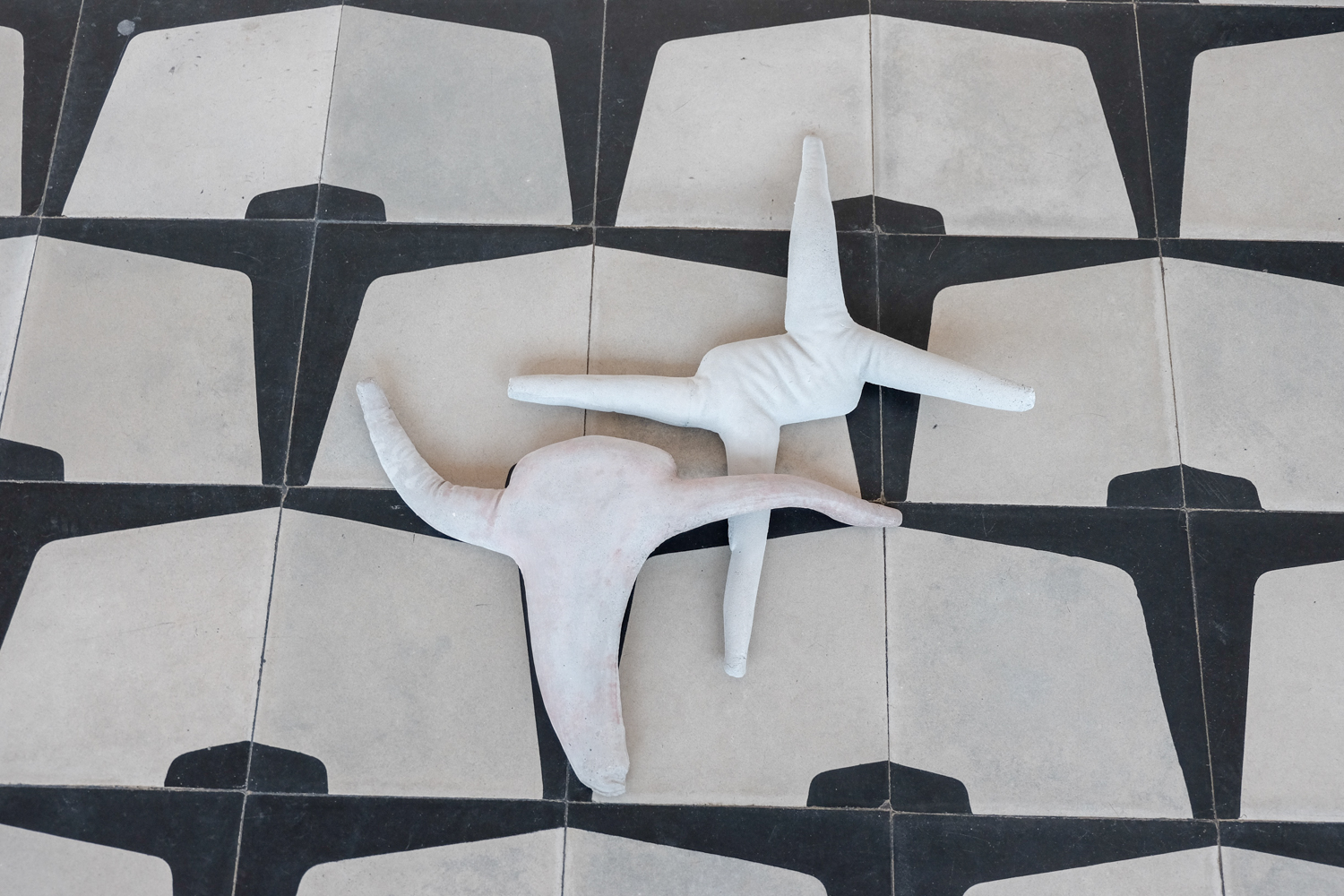
If not an hongo // Si no es un mushroom, 2017
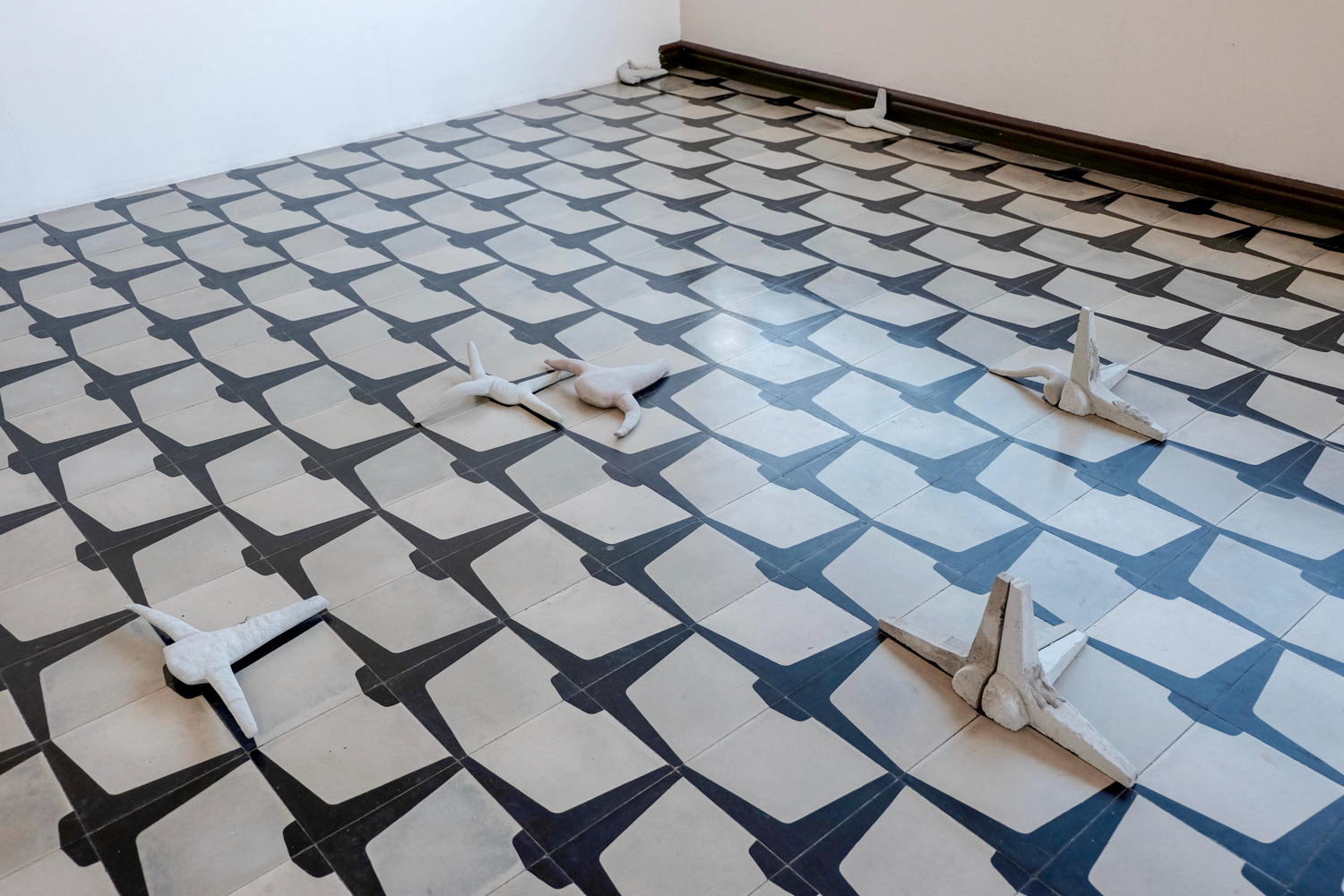
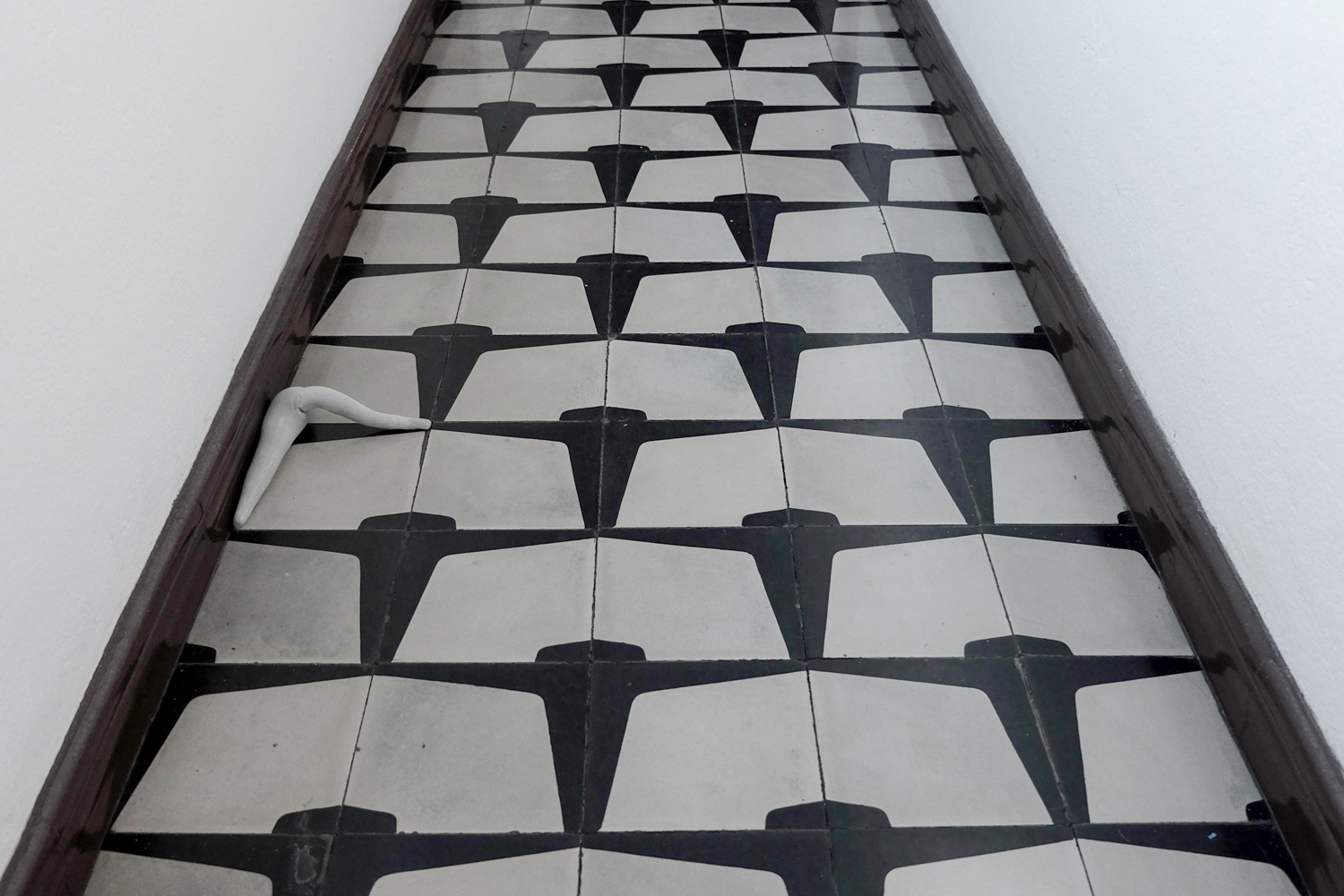
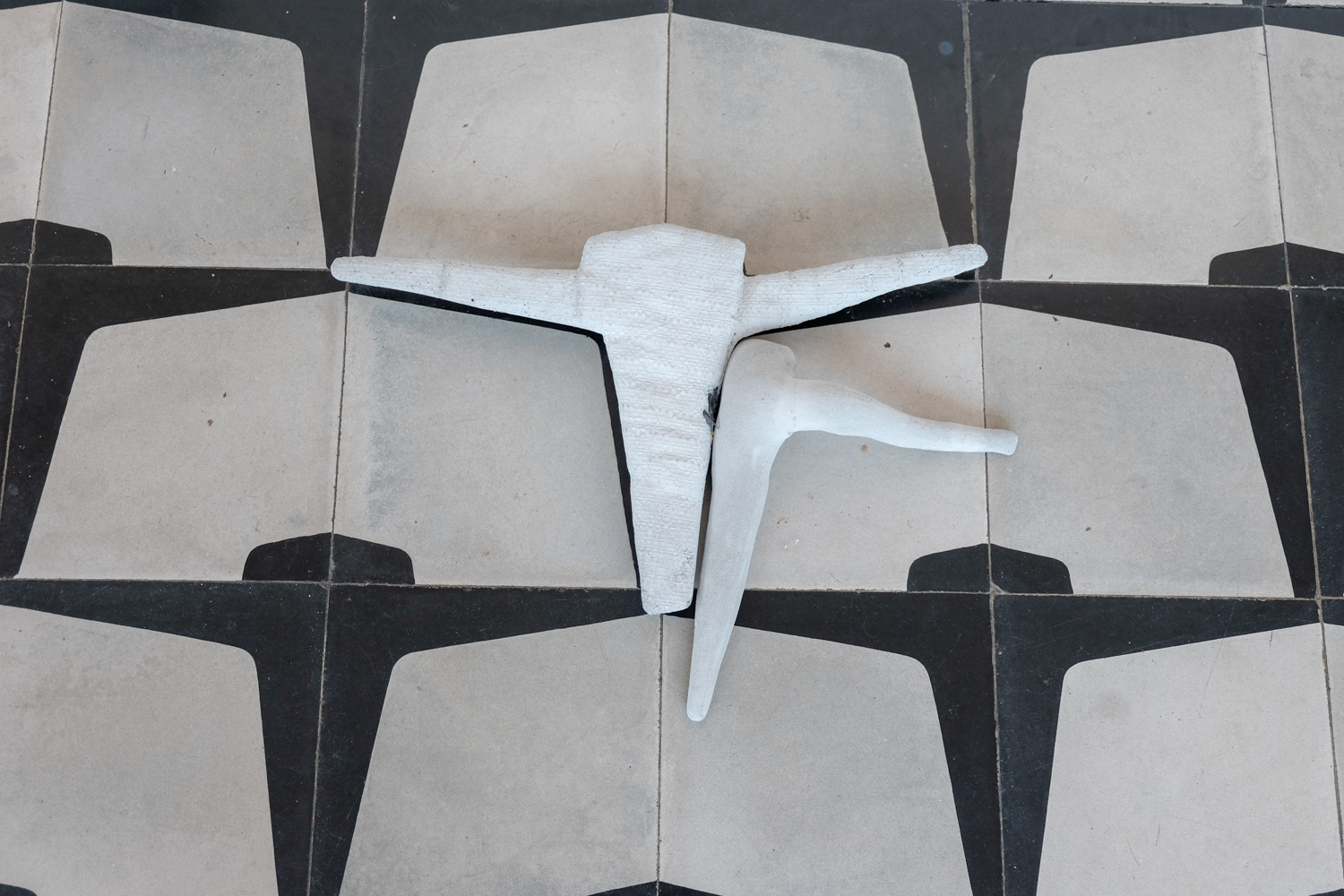
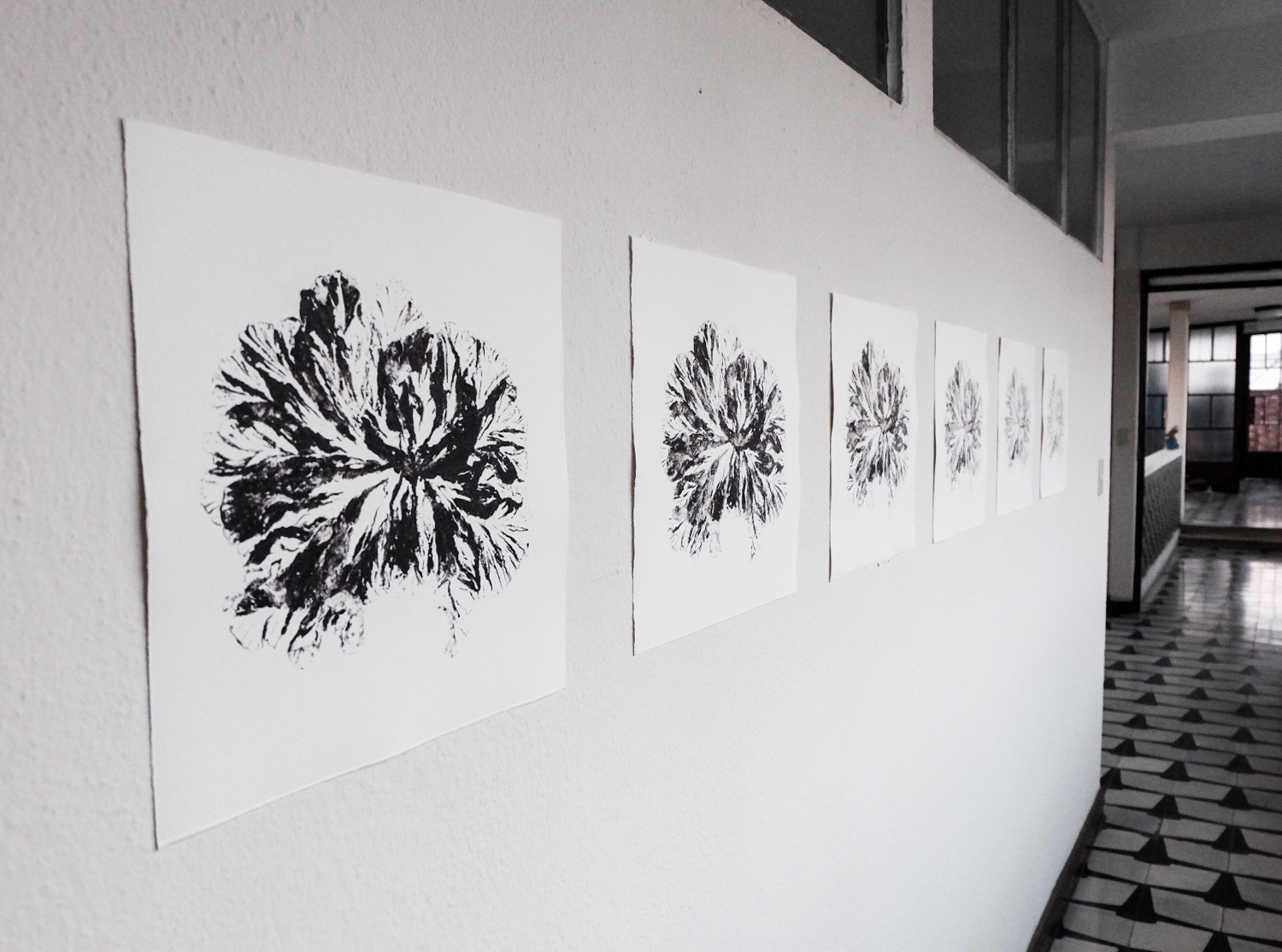
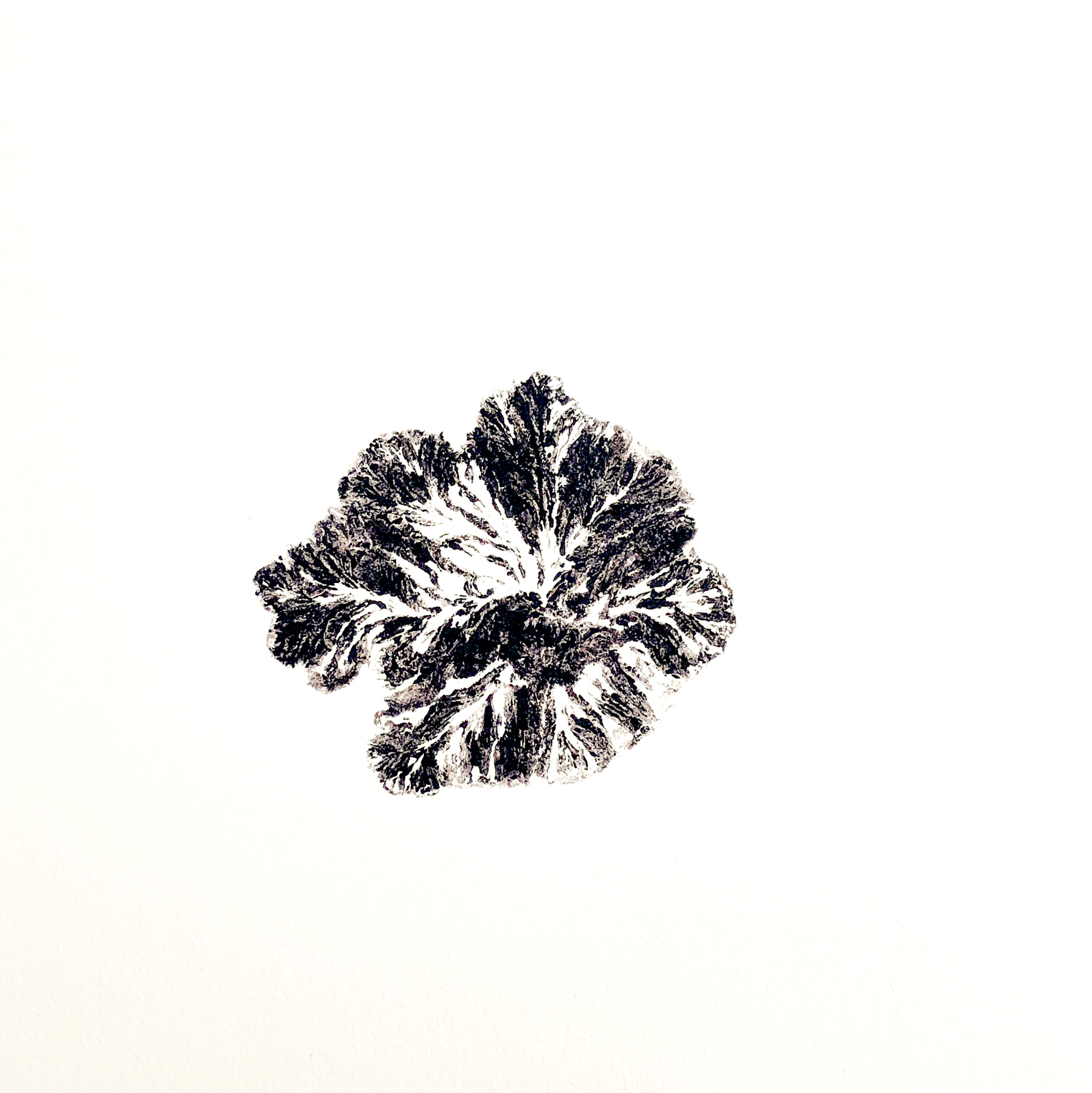
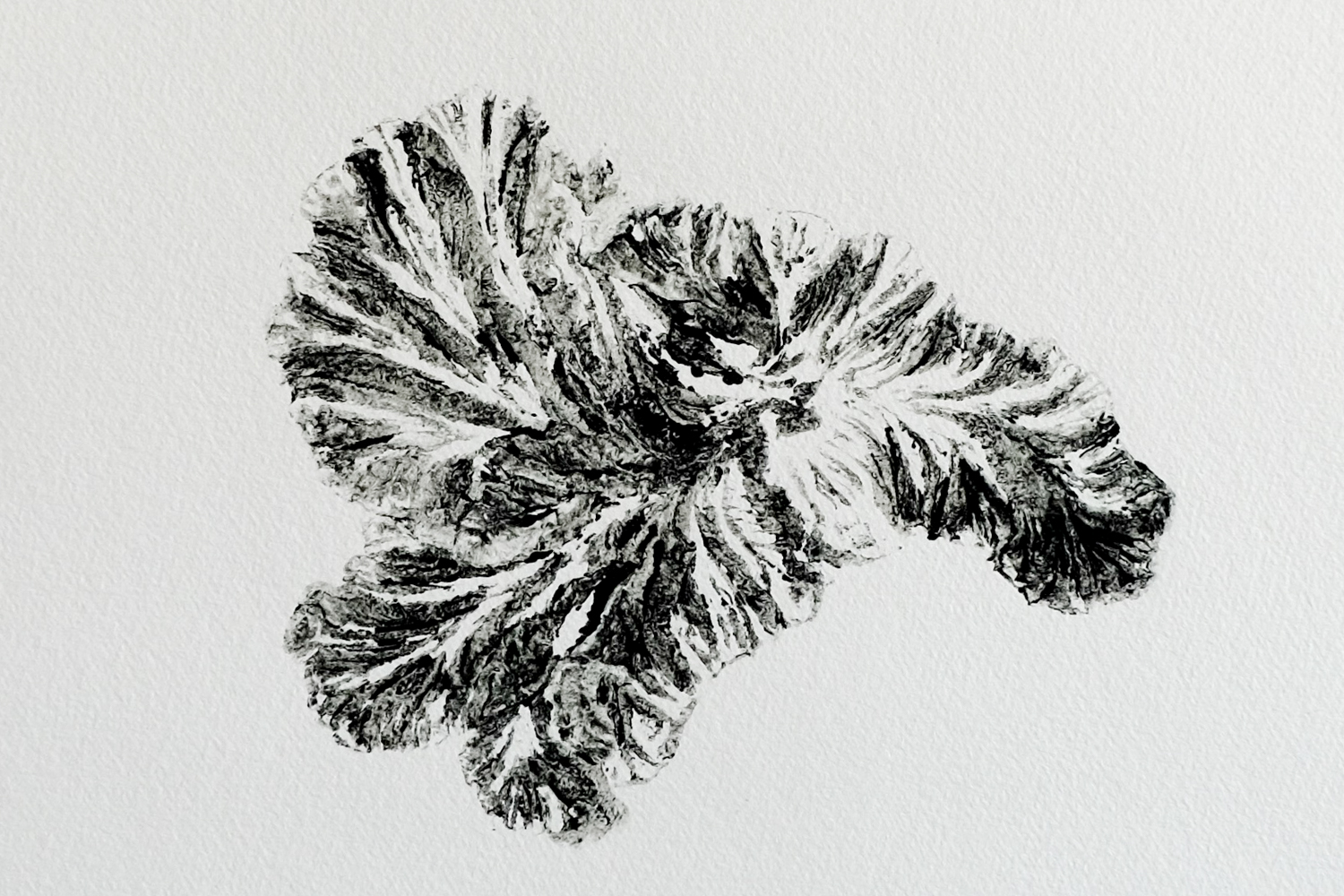
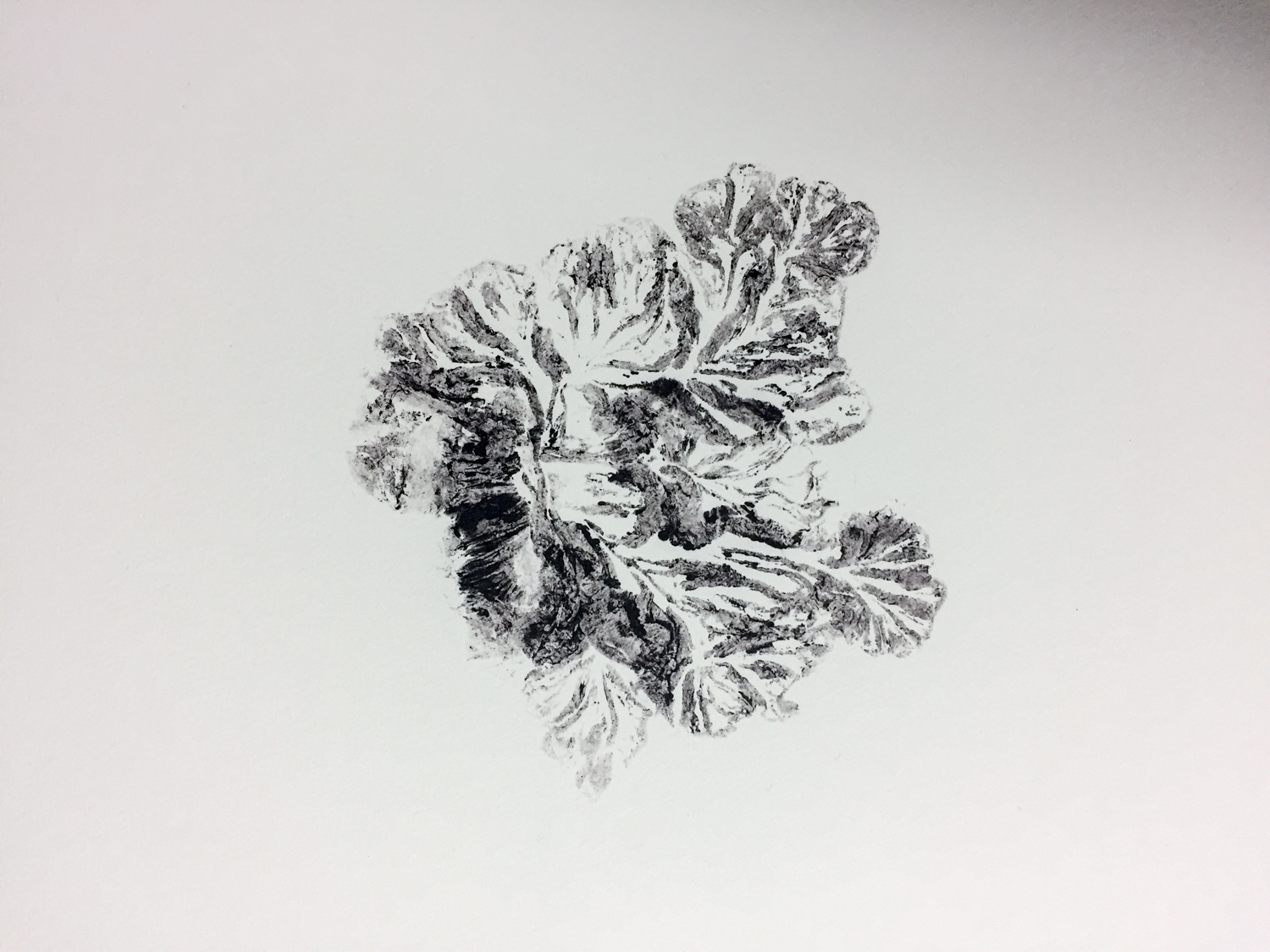
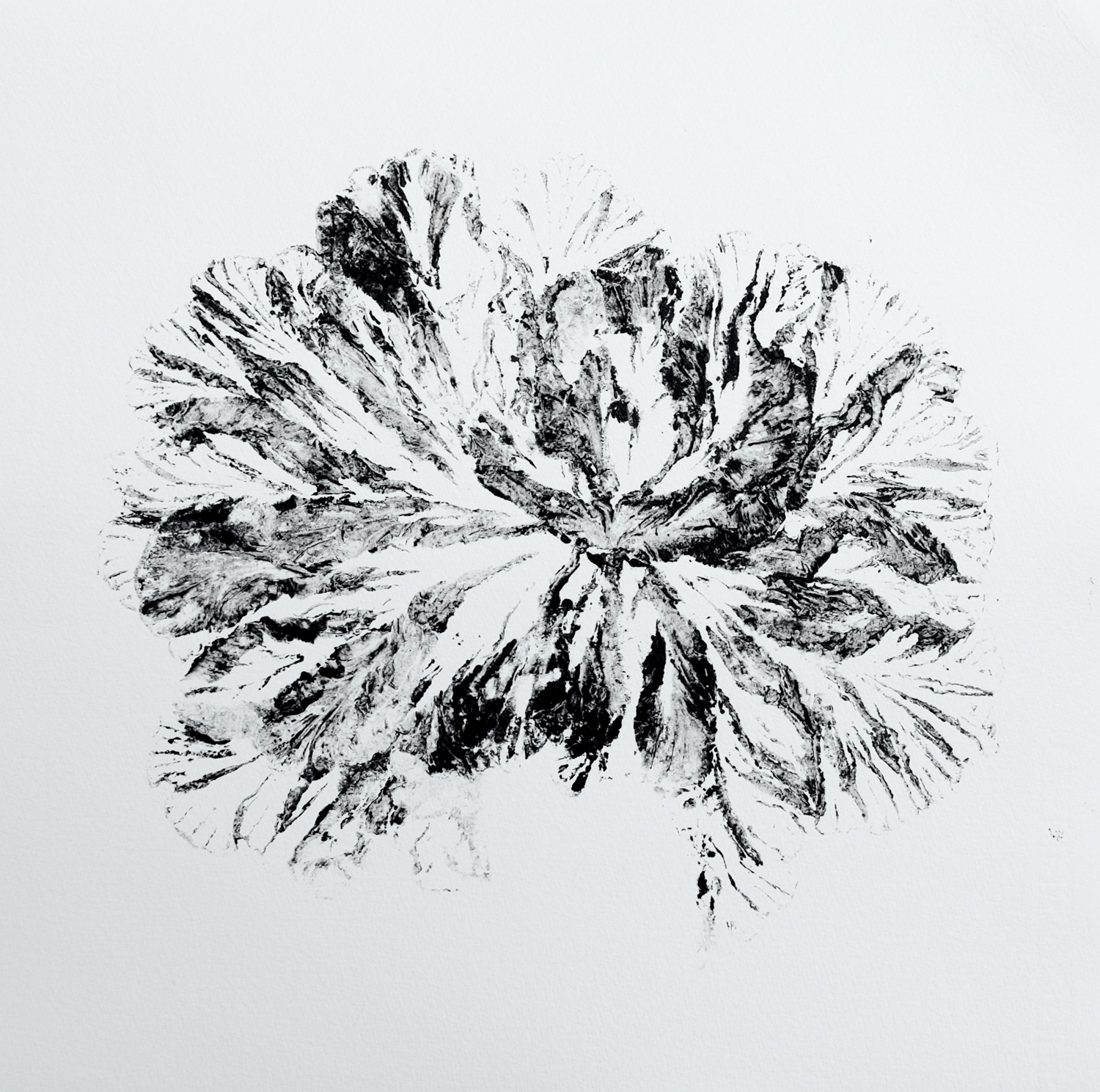
If not an hongo // Si no es un mushroom
January 2017
Yvonne (Guatemala City, Guatemala)
Related Materials:
Notes:
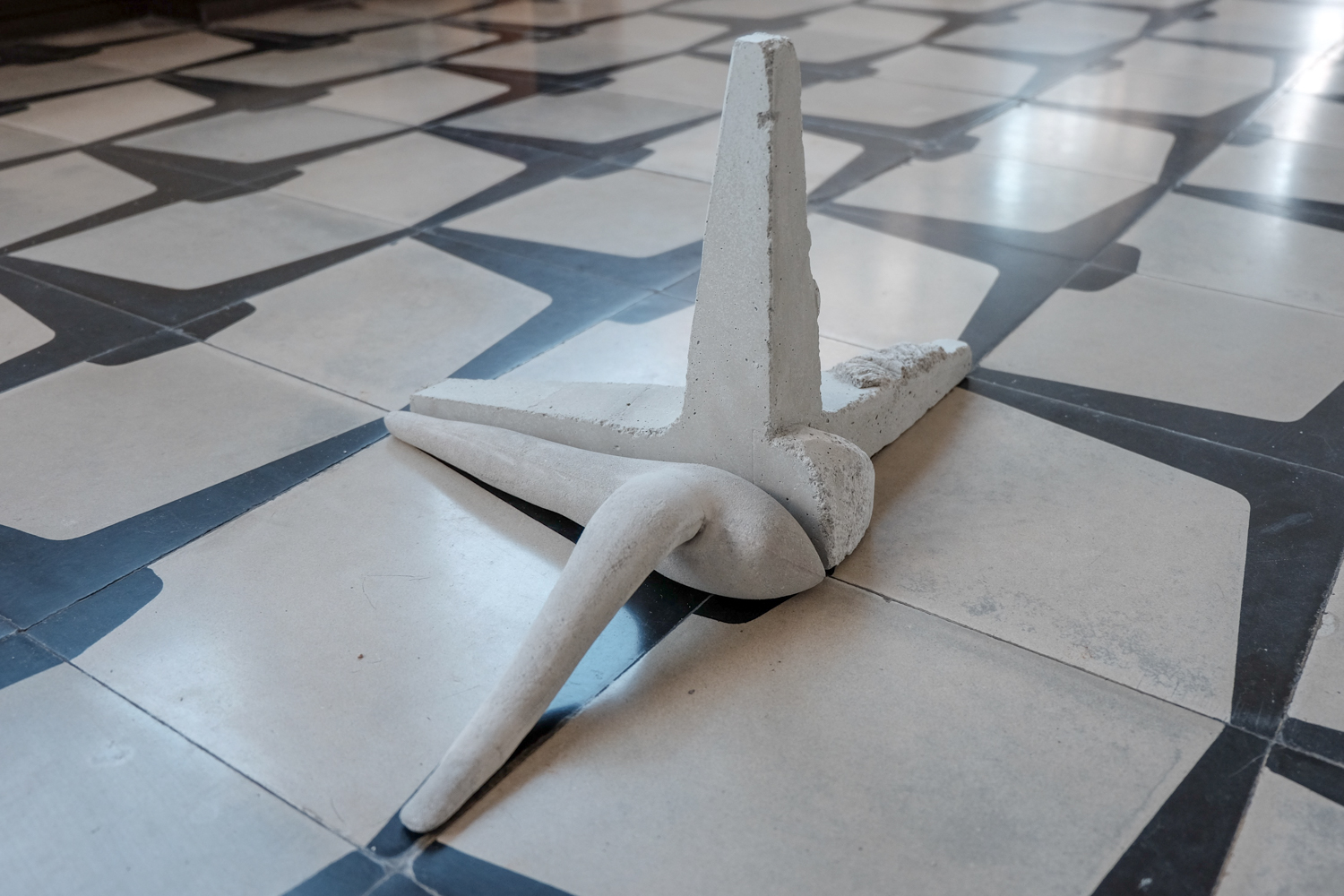
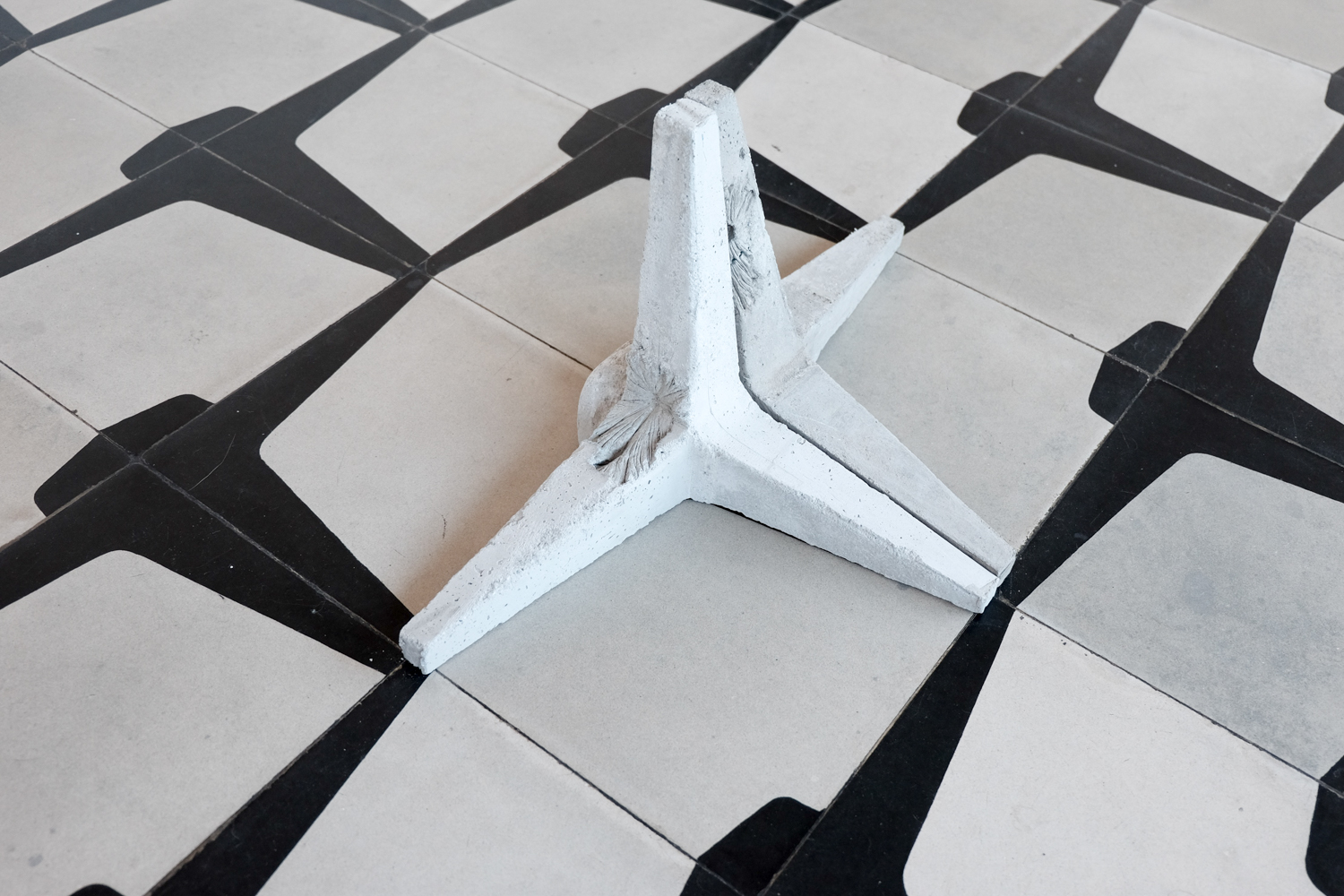
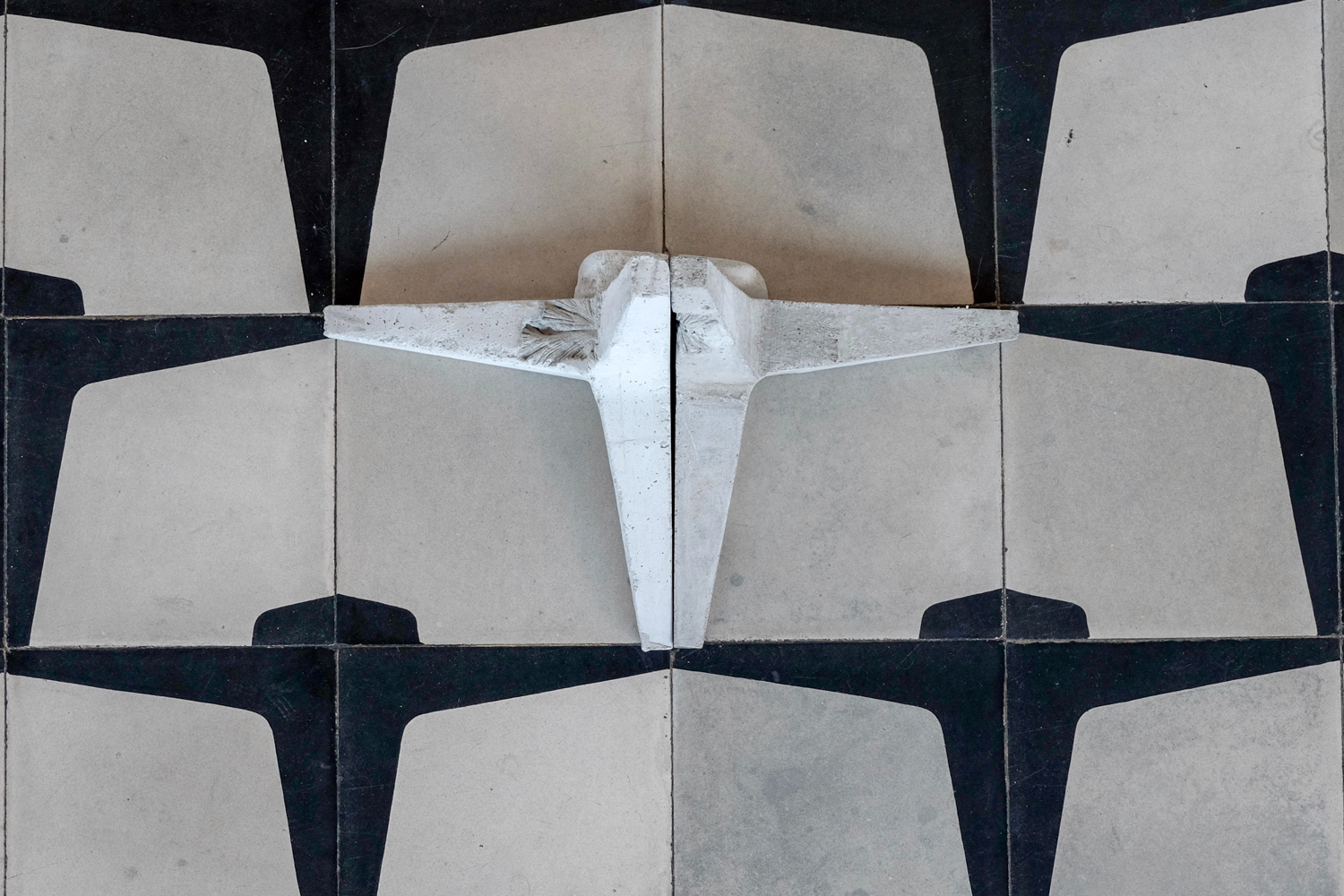
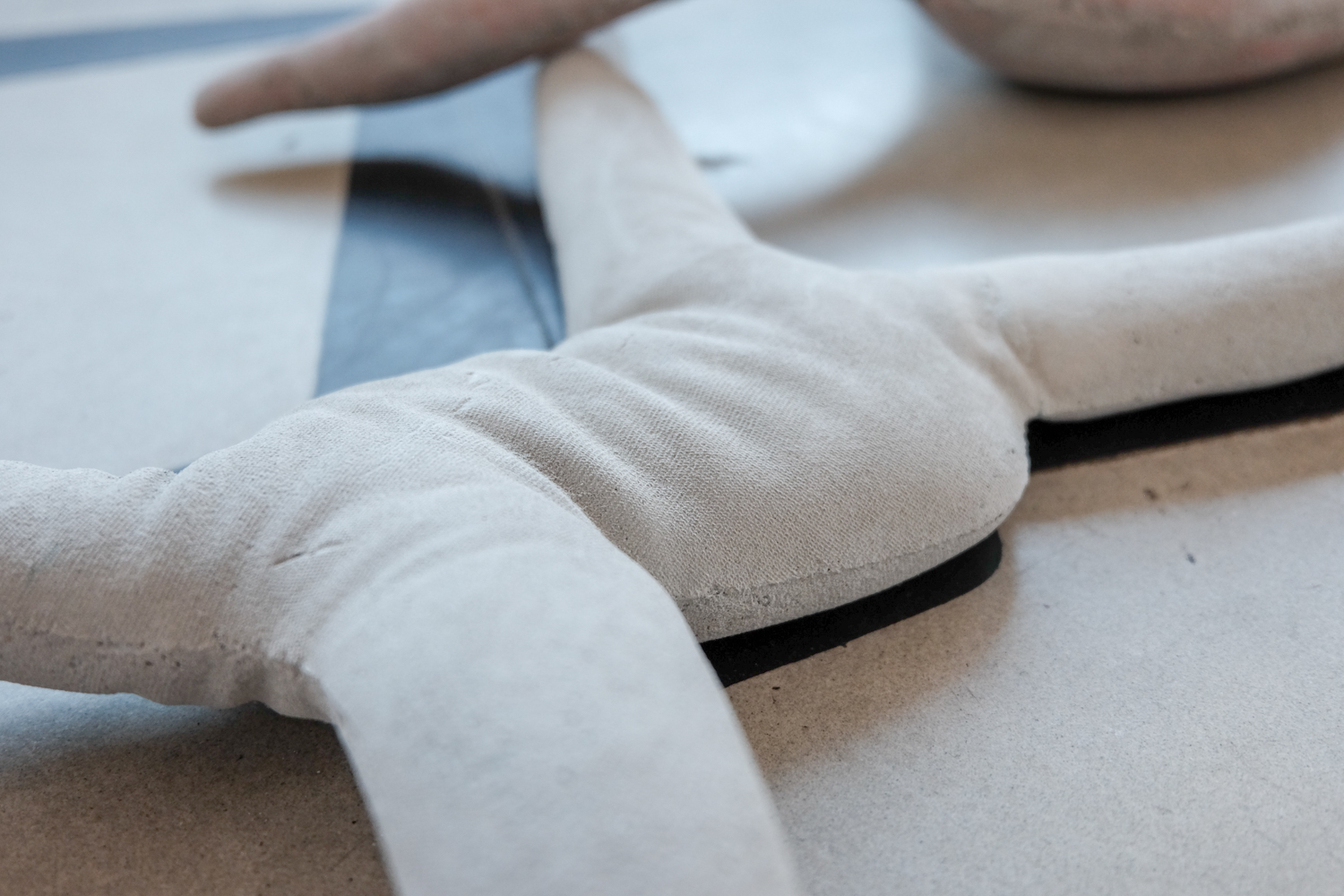
If not an hongo // Si no es un mushroom, begins with an investigation of a biological occurrence native to Guatemala: an abnormal growth that occurs on certain trees in response to a parasitic mistletoe. Often mistaken for some kind of mushroom, these intricate woody tumors are collected and sold as decorative curios. As I questioned guest/host dynamics in relation to parasitism and hospitality (and my own role as a visitor) I made a series of concrete sculptures that engage and respond to architectural details throughout Yvonne. Opening the week of the U.S. inauguration, If not an hongo looks for ways to live under threat, finding a model for necessary resistance that fosters the growth of something beautiful.
List of Works:
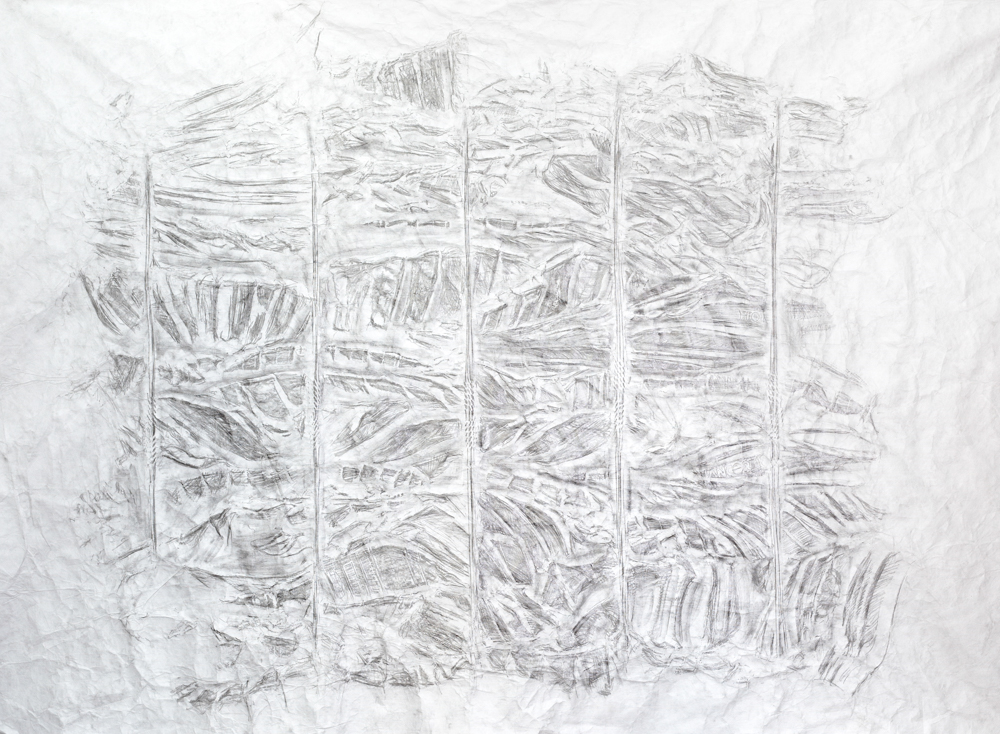
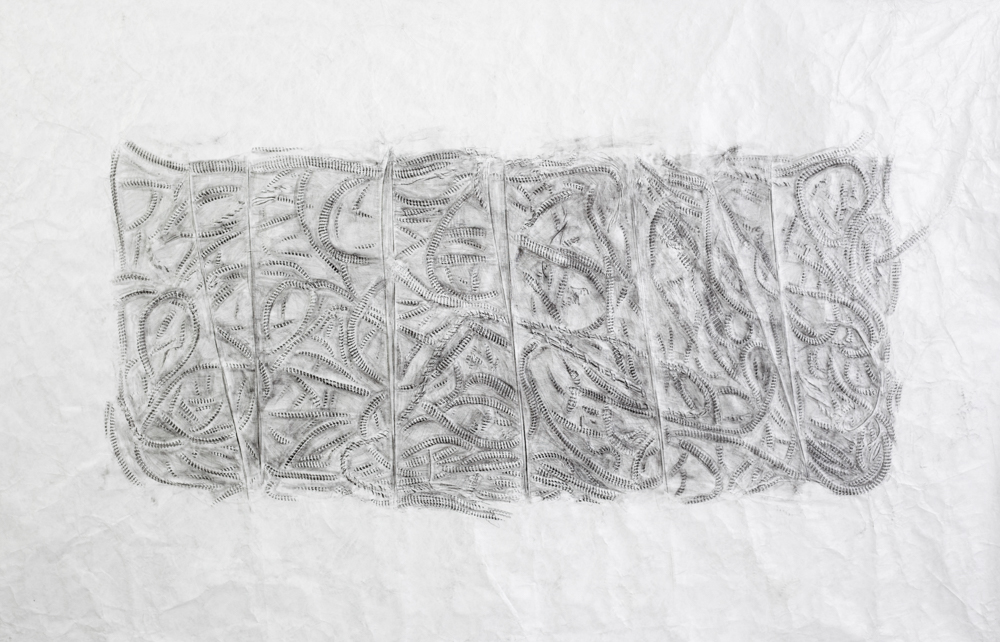
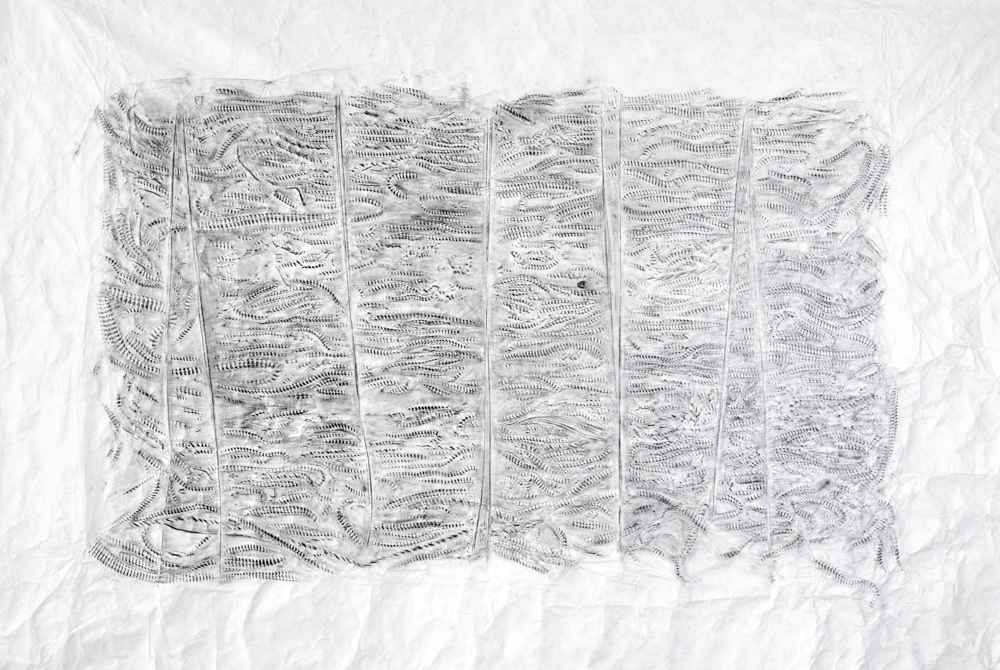
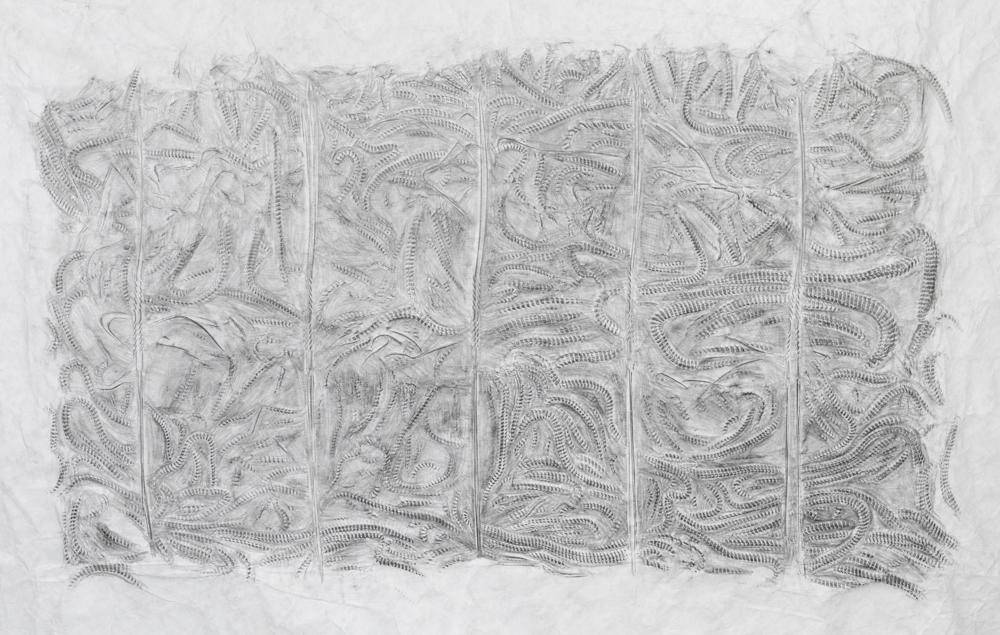
Spore Print series, 2017
monoprint; 35 x 35 cm.
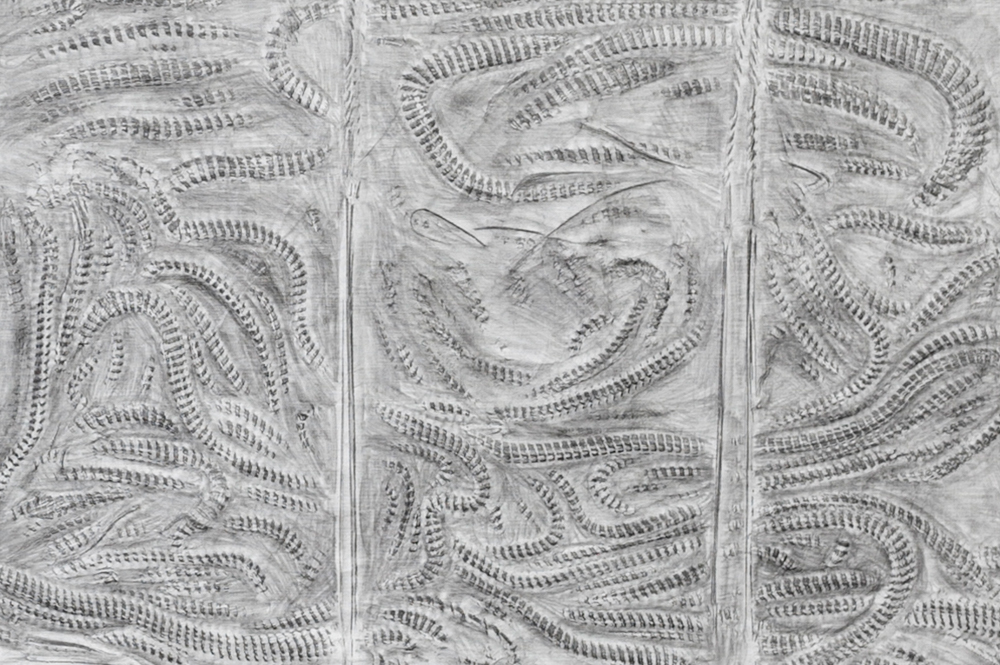
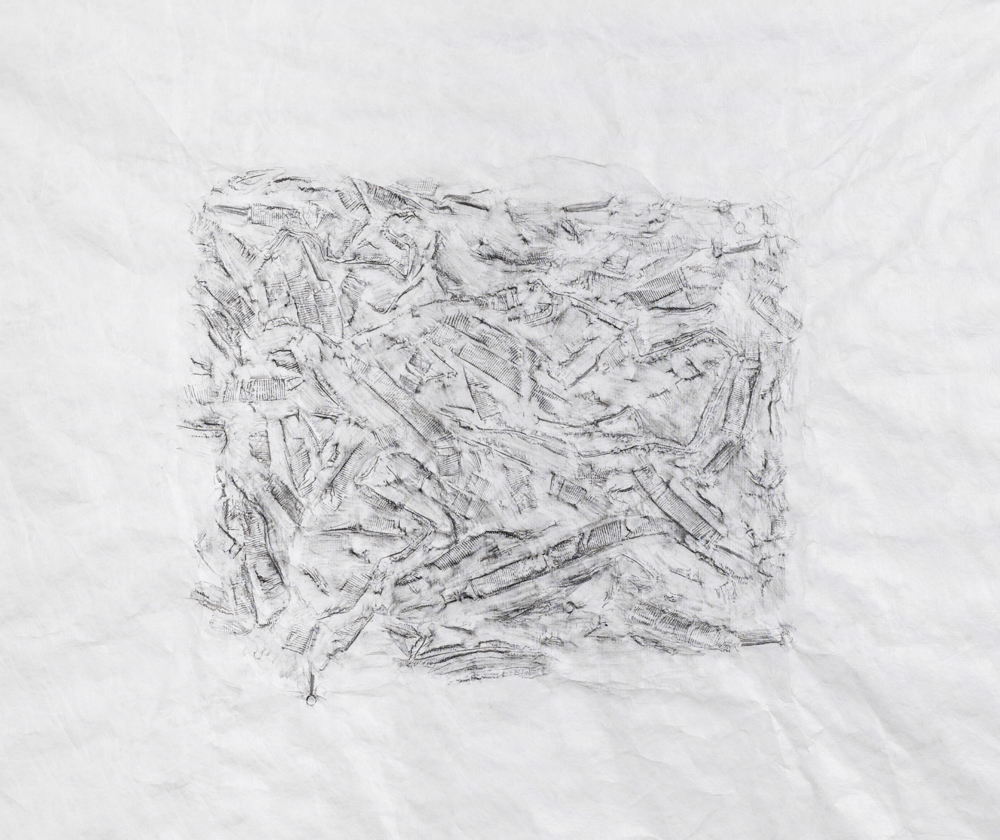
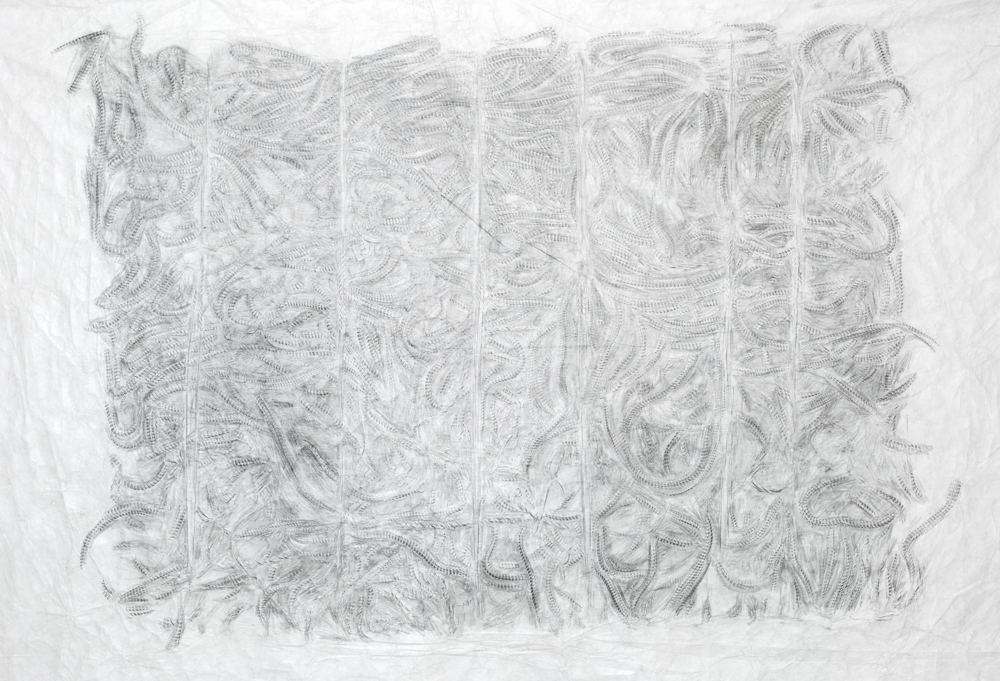
Matapalos, 2017
concrete; based on tiles measuring 20 x 20 cm.
Credits:
Many thanks to Taller Experimental de Gráfica de Guatemala (TEGG) for printmaking wisdom.
Photography by Karl Williamson
Forms:

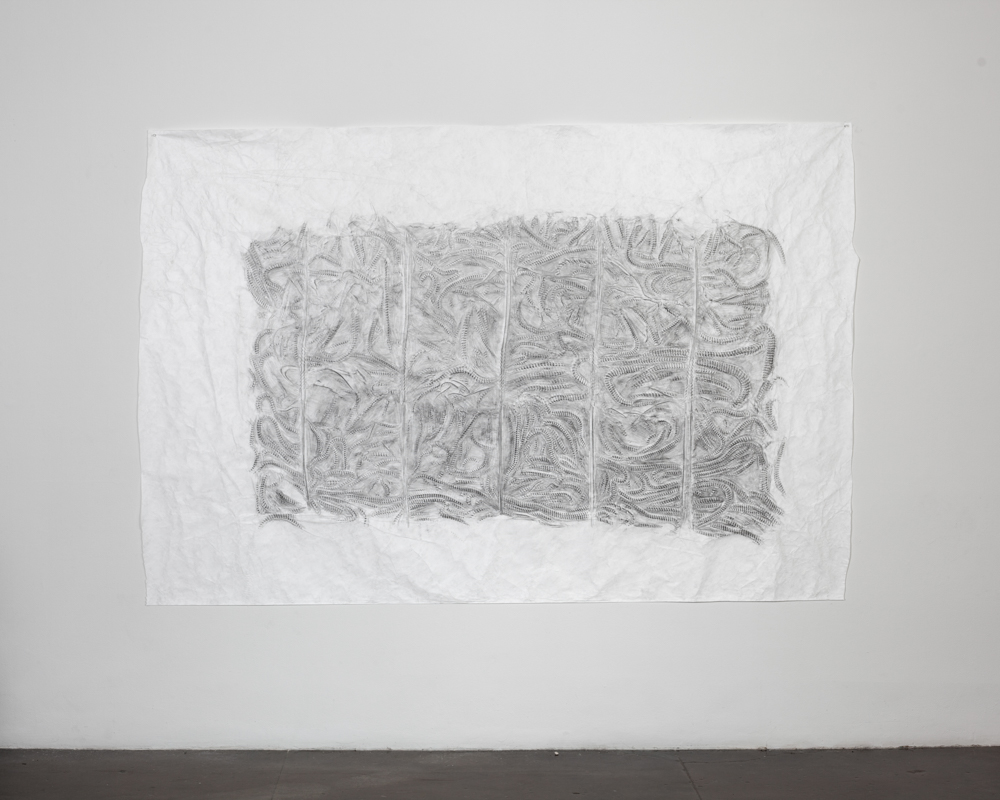
Old Copper Futures
lilycoxrichard@gmail.com
2015
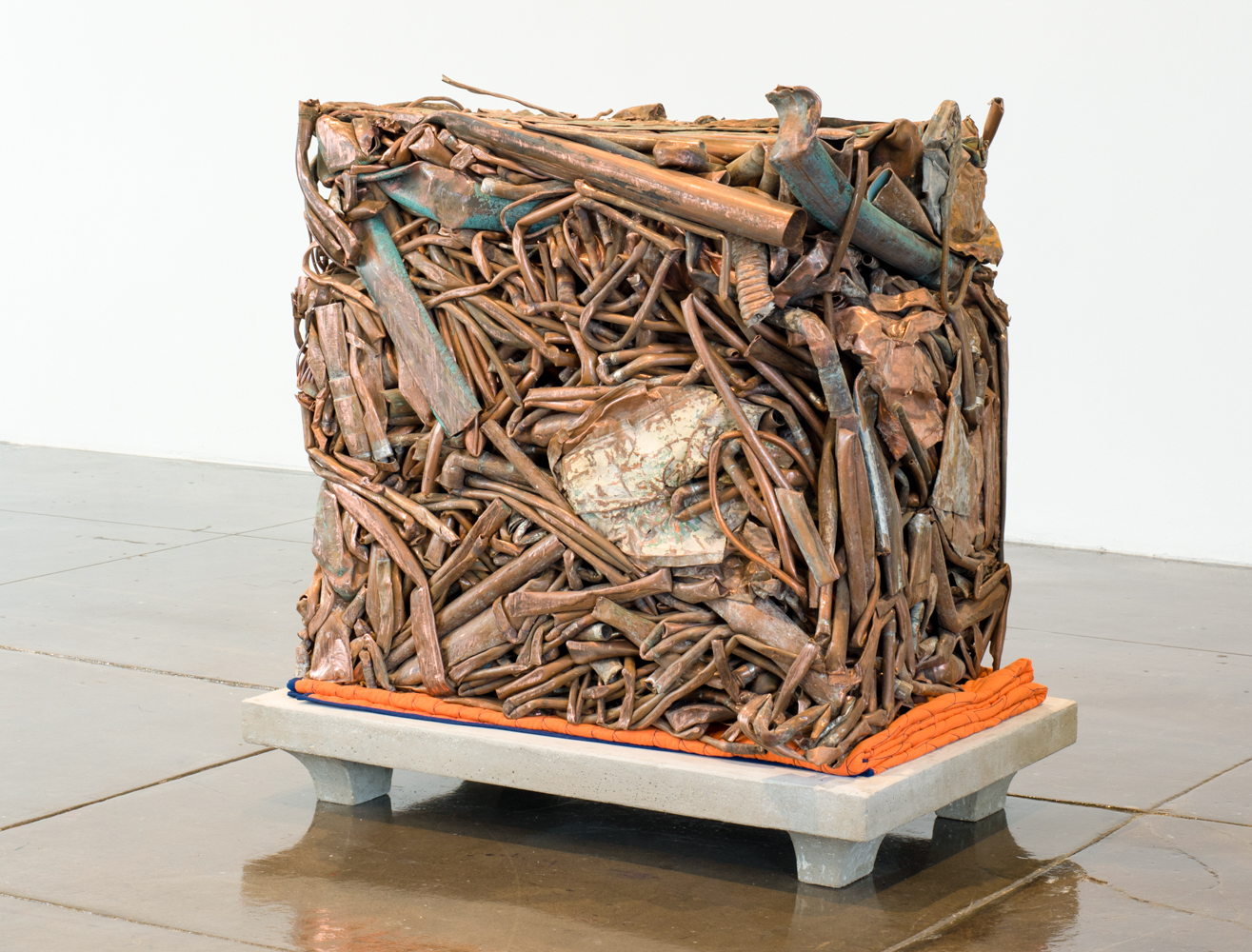
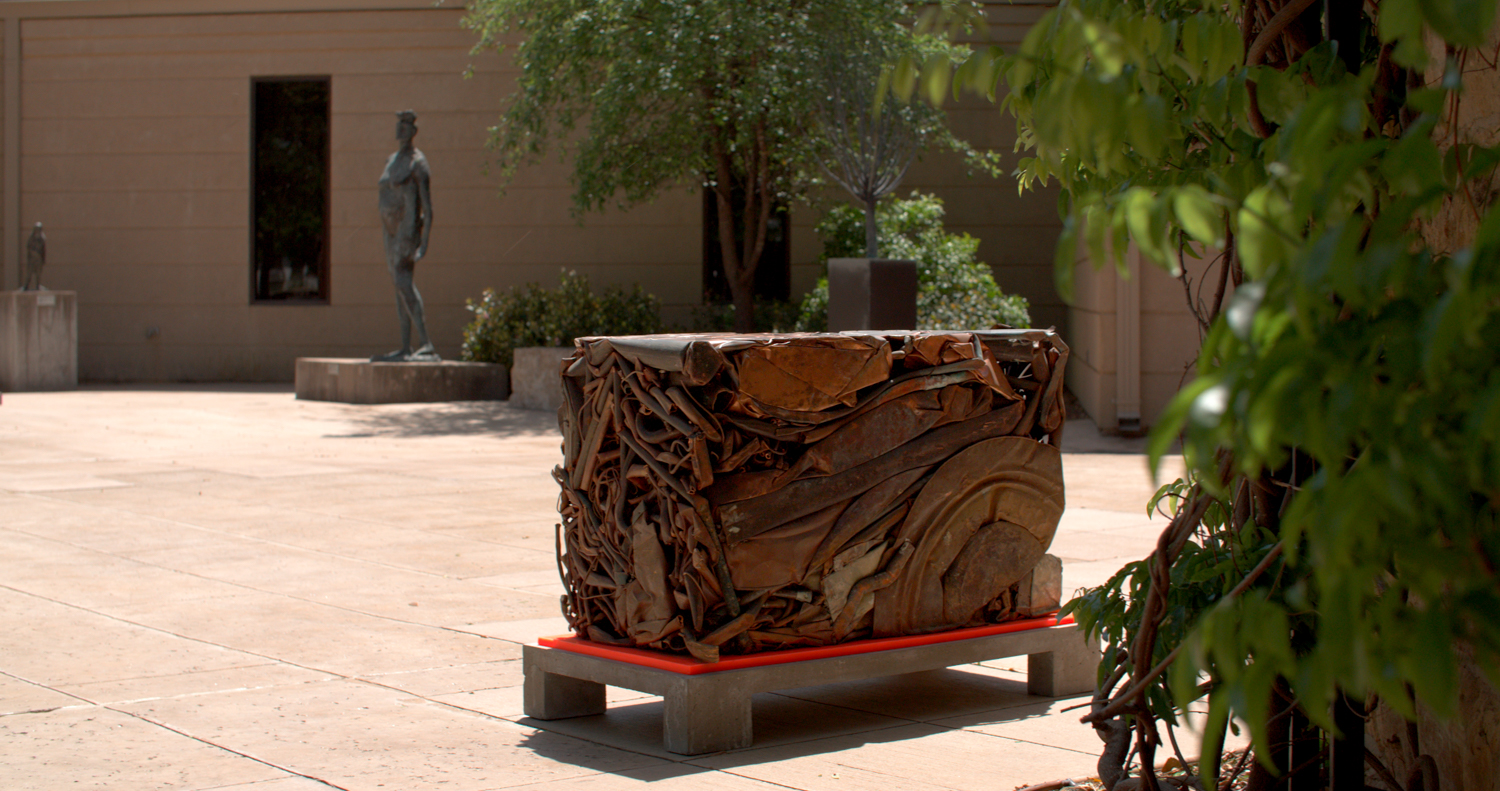
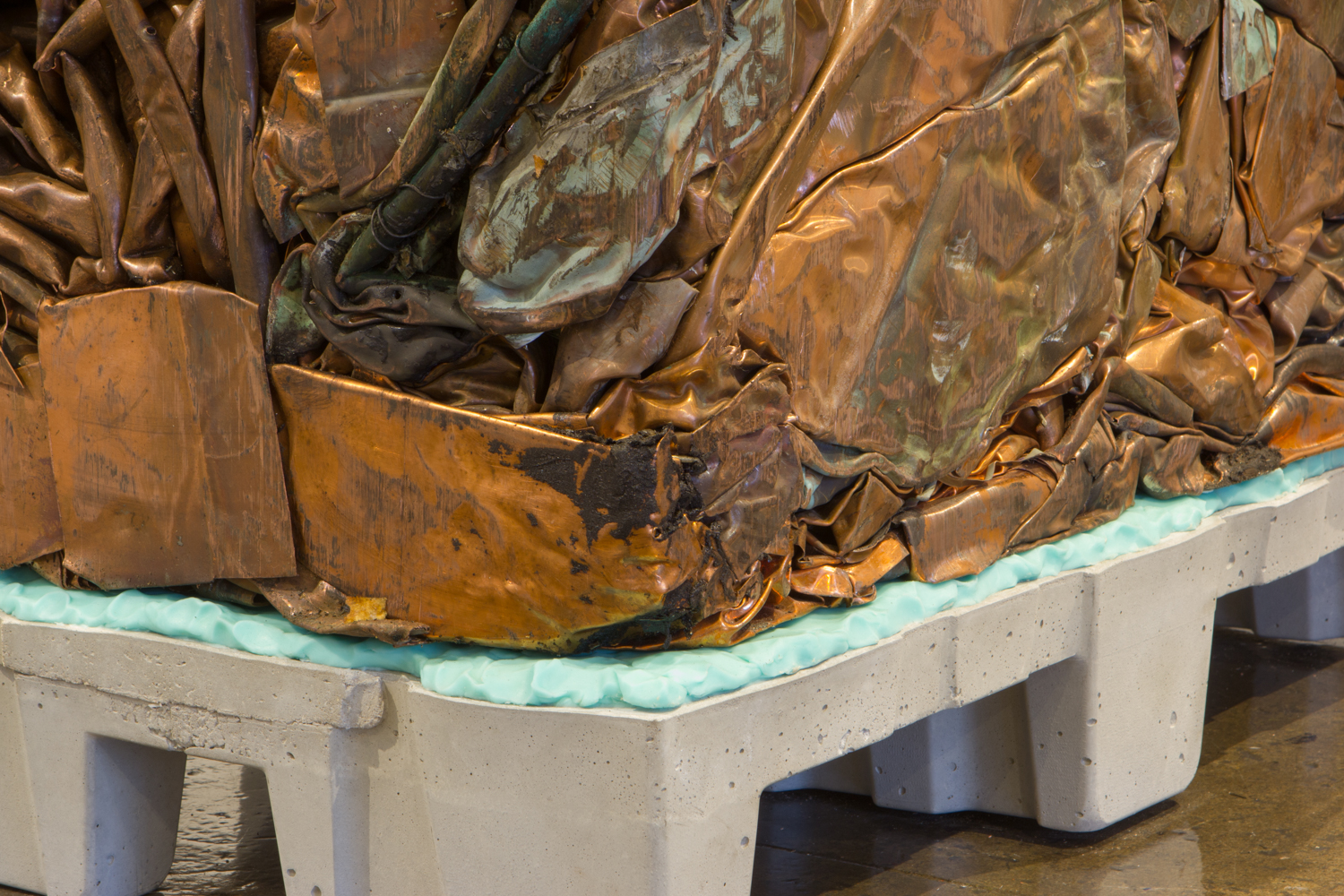
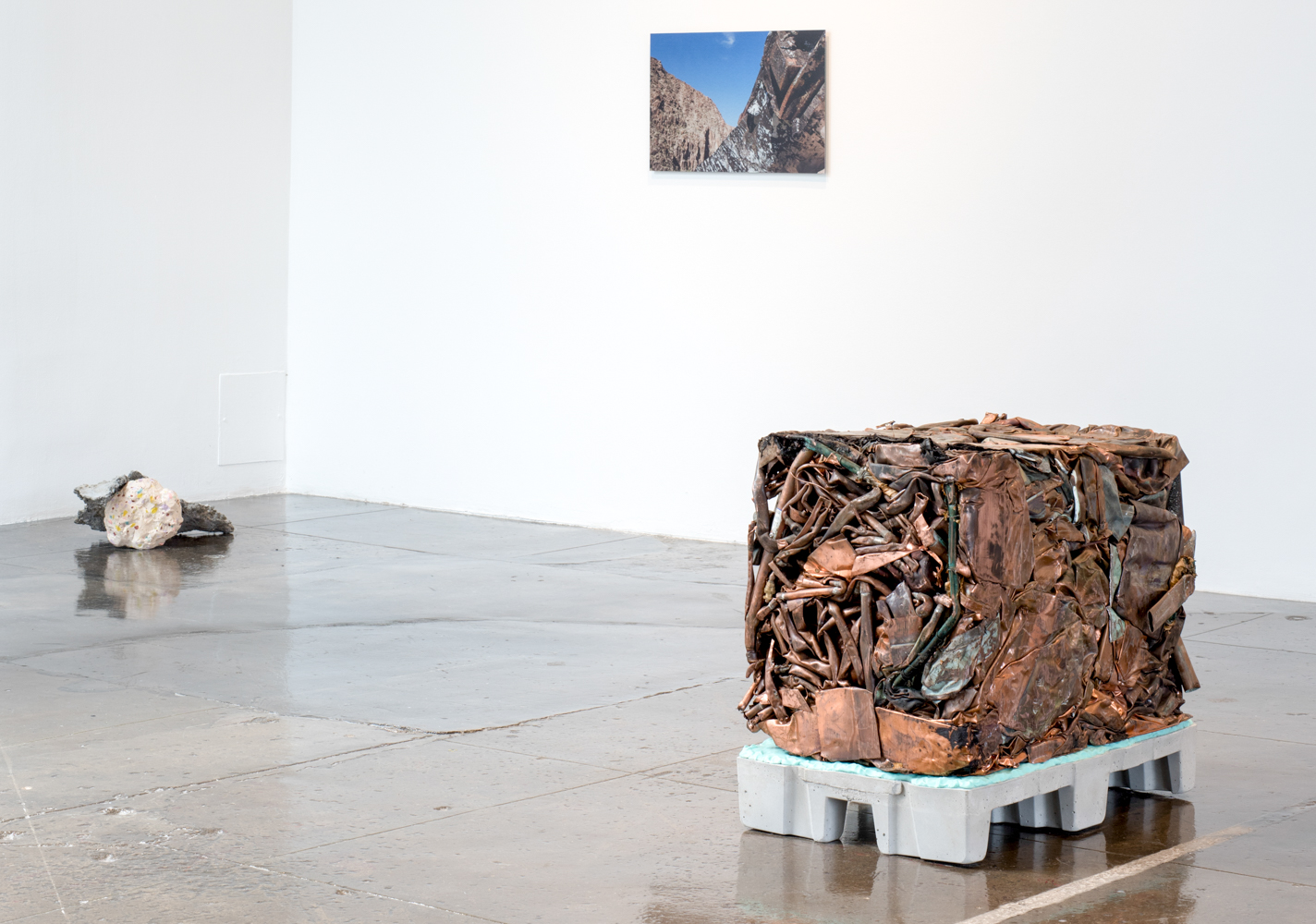
Old Copper Futures: 772 lbs. of #2 scrap copper from R&S Recycling, Corsicana, TX, 2018
copper, concrete, silicone rubber; 30 x 44 x 22 in.
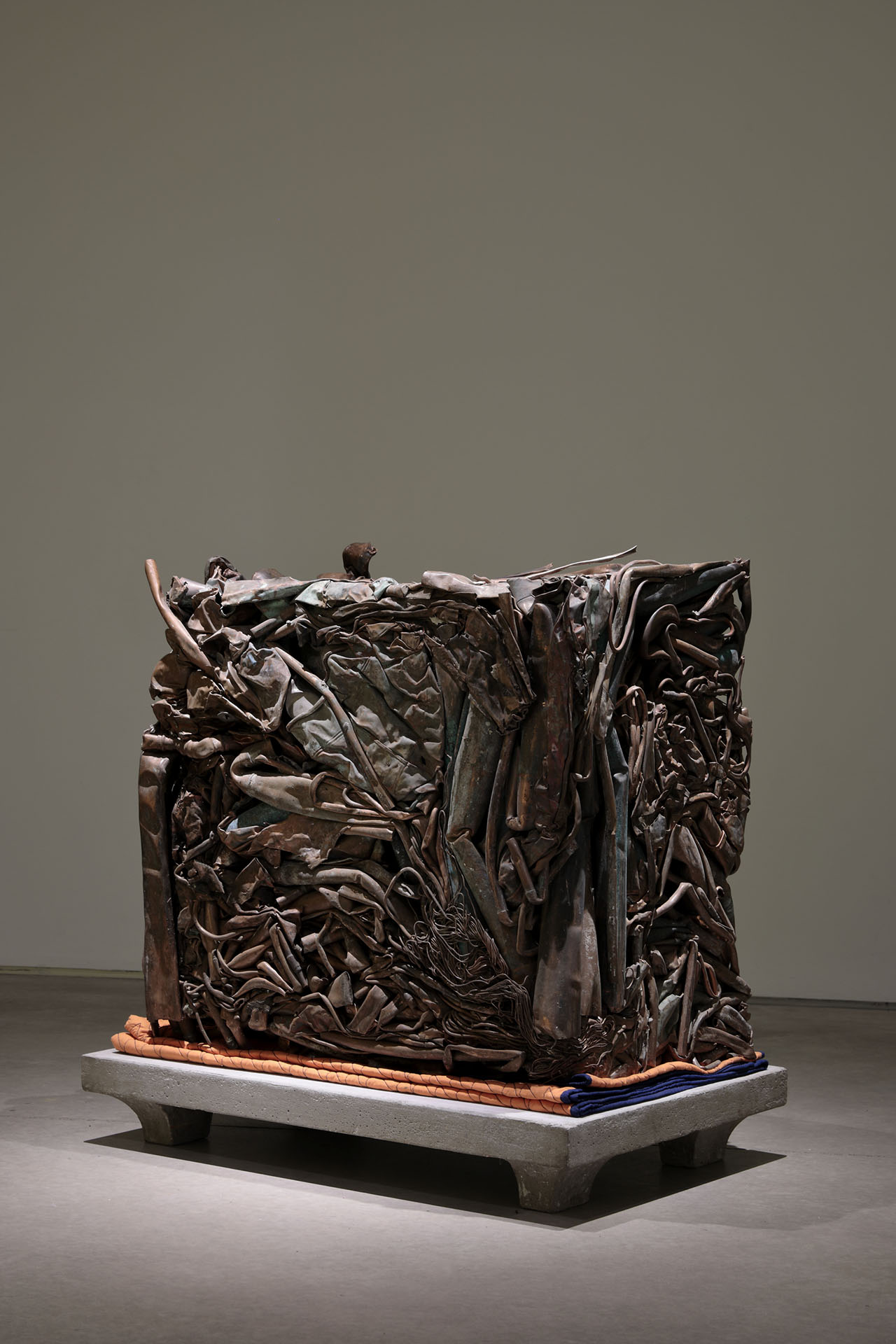
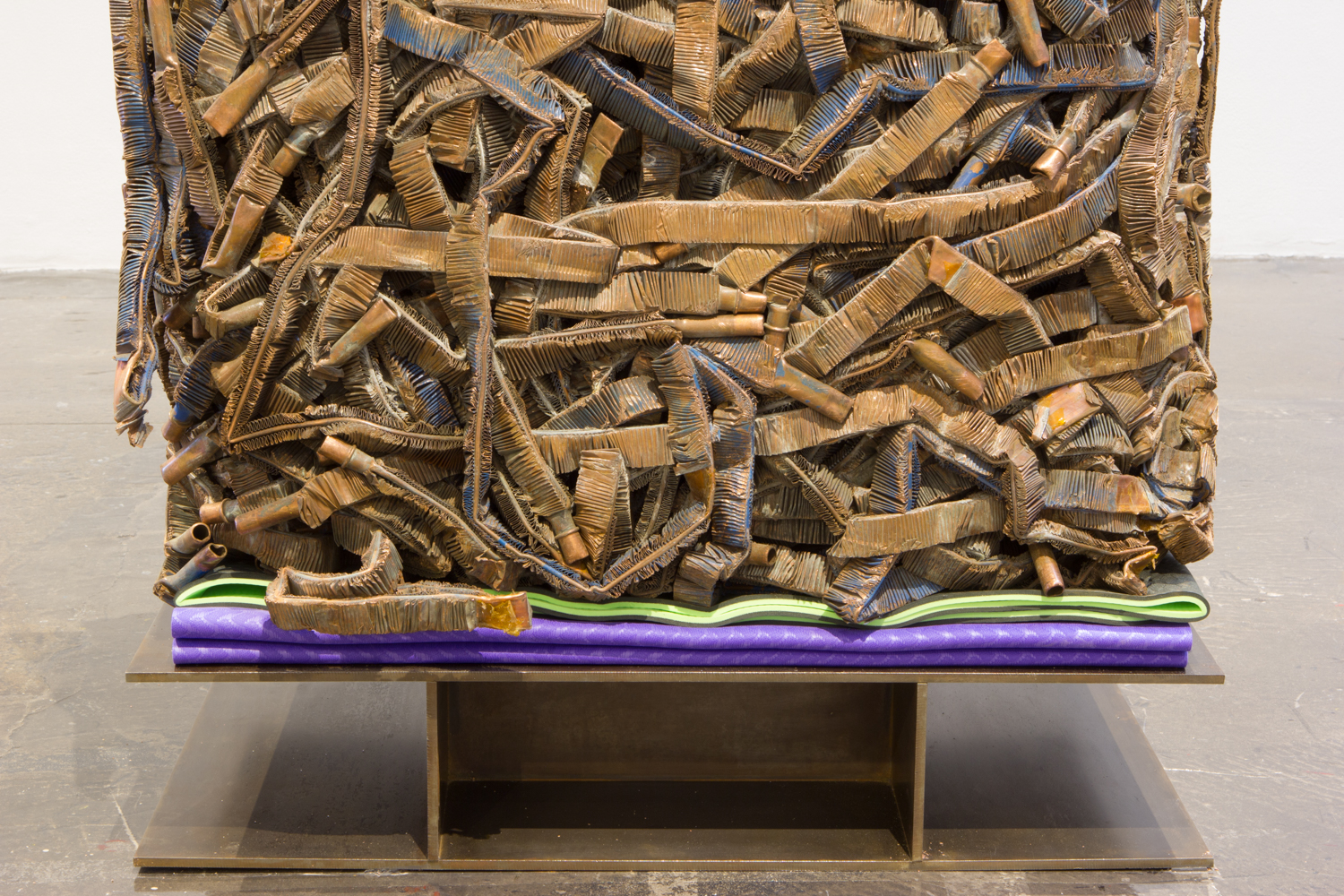
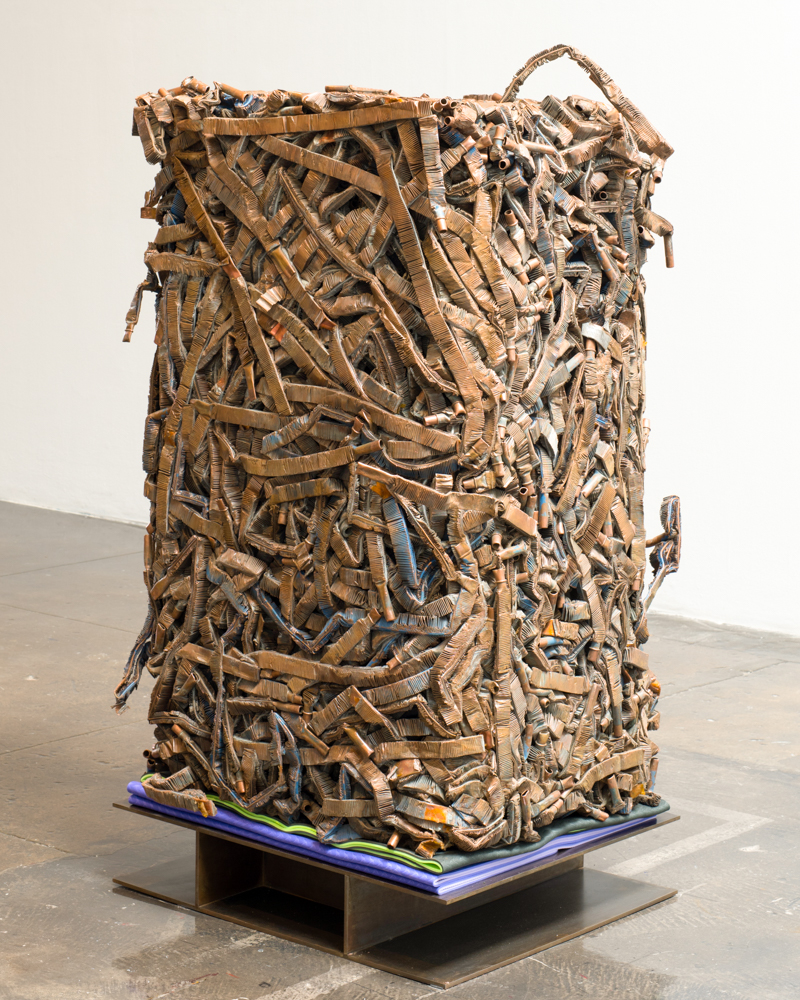
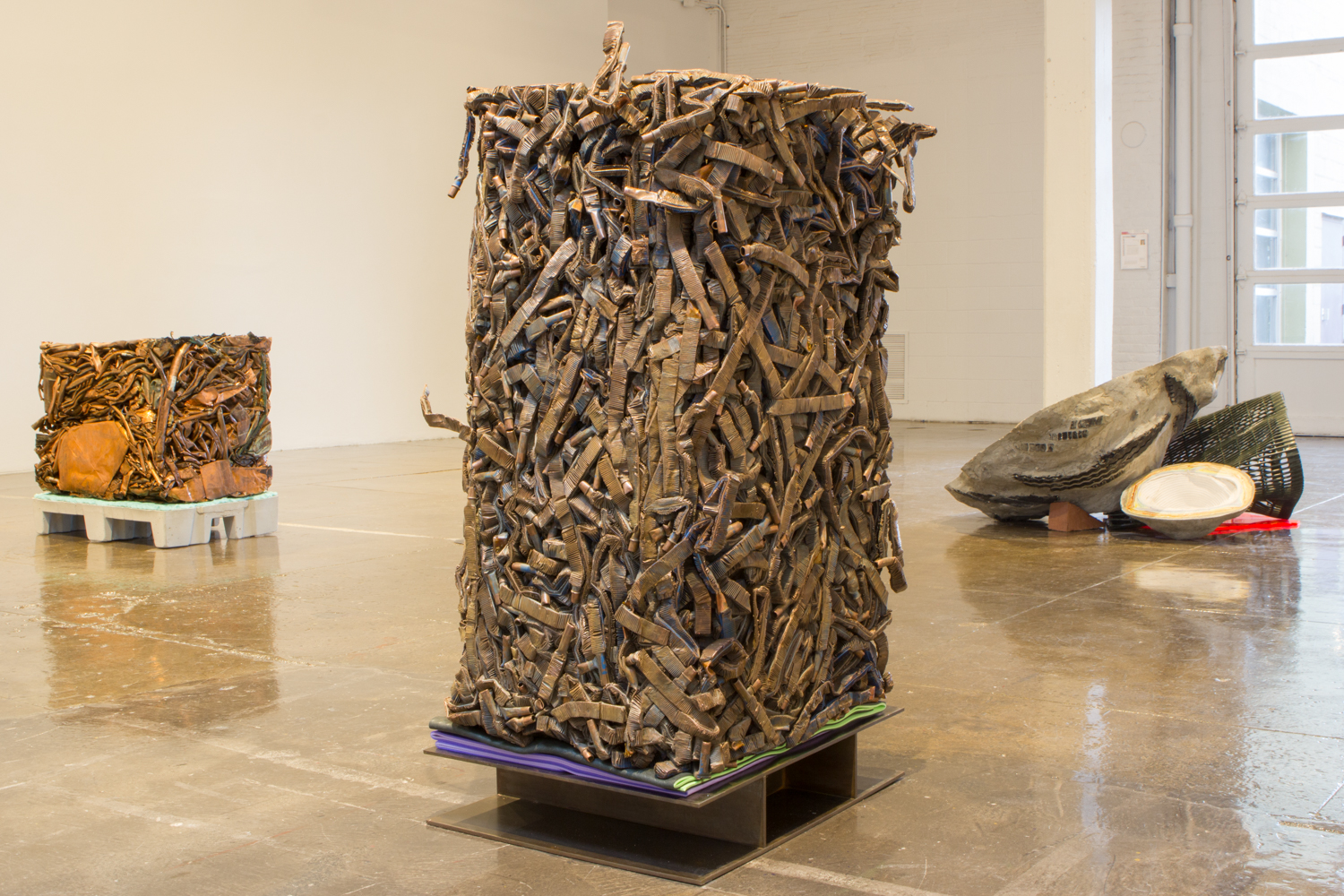
Old Copper Futures: 1200 lbs. of #2 scrap copper from Monterrey Iron & Metal, San Antonio, TX, 2016
copper, steel, yoga mats; 48 x 22 x 26 in.
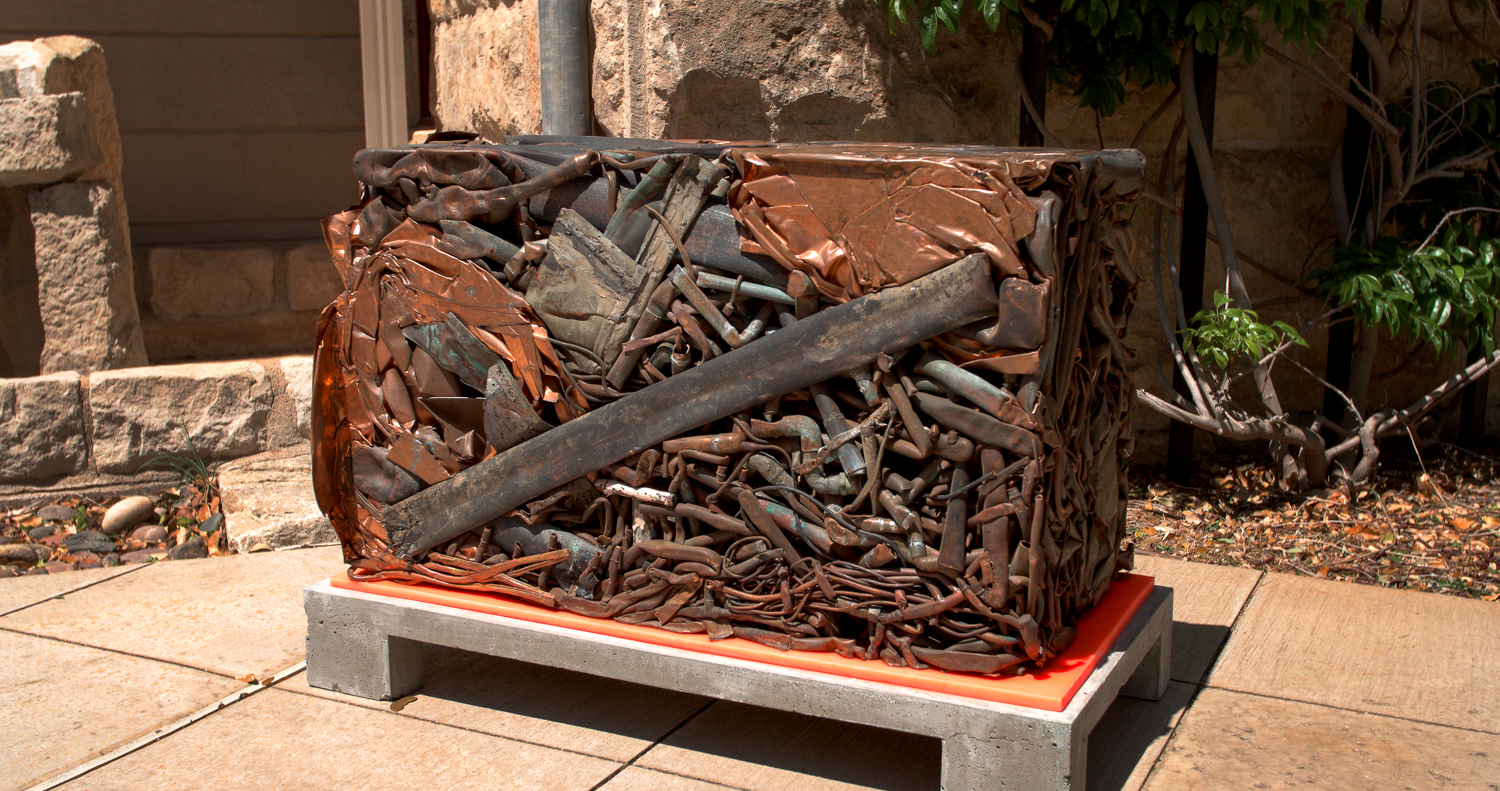
Old Copper Futures: 977 lbs. of #2 scrap copper from Sullivan’s Scrap Metal, Hatboro, PA, 2016
copper, concrete, silicone; 32 x 35 x 22 in.
Old Copper Futures: 951 lbs. of #2 scrap copper from Revolution Recovery, New Castle, DE, 2016
copper, concrete, blanket; 42 x 26 x 39 in.
Salv., 2016
Salv.
November 10 – December 31, 2016
Artpace (San Antonio, TX)
Related Materials:
Notes:
In Salv., Lily Cox-Richard explores stewardship asking, “How does value work?” which she unpacks via a winding account involving the National Park system, accidents, art historic bravado, asphalt, copper, and geologic specimens. This installation investigates how we cast value, account for labor, and become more responsible custodians.
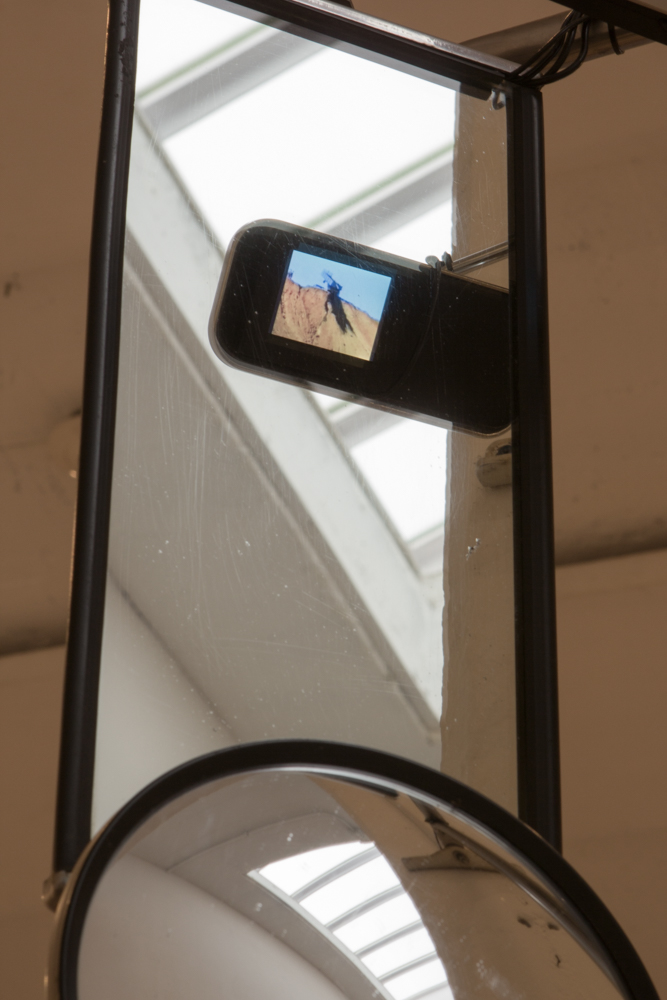
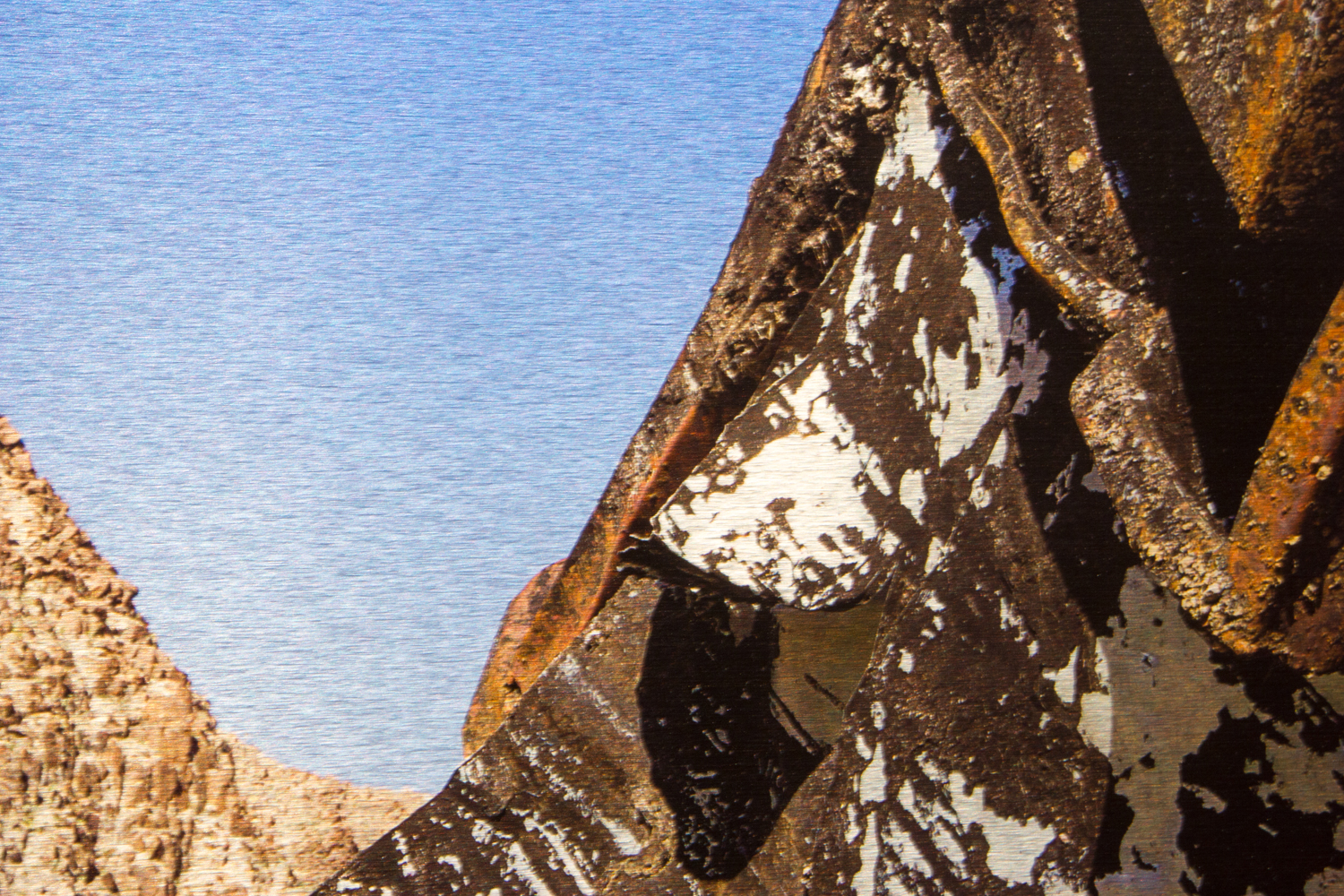
In 2013 the catalytic converter was cut out of Cox-Richard’s car to be salvaged for the small amount of platinum inside. The street value of platinum ranges from $20-$50, while the cost of replacing a converter is astronomically more. Then in the summer of 2016, she visited Big Bend Ranch State Park, Texas where she learned the story of Bobby Wayne Caughorn. On October 1, 1985, Caughorn suffered a broken axle which caused him to lose control of his asphalt truck. Asphalt spewed from the tank as the falling wreck caused rockslides resulting in the deaths of the driver and passenger, Michael S. Mayfield. In 1989, a jury found American Petrofina negligent in the death of Mayfield and awarded $879,700 to his mother. The trailer remains lodged in the rocky cliff of the park.
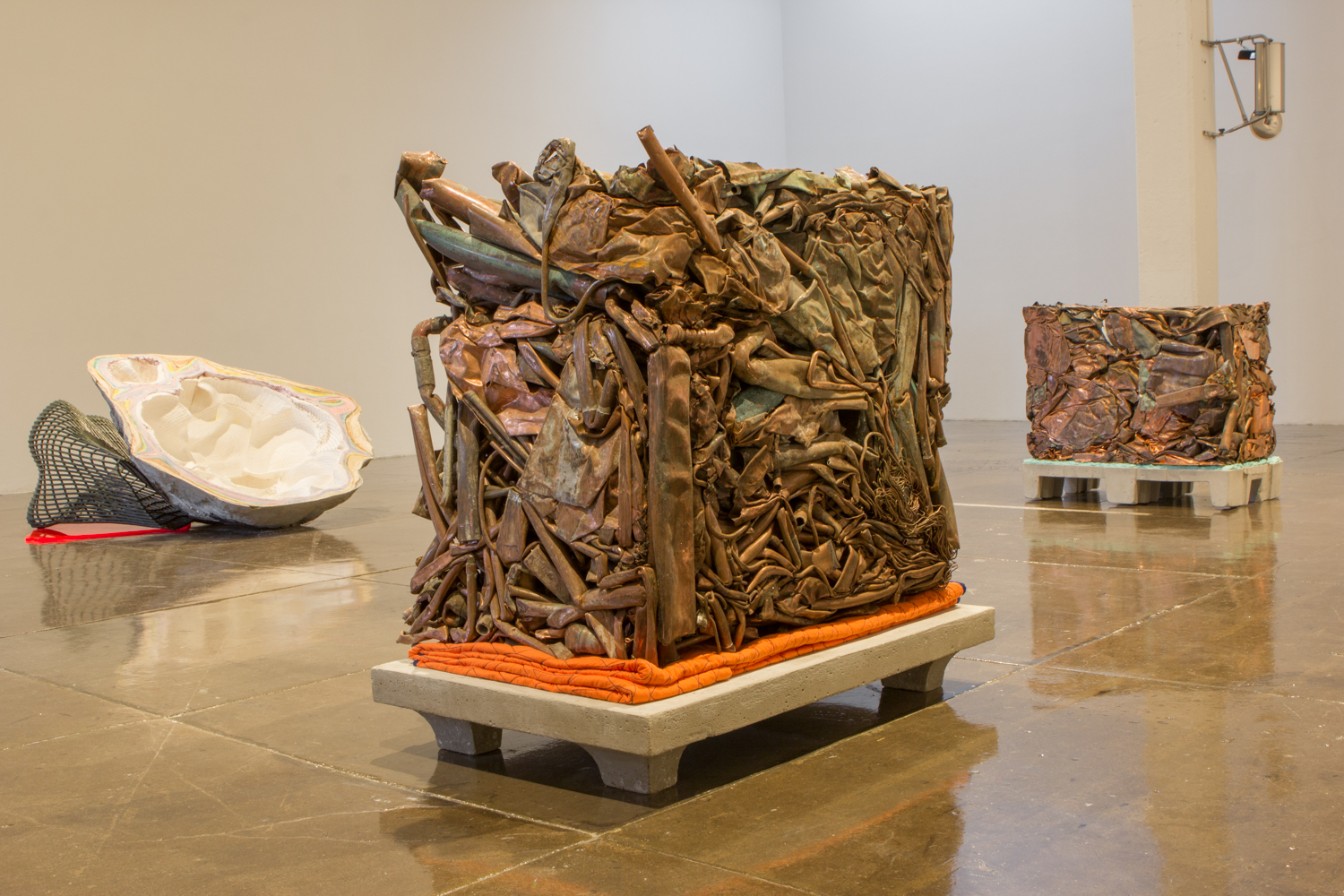
These stories are ultimately about reckoning with the value of things, which led Cox-Richard to another sought after commodity, #2 scrap copper. Cox-Richard has amassed over three tons of copper and worked with scrapyards in Pennsylvania, Delaware, and Texas to create three compacted bales. Each on their own designed platform (both form and function reference industrial pallets), they stand as compacted value and also nod to Cox-Richard’s sculptural forbearers. But just as much as she looks to art history, Cox-Richard questions the phallocentric art cannon, and artists like Robert Smithson (his Asphalt Rundown, of 1969 is a clever footnote to Cox-Richard’s work) or Carl Andre. Instead, Cox-Richard’s aims to create minimalist forms with stewardship and feminism embedded within.
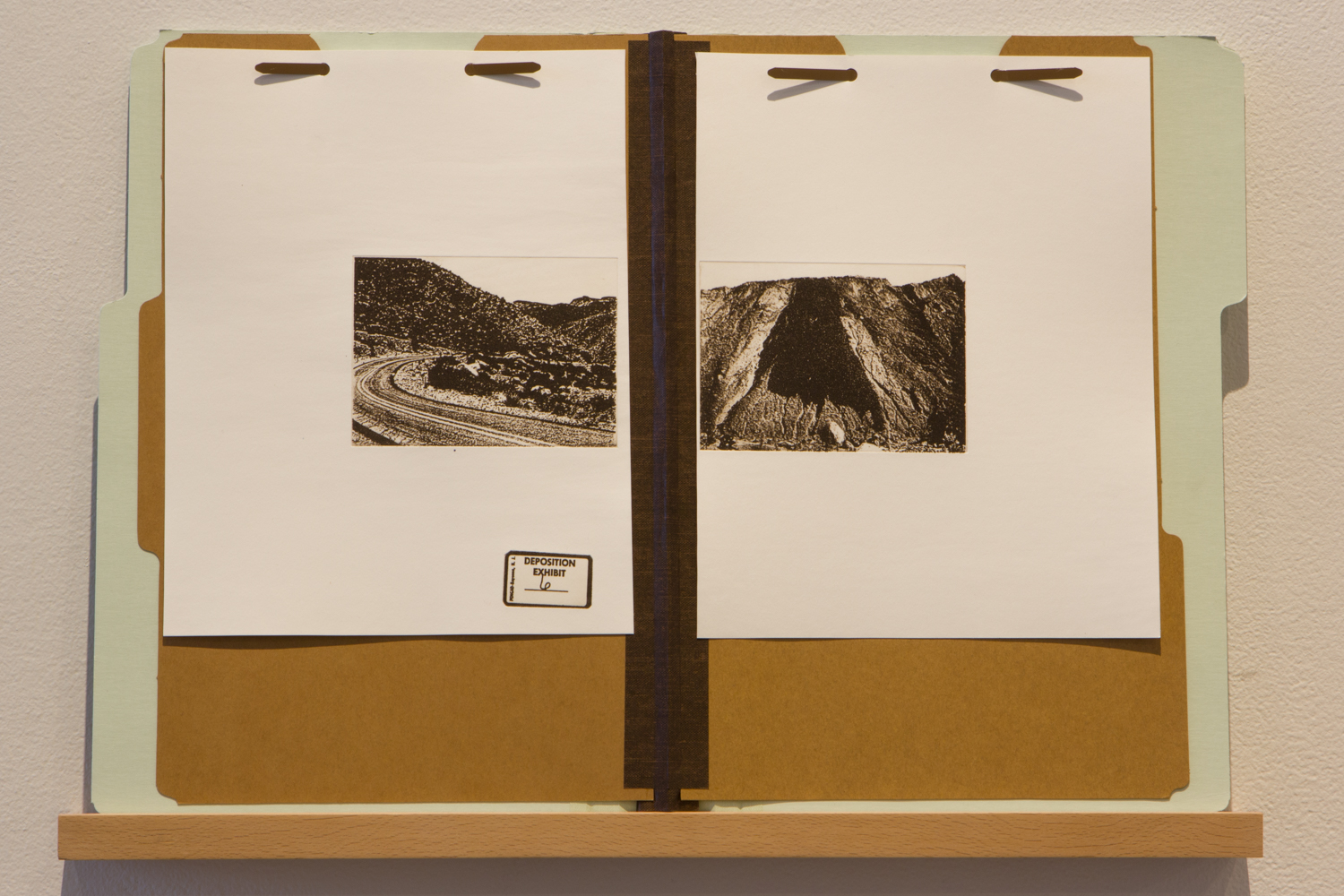
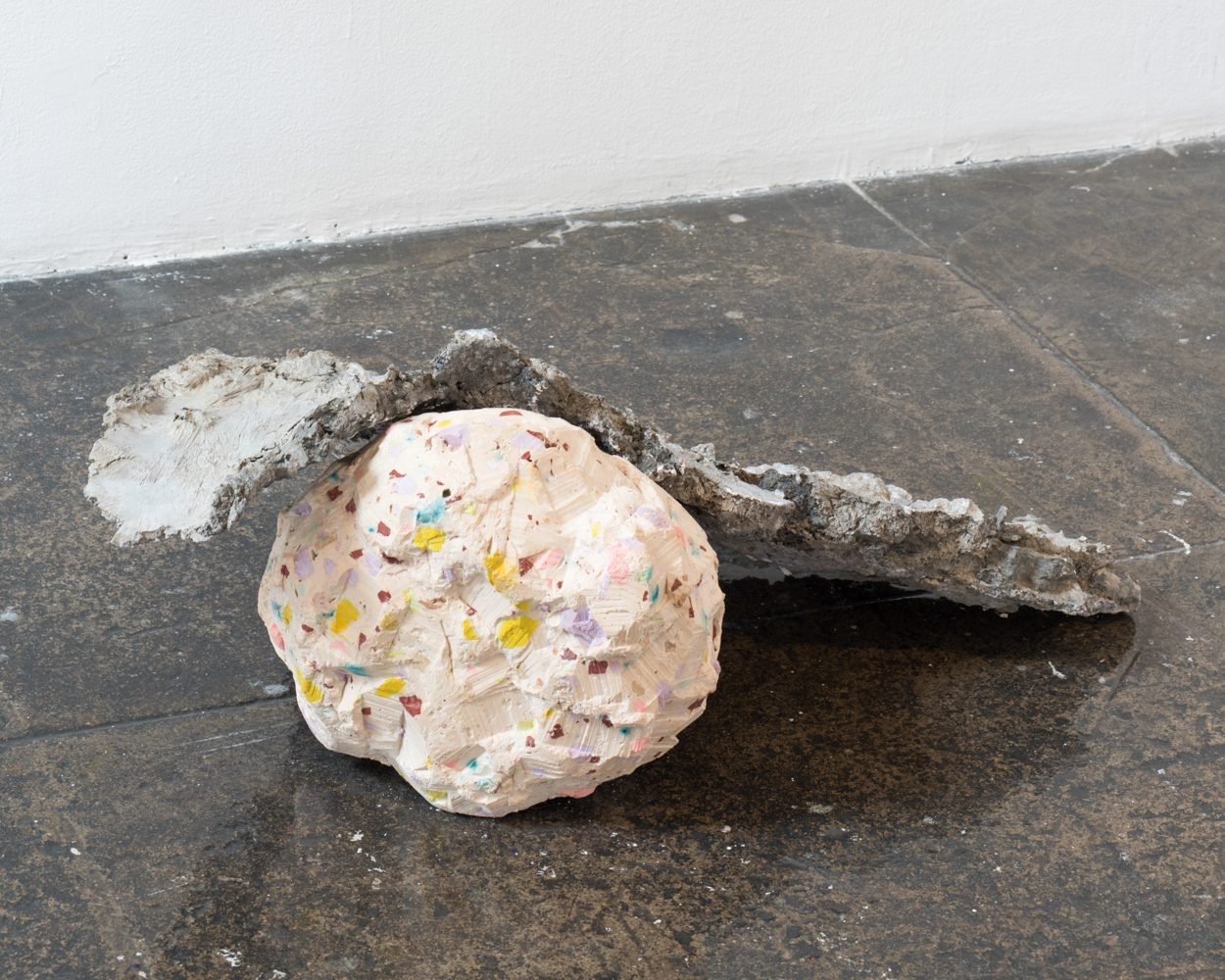
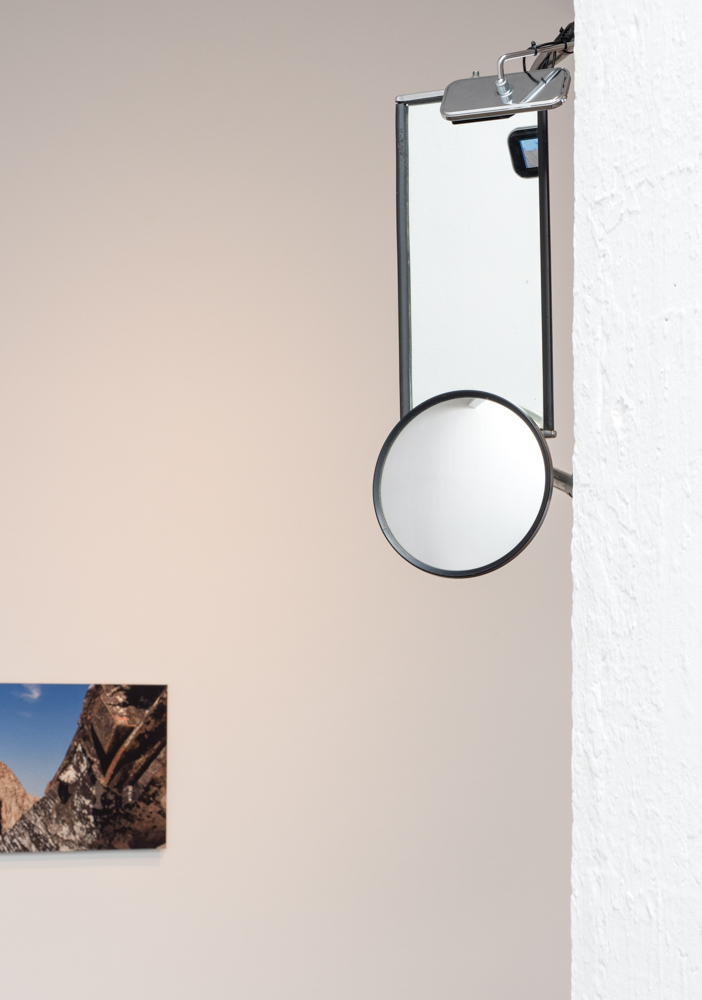
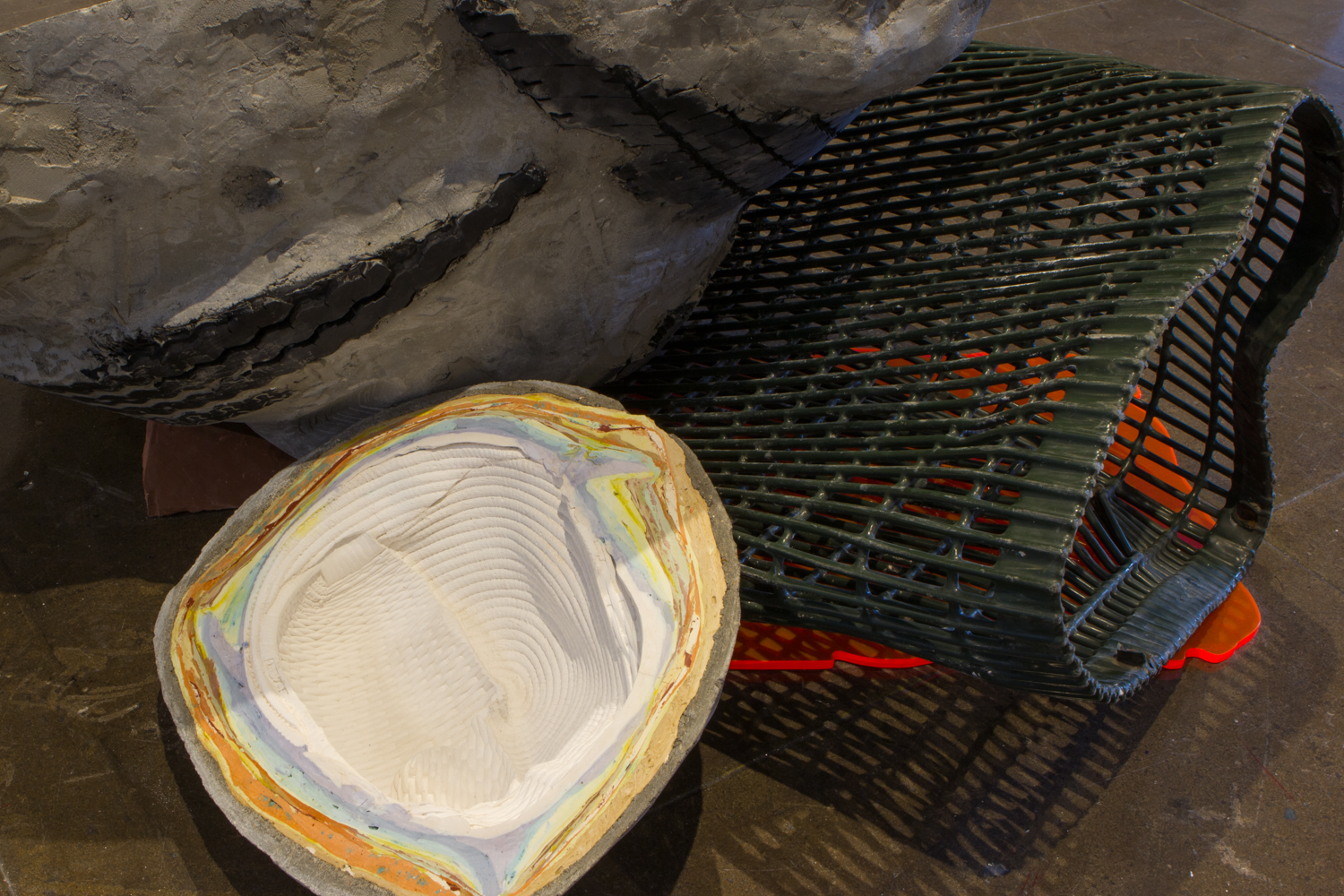
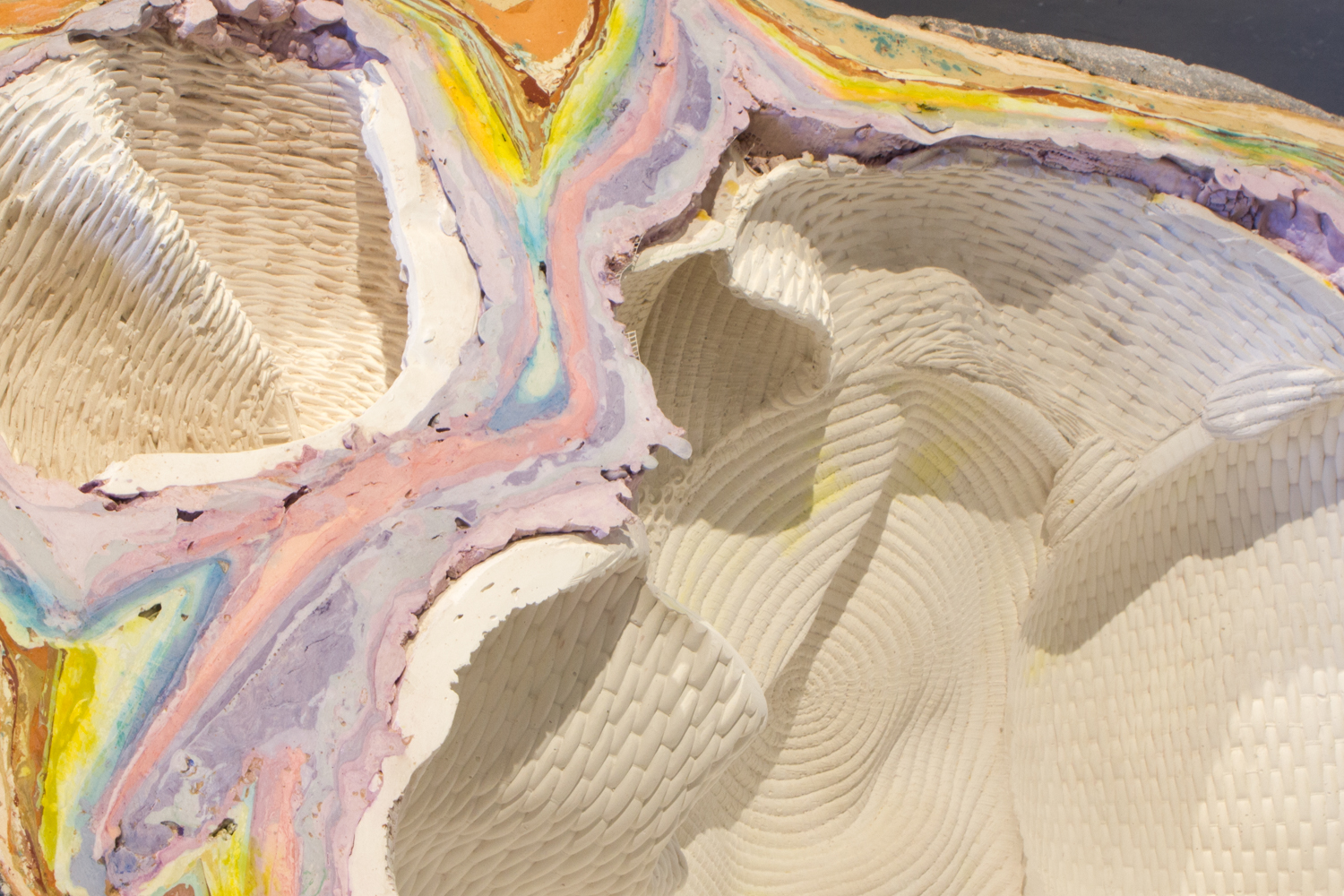
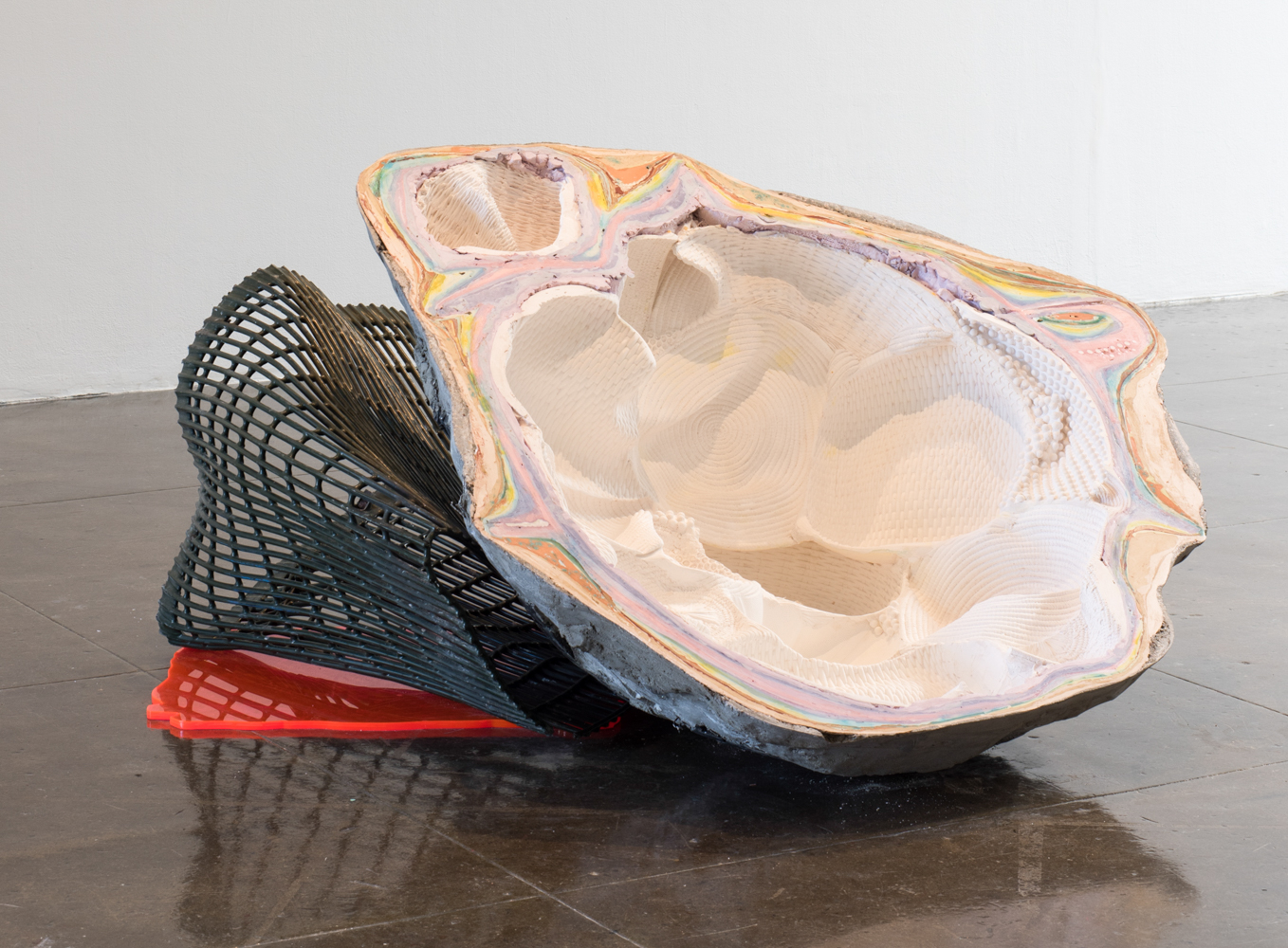
Supporting the bales are: a print made of asphalt that depicts the rundown in Smithson’s work next to the curved road where the Big Bend asphalt accident occurred; a print of the wrecked trailer on aluminum; and two sculptures: one referencing historic litter embedded in a rock and another made to resemble thunder eggs—geological features akin to geodes but formed in layers. In this last work, Cox-Richard breaks the form apart, revealing its intimate interior of cast plaster baskets. Here stewardship turns into the domestic, tenderly reminding us to take care of what we value.
——
I started thinking about scrap copper a few years ago, drawn to the ways this infinitely recyclable material wears the patina and form of its most recent incarnation. In preparation for my Artpace residency, I spent this past summer as artist-in-residence at RAIR/Revolution Recovery, a three-acre site in Philadelphia where 400 tons of material are processed and mostly diverted from landfills on a daily basis. I paid attention to trash as it moved through this system, and watched as materials were sorted, shredded, and hydraulically compacted to fit into smaller footprints.
This year, I made several visits to West Texas, where space isn’t at such a premium. I’ve been wondering about how the contours of landscape—its density or use—affects our relationship to natural resources, labor, and time. The possibility for certain goods to be indexed to a commodities market makes determining the value of things like life, labor, and love feel all the more impossible. In addition to the physical space and support (a ground floor studio with a roll-up door, gantry crane, and Riley Robinson were all key in making this work), I am grateful for the time alongside residents Kim Faler and Kim Morgan, and our conversations with curator Denise Markonish. During this fall’s hot mix of queasy politics, I felt solidarity in crafting meaning with remnants—dirt, rubble, bodily fluids—and claiming space for the details and scraps.
-LCR, Nov 1, 2016
List of Works:
Old Copper Futures: 1200 lbs. of #2 scrap copper from Monterrey Iron & Metal, San Antonio, TX, 2016
copper, steel, yoga mats; 48 x 22 x 26 in.
Old Copper Futures: 977 lbs. of #2 scrap copper from Sullivan’s Scrap Metal, Hatboro, PA, 2016
copper, concrete, silicone; 32 x 35 x 22 in.
Old Copper Futures: 951 lbs. of #2 scrap copper from Revolution Recovery, New Castle, DE, 2016
copper, concrete, blanket; 42 x 26 x 39 in.
Thunder Egg, 2016
gypsum cement, concrete, trashcan, acrylic; 30 x 60 x 56 in.
Hot Mix, 2016
gypsum cement, aluminum slag; 12 x 30 x 20 in.
Asphalt Manifest: Evidence, 2016
photopolymer gravure asphaltum on rag paper, classification folder; 15 x 20.5 in. edition of 7
Asphalt Manifest: Landscape, 2016
photograph on aluminum; 19 x 30 in.
He’s not heavy, he’s my sister, 2016
video and driver’s side truck mirror; 24 x 18 x 10 in.
Press:
Credits:
Photography by Adam Schreiber and Sharad Patel
Forms:
Stringer Lode, 2016
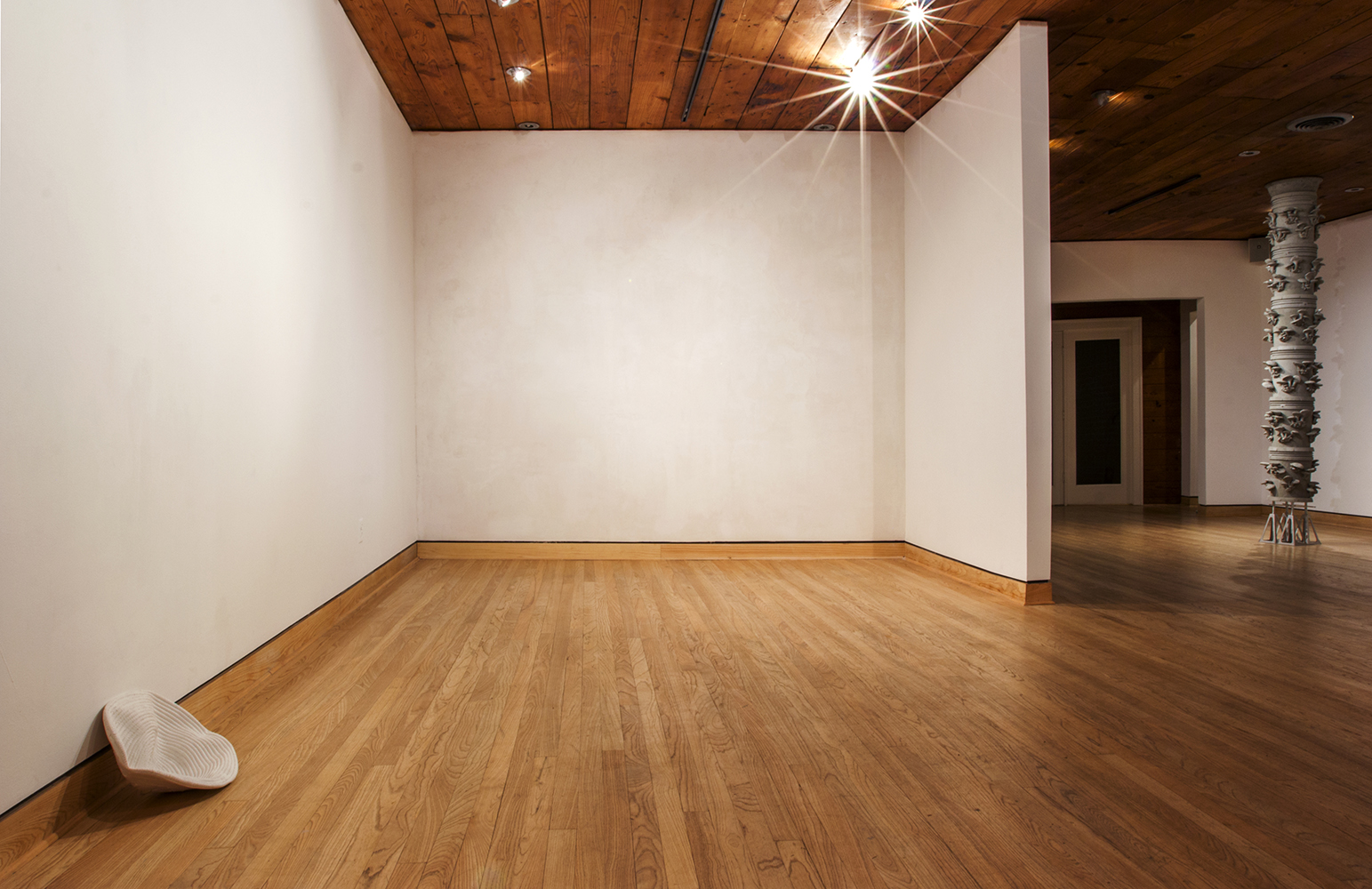
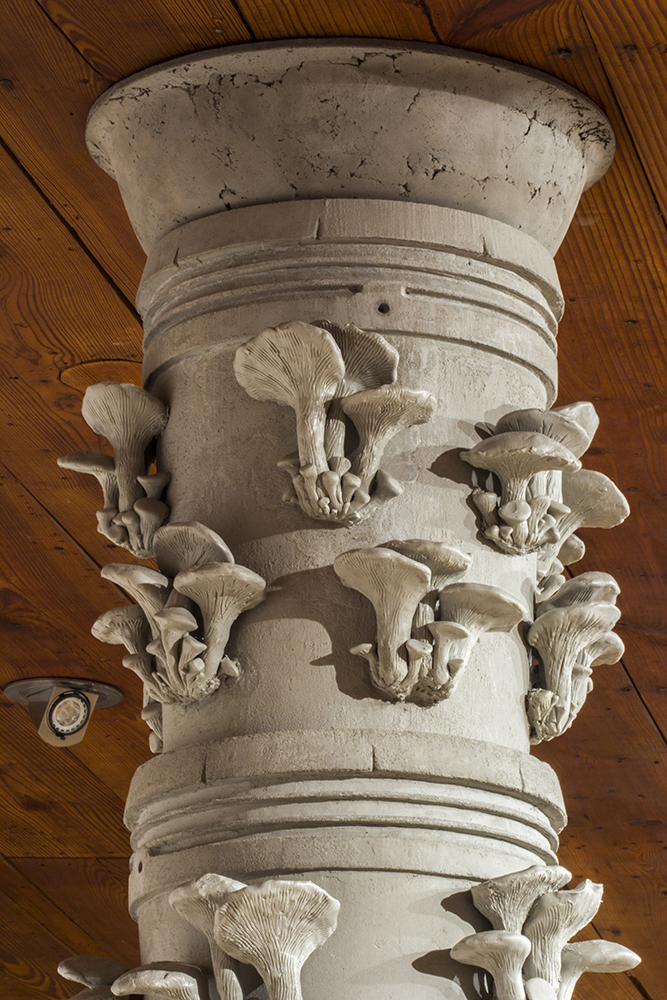
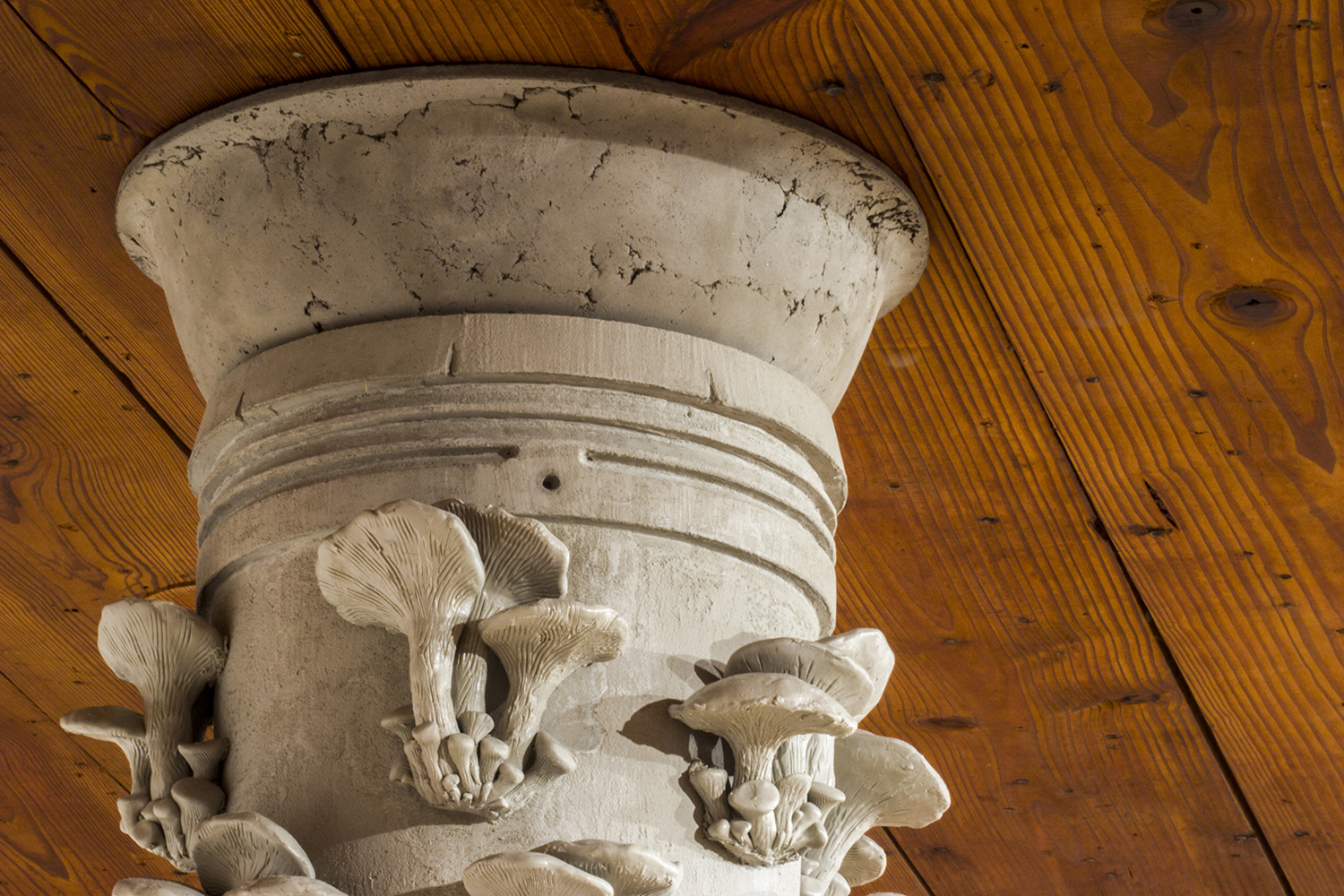
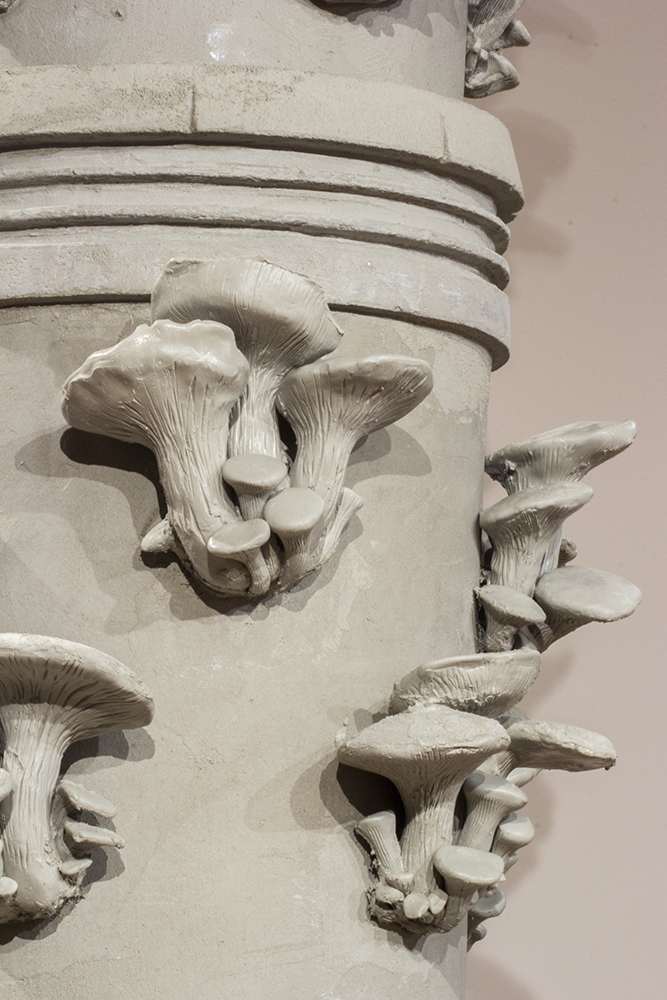
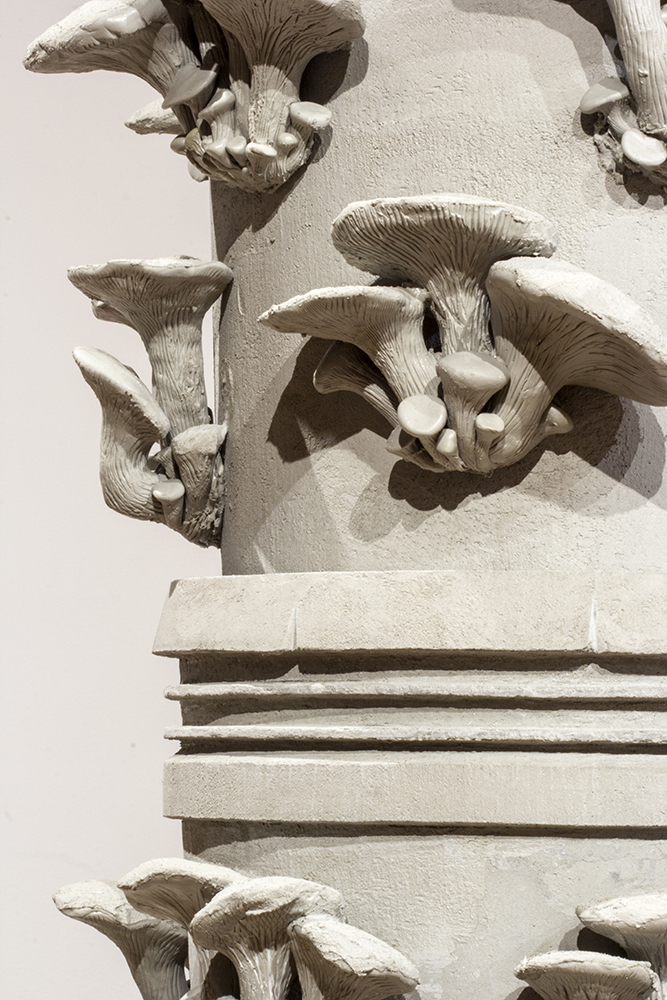
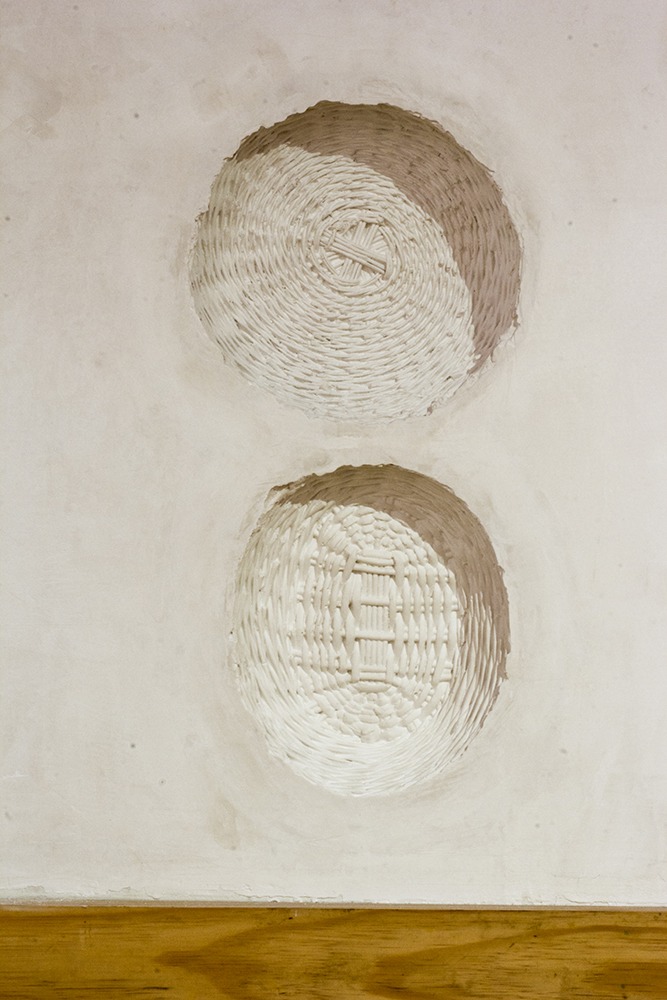
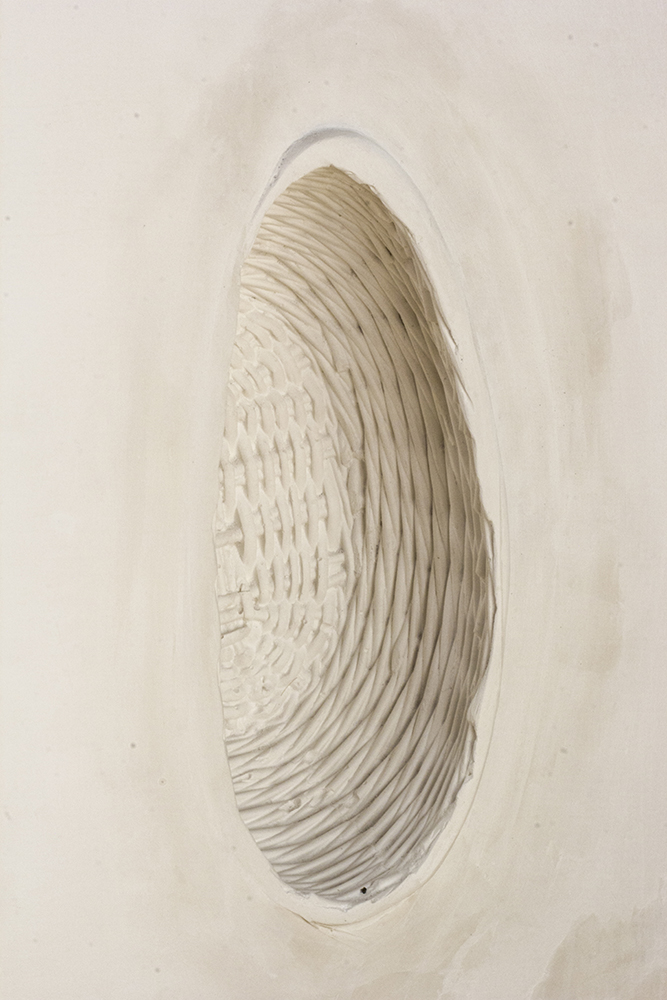
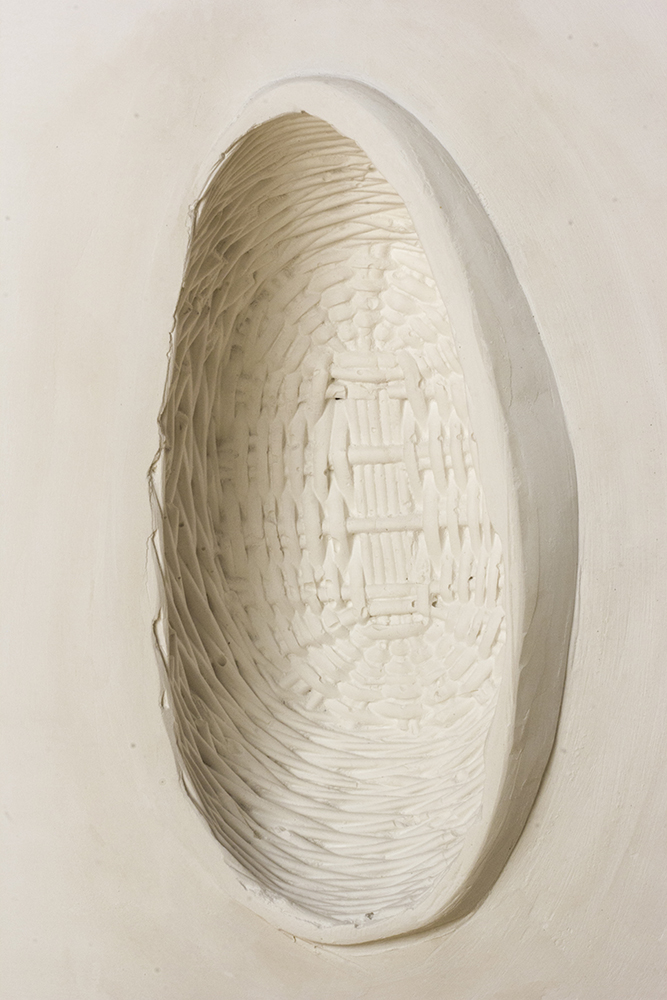
Stringer Lode
February 19 – April 9, 2016
She Works Flexible (Houston, Texas)
Related Materials:
Essay: “On Whose Back” by Wendy Vogel
Notes:
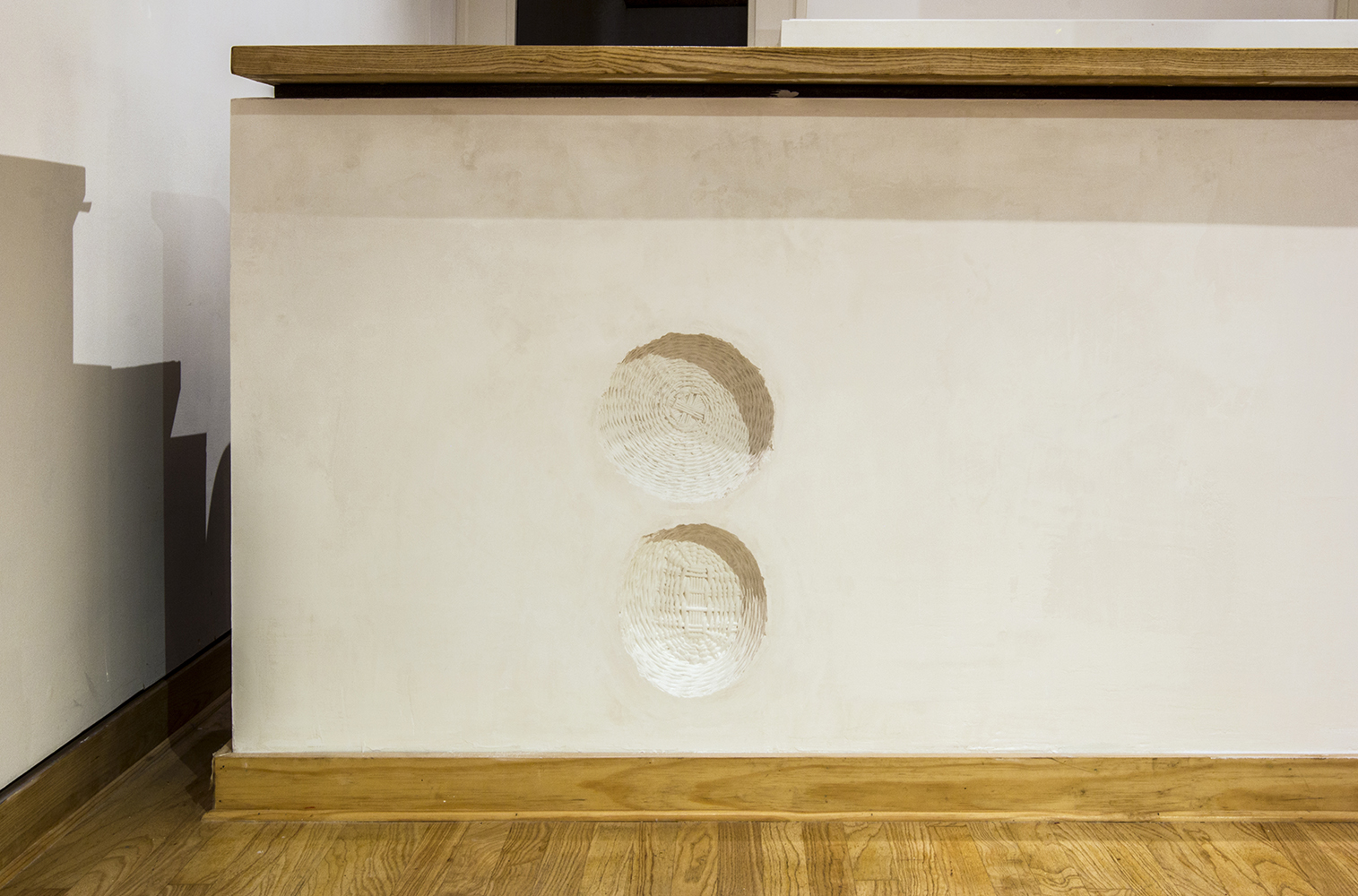
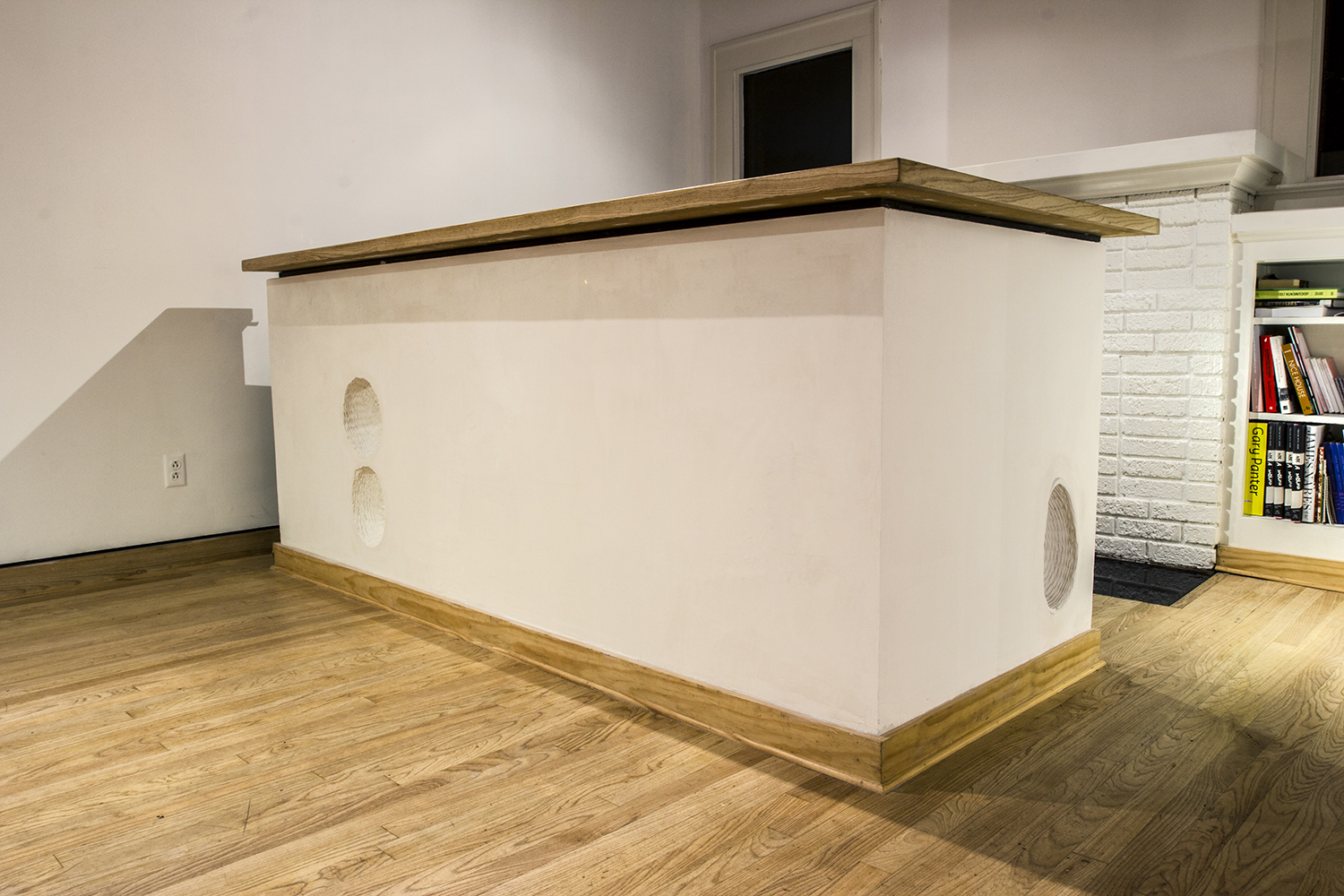
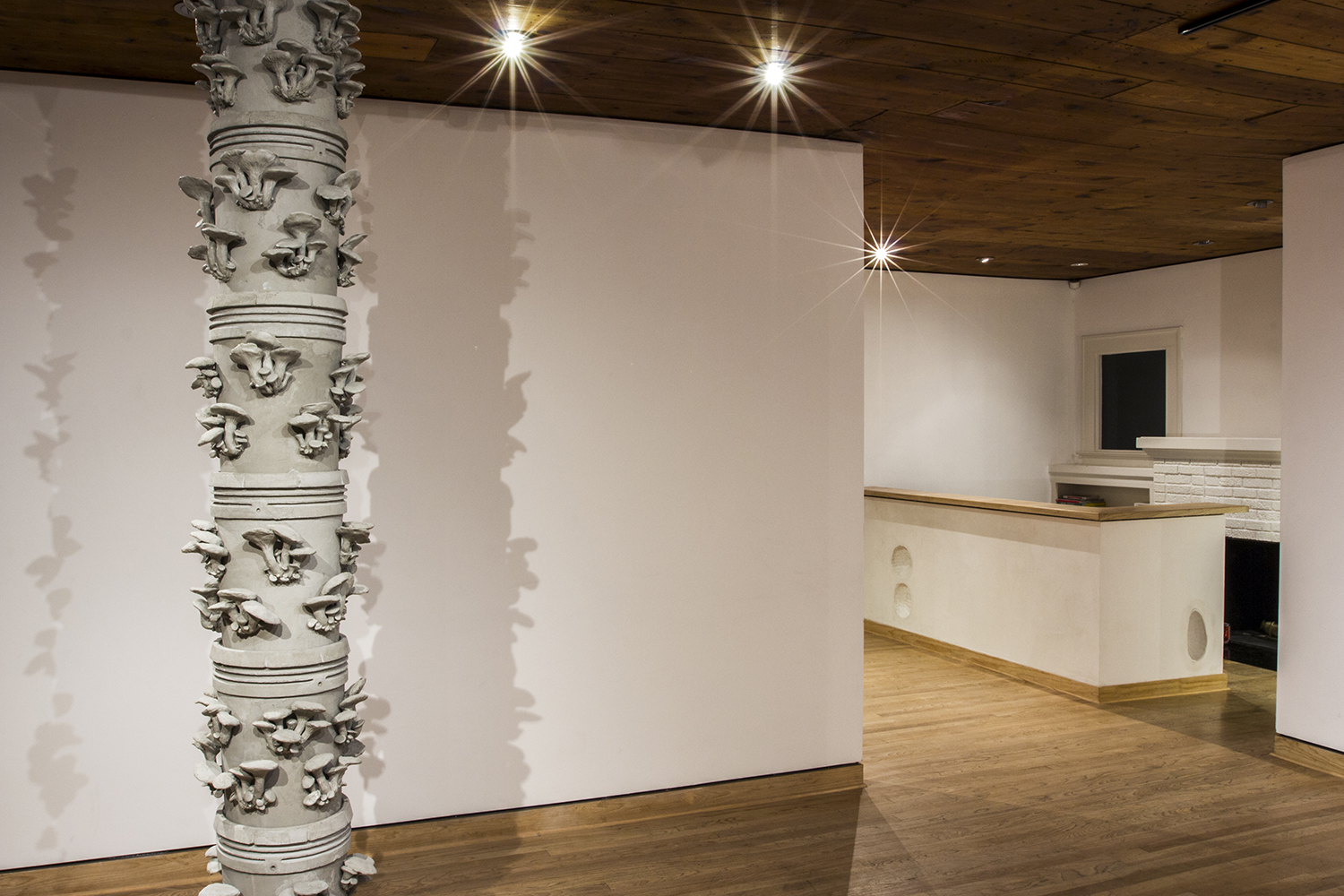
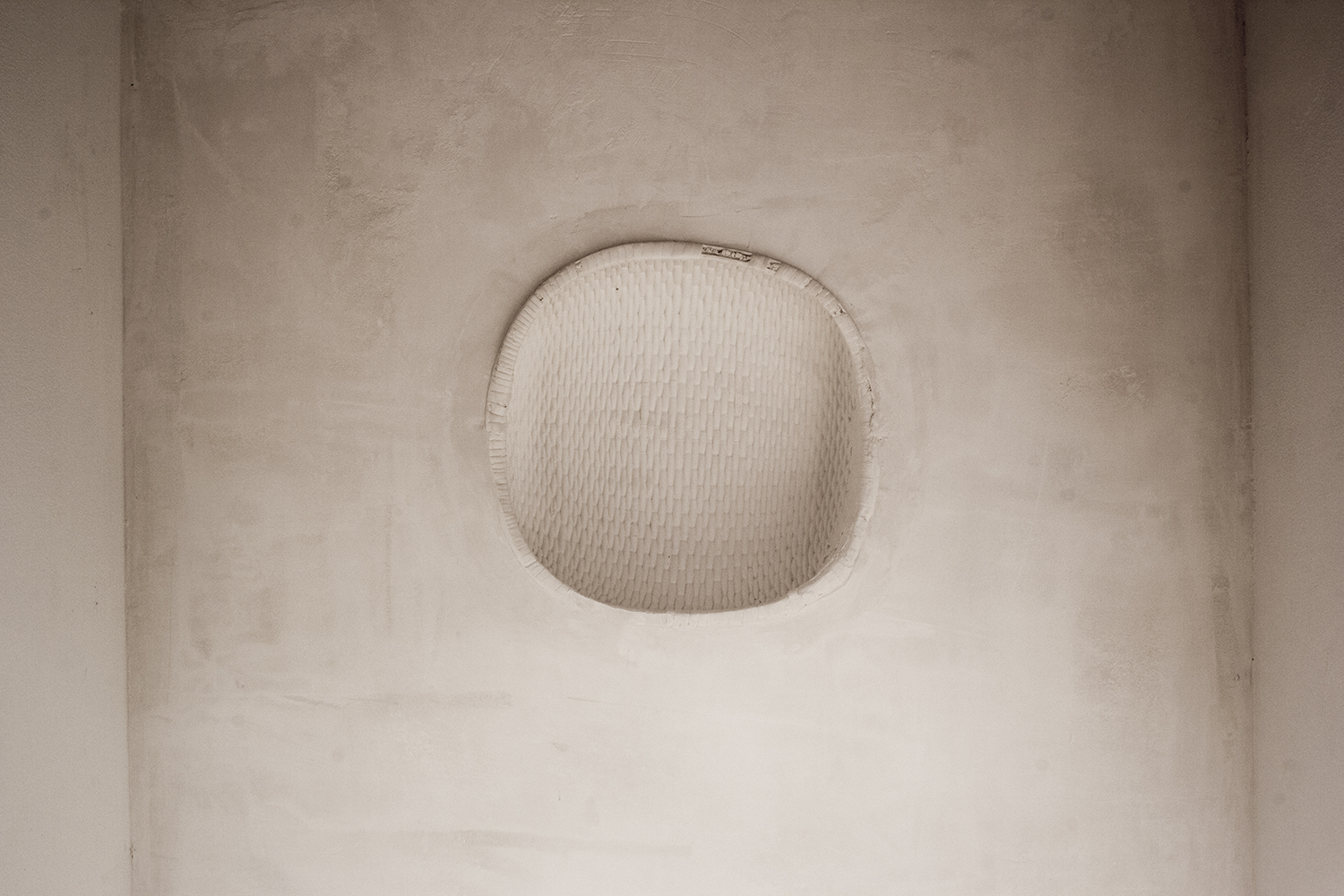
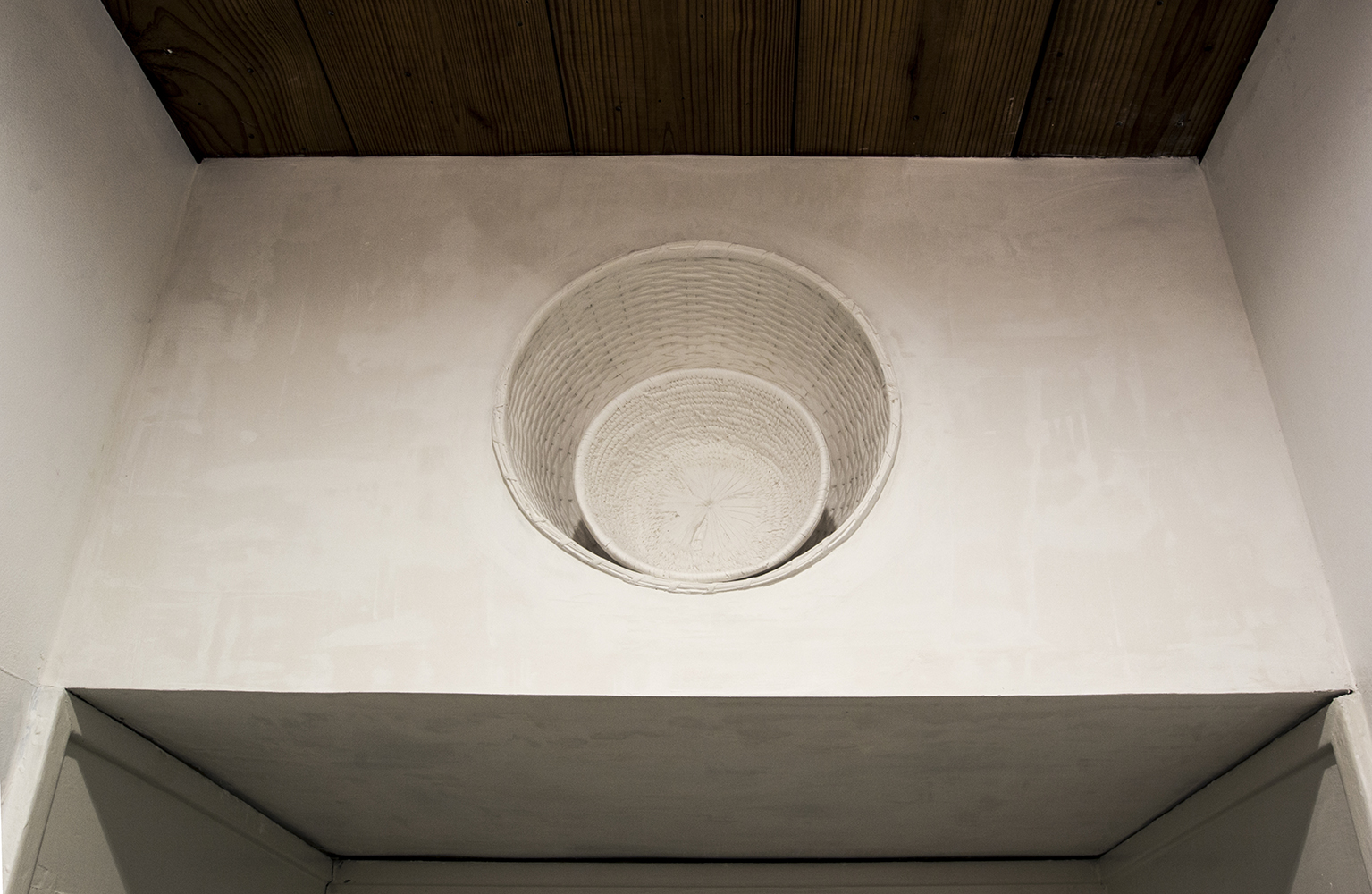
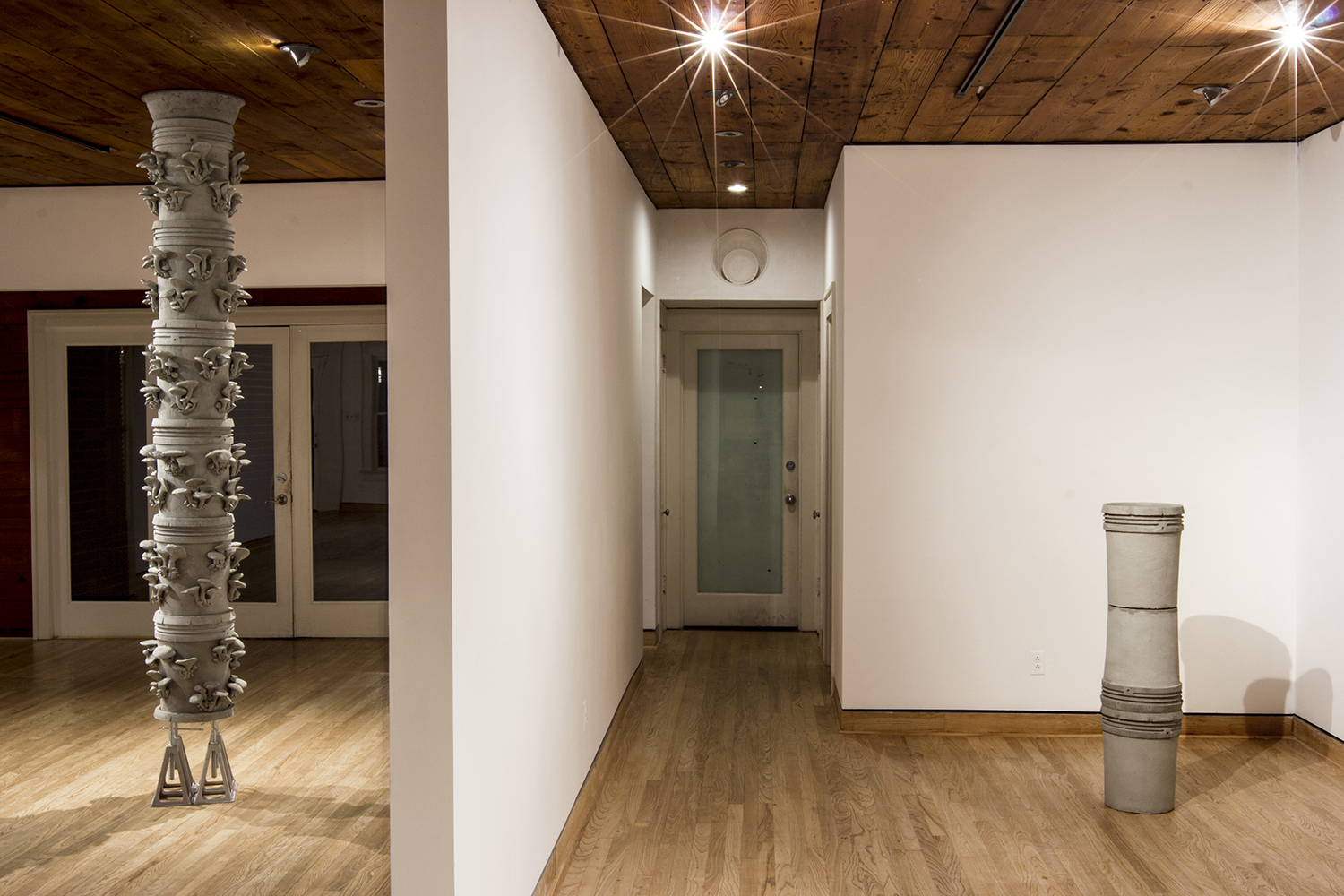
My current projects focus on systems and networks that are ubiquitous yet often unnoticed: the electrical wiring and plumbing in the walls, the sprawling mycelium underfoot, and the goods created by cottage industries. I transform the guts of these systems, asserting their strength in formal terms by crafting buckets into columns, pallets into plinths, and baskets into niches. I am investigating histories of home-labor systems and newer iterations found in hacker-spaces, Etsy sites, artisanal food production, and urban mining, to explore relationships between ideas of American innovation and issues of precarity, gender, and class. In this work, I question the contours of value in the un/seen forms that surround us, to engage issues of the similarly un/seen labor of their construction.
From the Press Release:
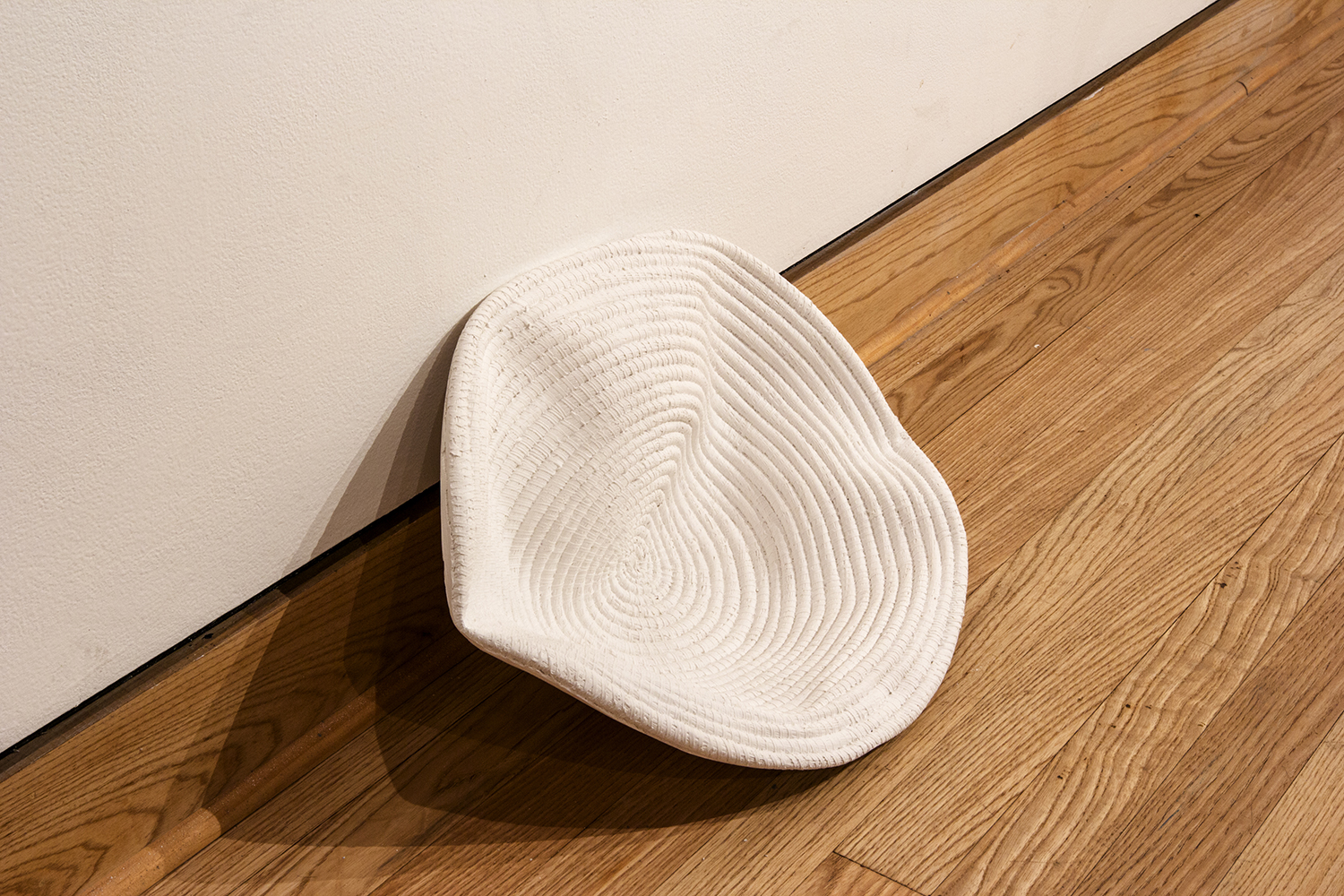
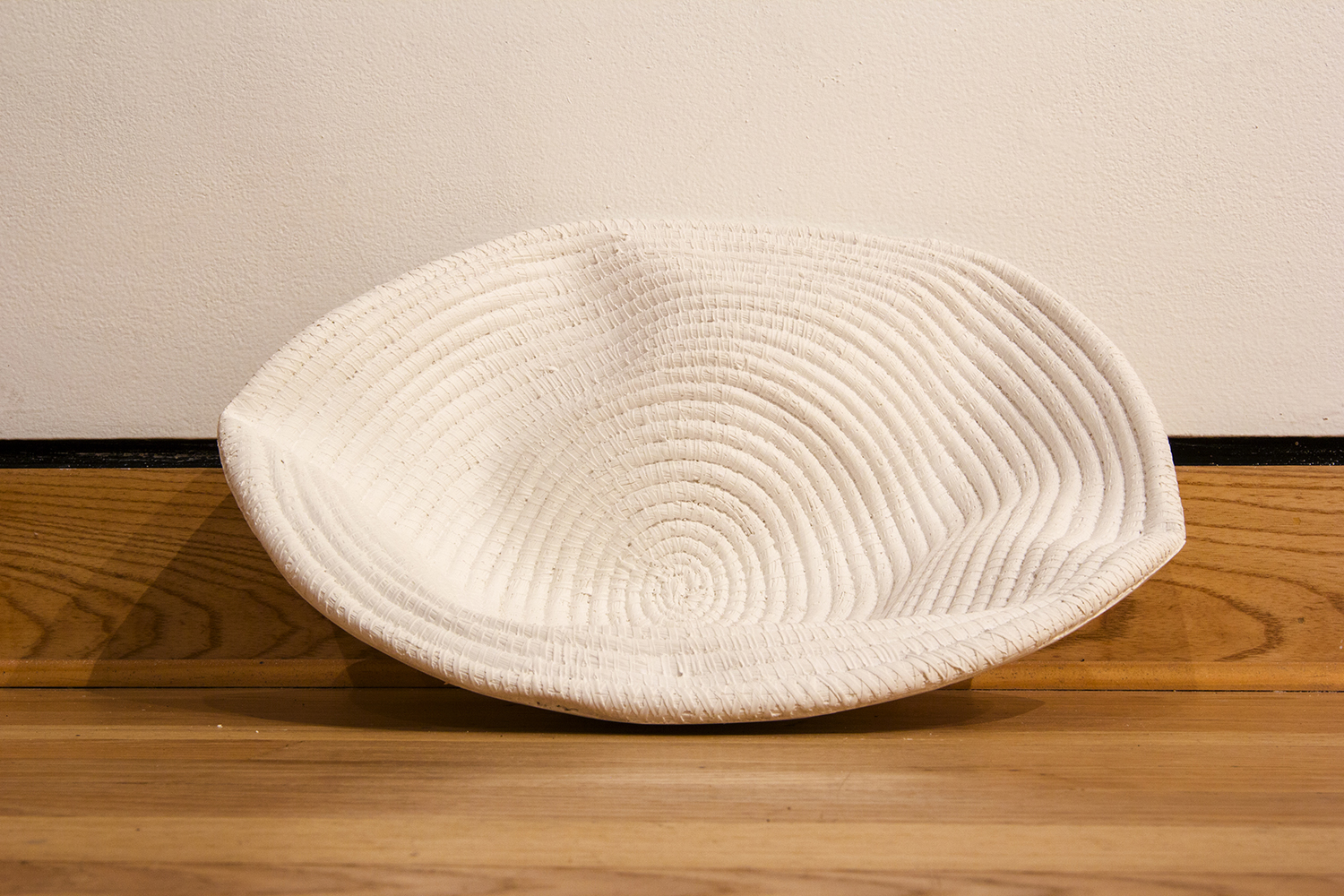
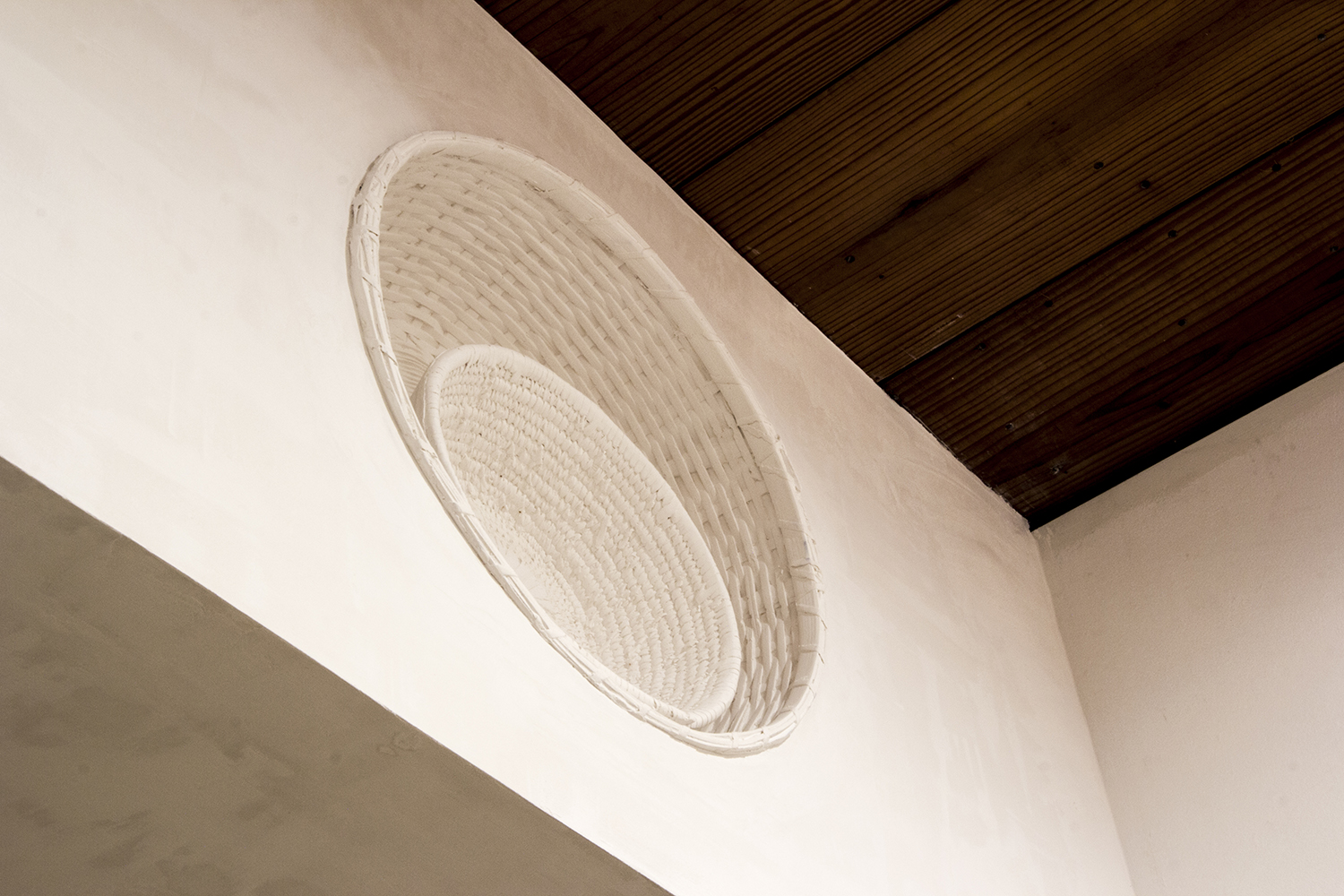
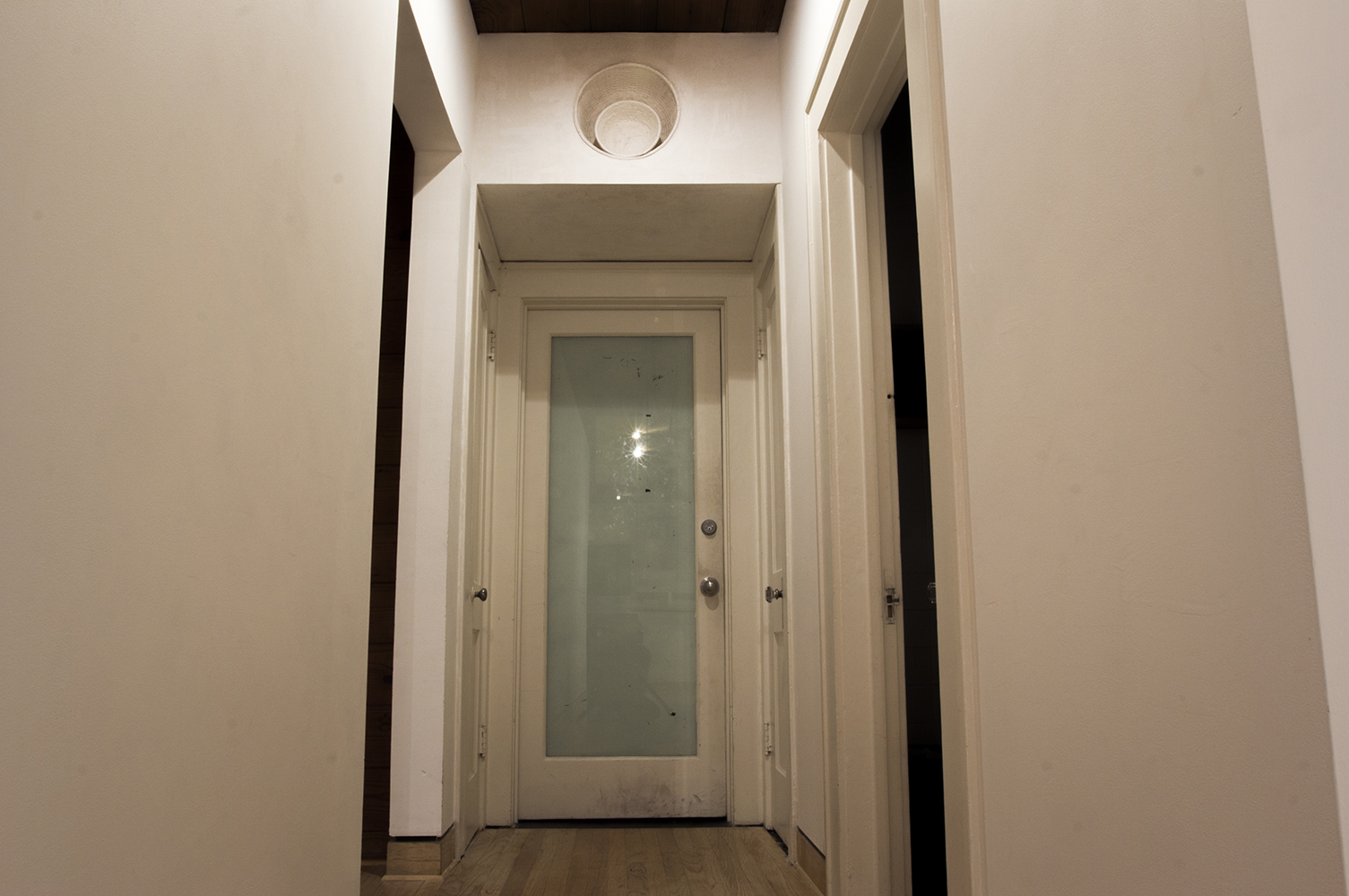
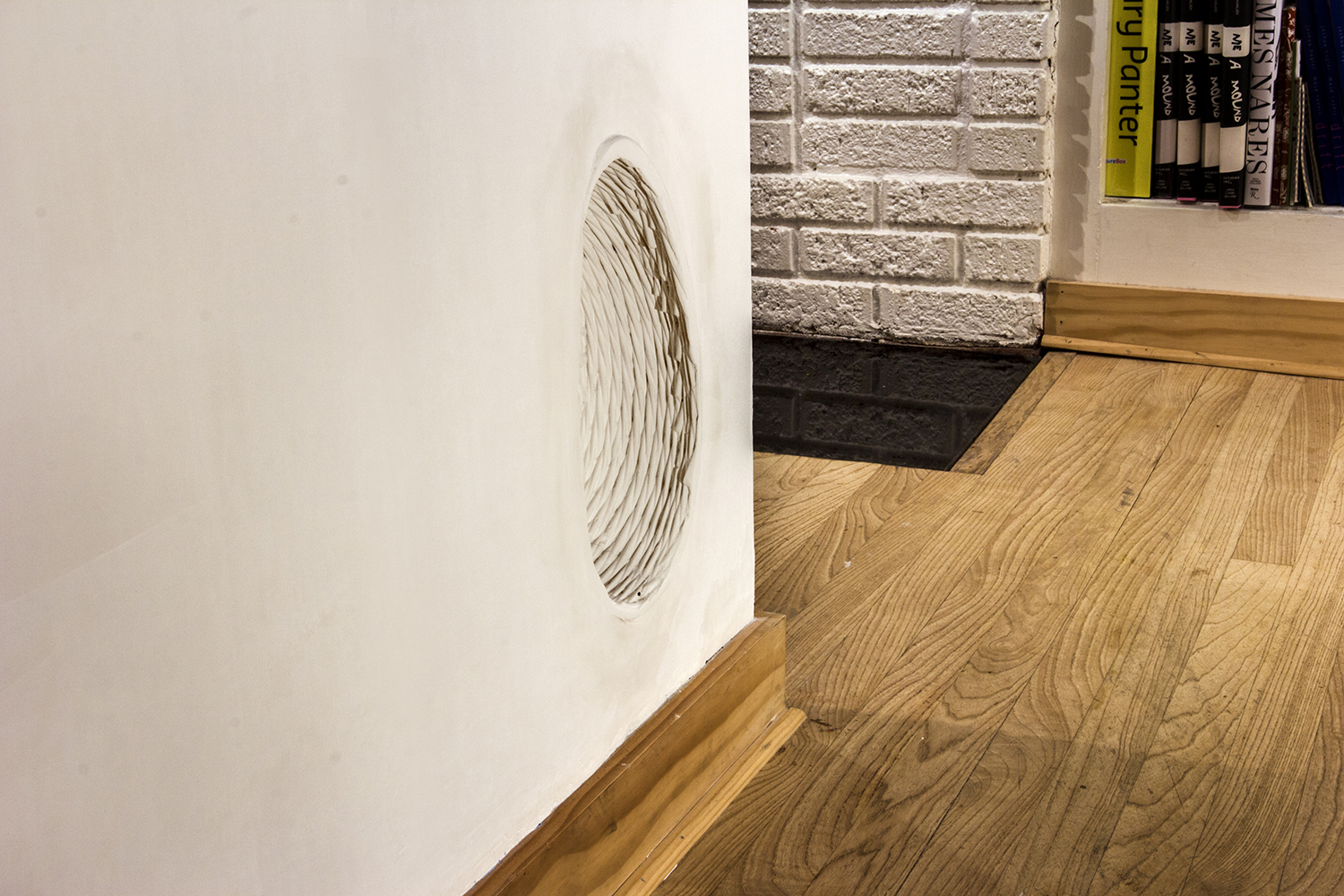
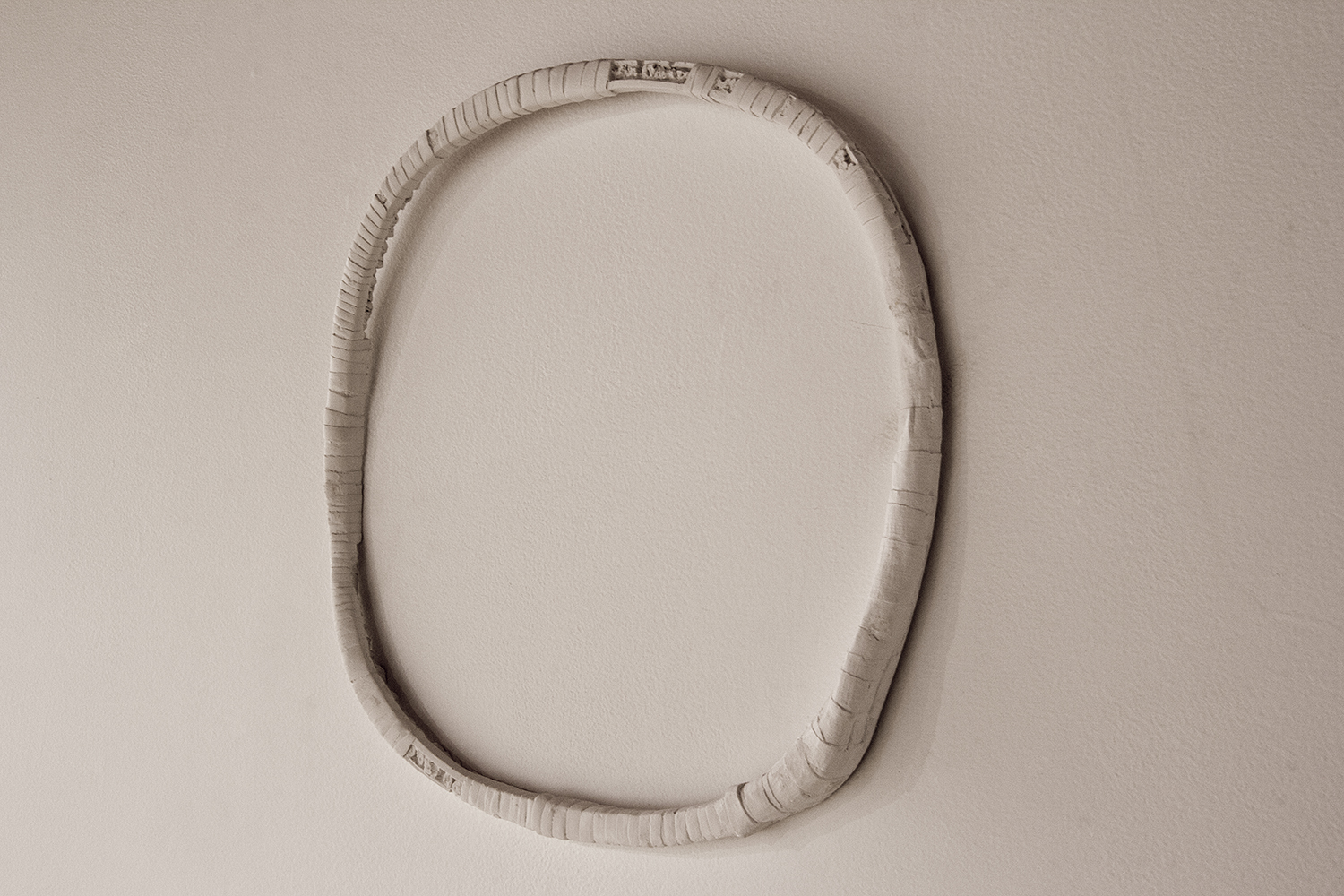
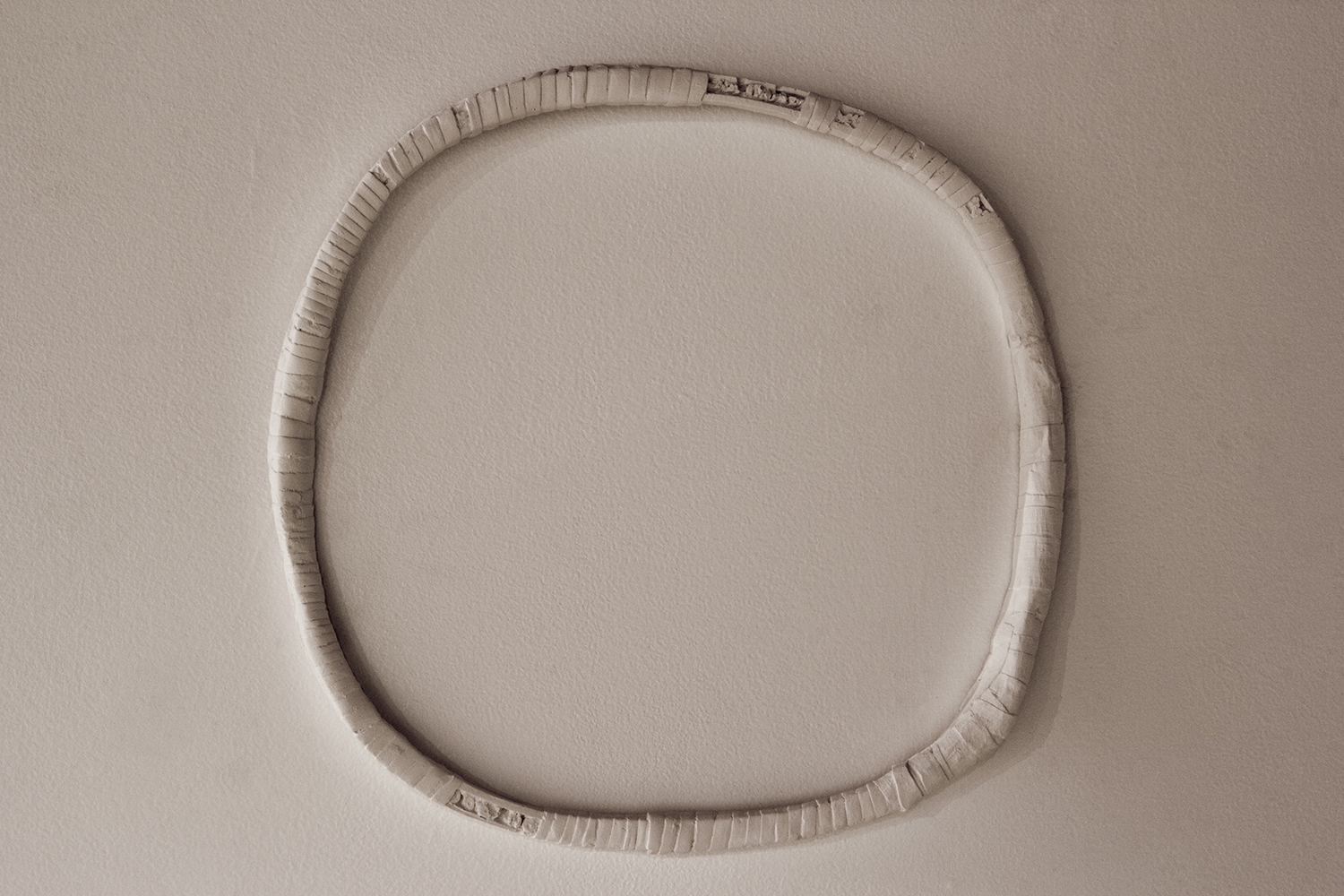
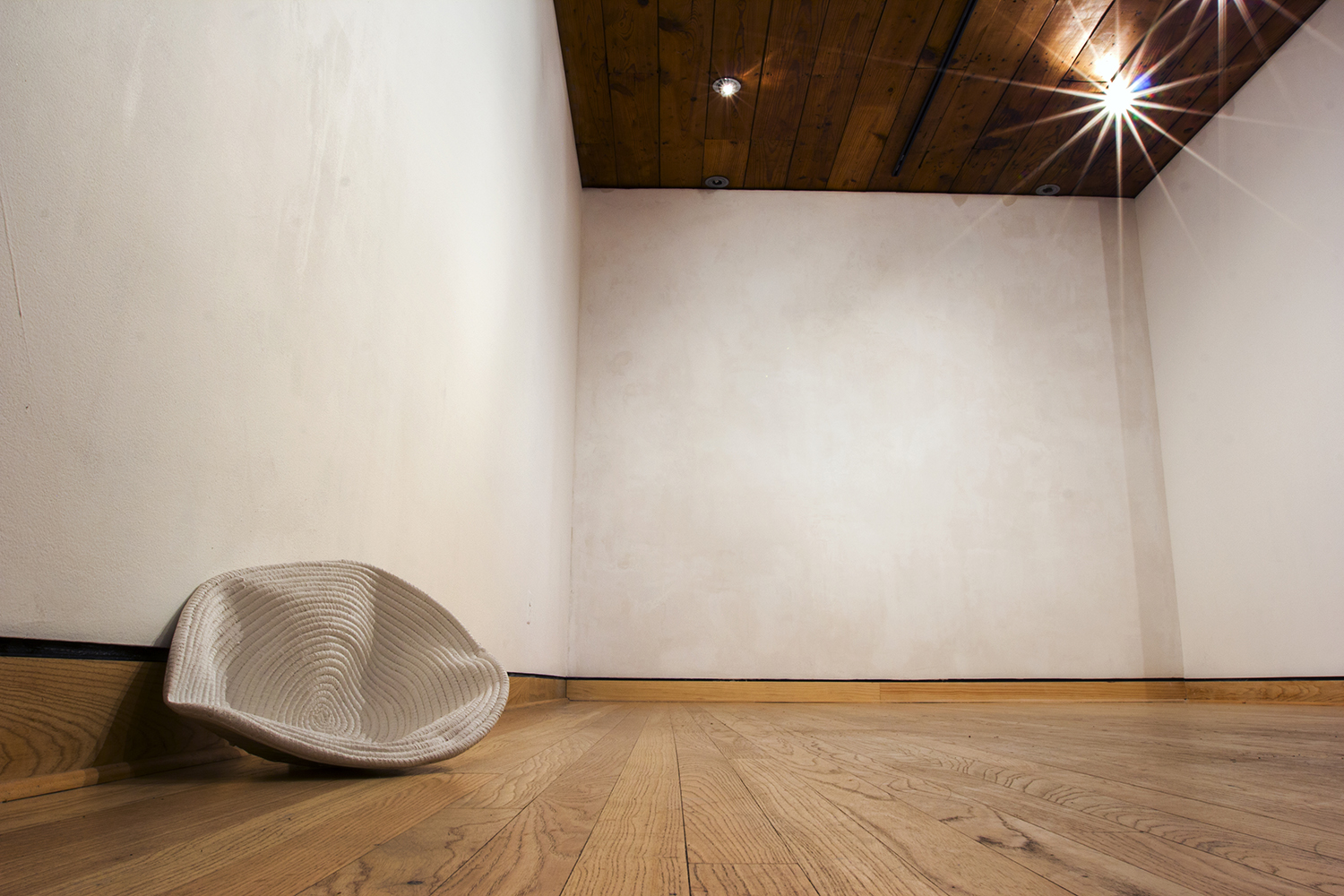
These systems are successful in no small part because they go unremarked; if most public acclaim is reserved for the loudest, the grandest, and the most exceptional, these networks assert the value of dispersion, interdependence, and restraint. So there’s a twist to Cox-Richard’s celebration of the overlooked: in rendering them visible, she subverts their natural assets. It’s an irony echoed in the show title’s allusion to mining: a stringer lode, unlike a concentrated mother lode, is a fine lacework of veins. To get at the ore a miner needs to demolish the countryside and sift the rubble. Delicacy, context and continuity fall prey to blunt, analytical differentiation. That sense of dislocation – of an object designed for connection newly isolated – gives Cox-Richard’s sculptures their eerie potency. For Wattle and Daub she sets plaster casts of woven baskets into the gallery wall, recessed like niches. Though they allude to practical handiwork and craft economies, their uselessness as receptacles implicates them in a very different system of evaluation. Their placement – a little too low, a little too close to a corner – likewise interrupts the typical function of the wall, both in terms of display and support. They are as much breach as sculpture.
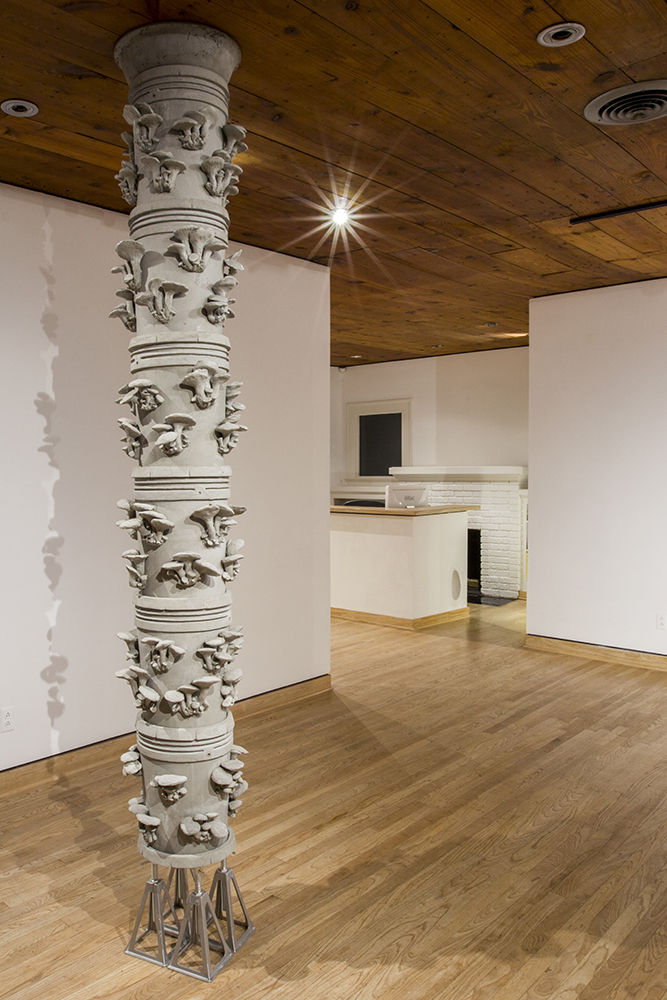
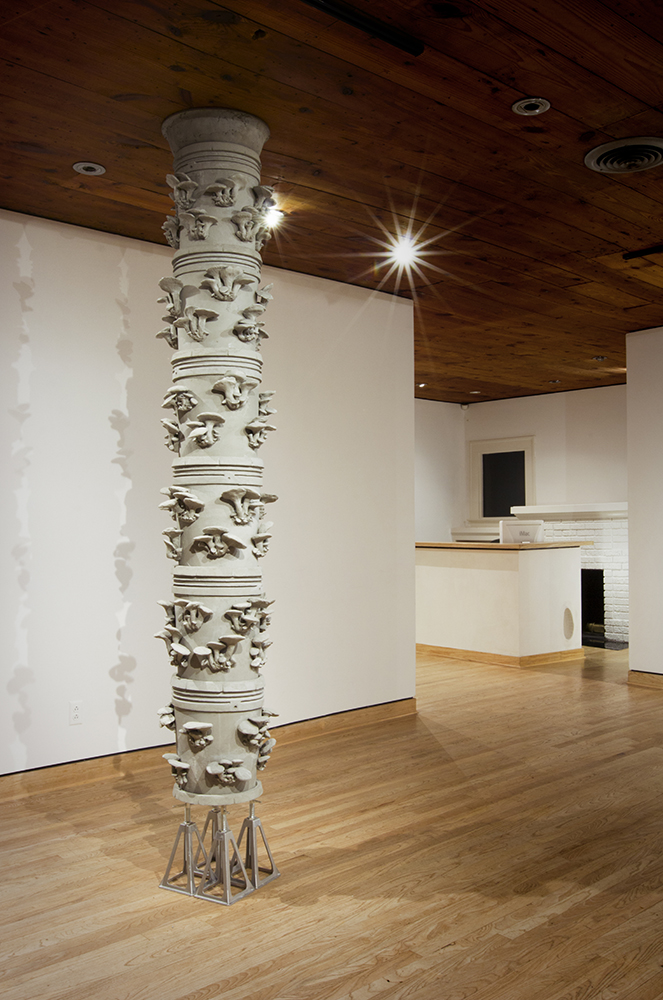
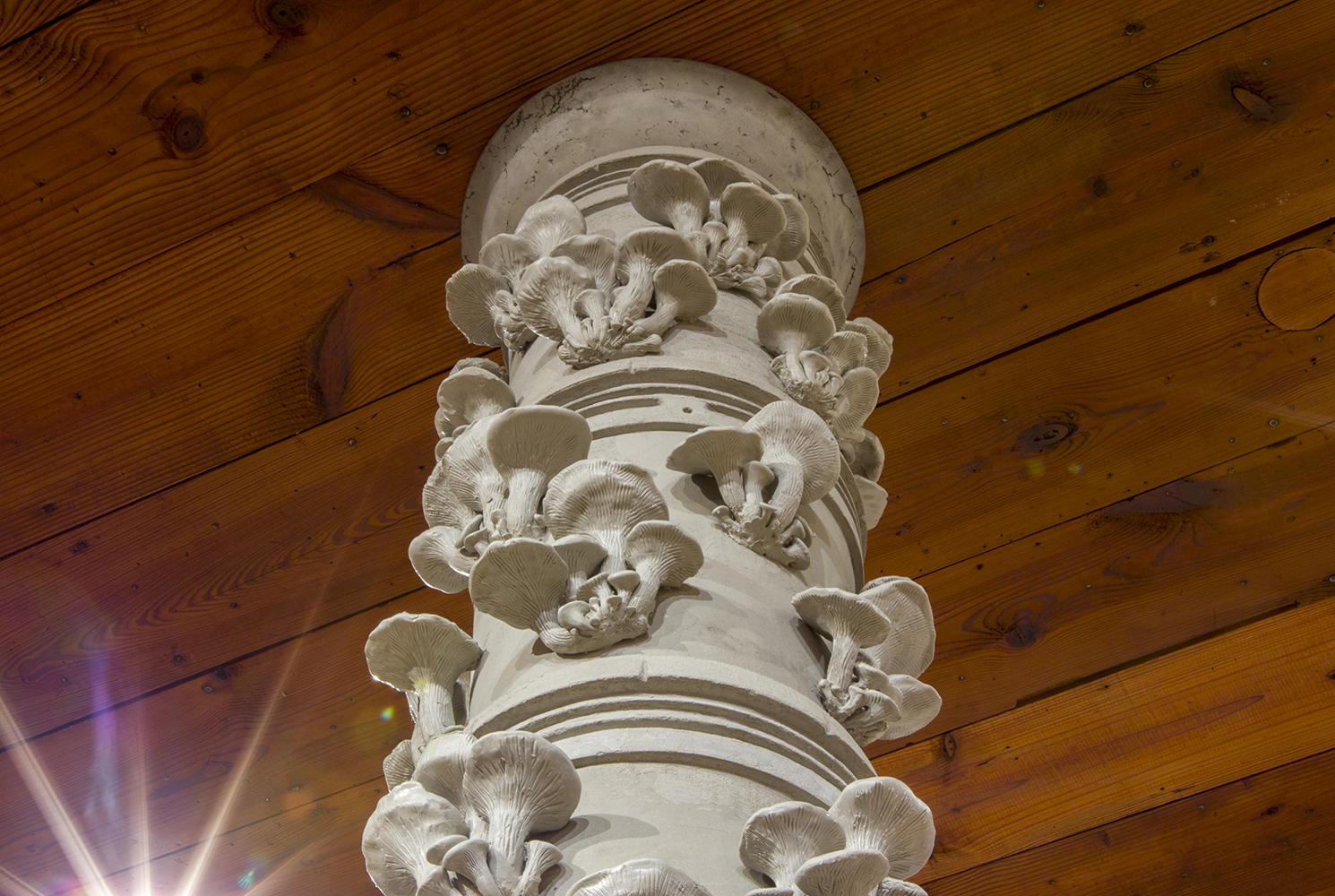
The carved columns in Cistern depict stacks of five-gallon buckets repurposed for DIY mushroom cultivation. Many mycologists today believe that mushrooms can mitigate or even reverse damages inflicted on the environment by cleaning up pollutants, rehabilitating depleted soil, and growing renewable building materials. Cox-Richard’s floor-to-ceiling columns, though not in fact structural, embody that optimism, implying reinforcement and ascendant ambition.
List of Works:
Wattle and Daub: wall and floor, 2016
gypsum cement; wall: 9 x 10 ft., object: 14 x 16 x 11 in.
Wattle and Daub: desk, 2016
gypsum cement; 42 x 96 x 45 in.
Wattle and Daub: above door, 2016
gypsum cement; 23 x 41 x 28 in.
Cistern 1, 2016
polymer concrete, epoxy putty, polystyrene, jacks; 109 x 15 x 15 in.
Wattle and Daub: cupboard, 2016
gypsum cement; 109 x 40 x 6 in.
Wattle and Daub: rim, 2016
gypsum cement; 14 x 14 x 1 in.
Credits:
Photography by Sharad Patel
Rapt
lilycoxrichard@gmail.com
2009
aqua resin, floral foam
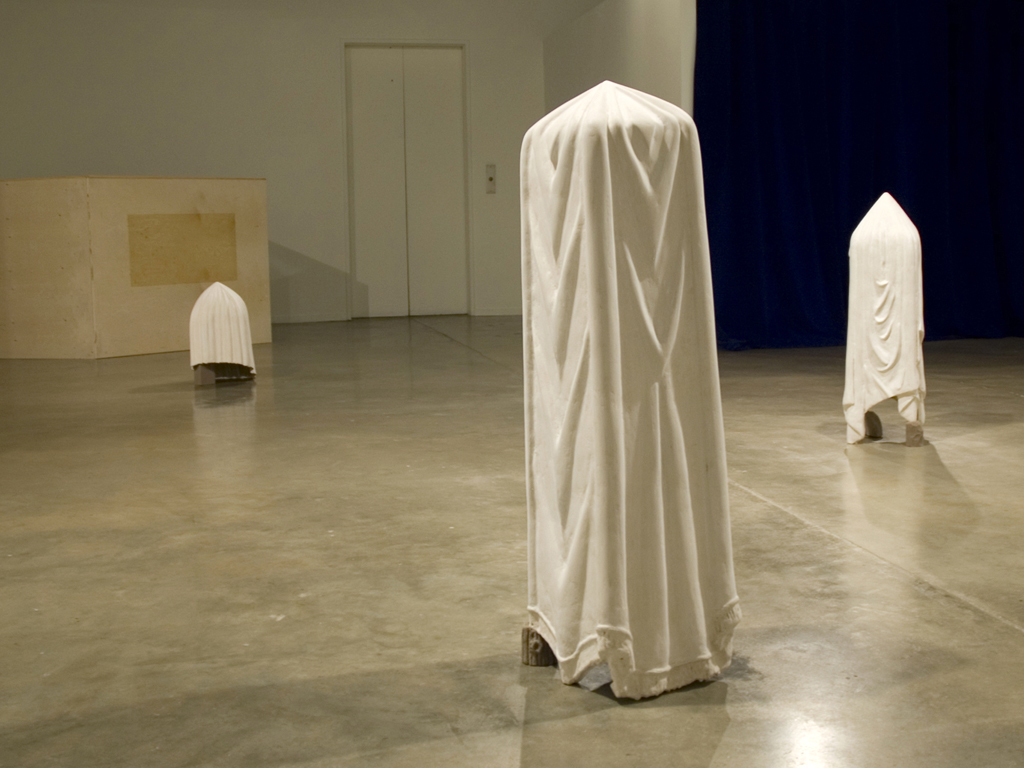
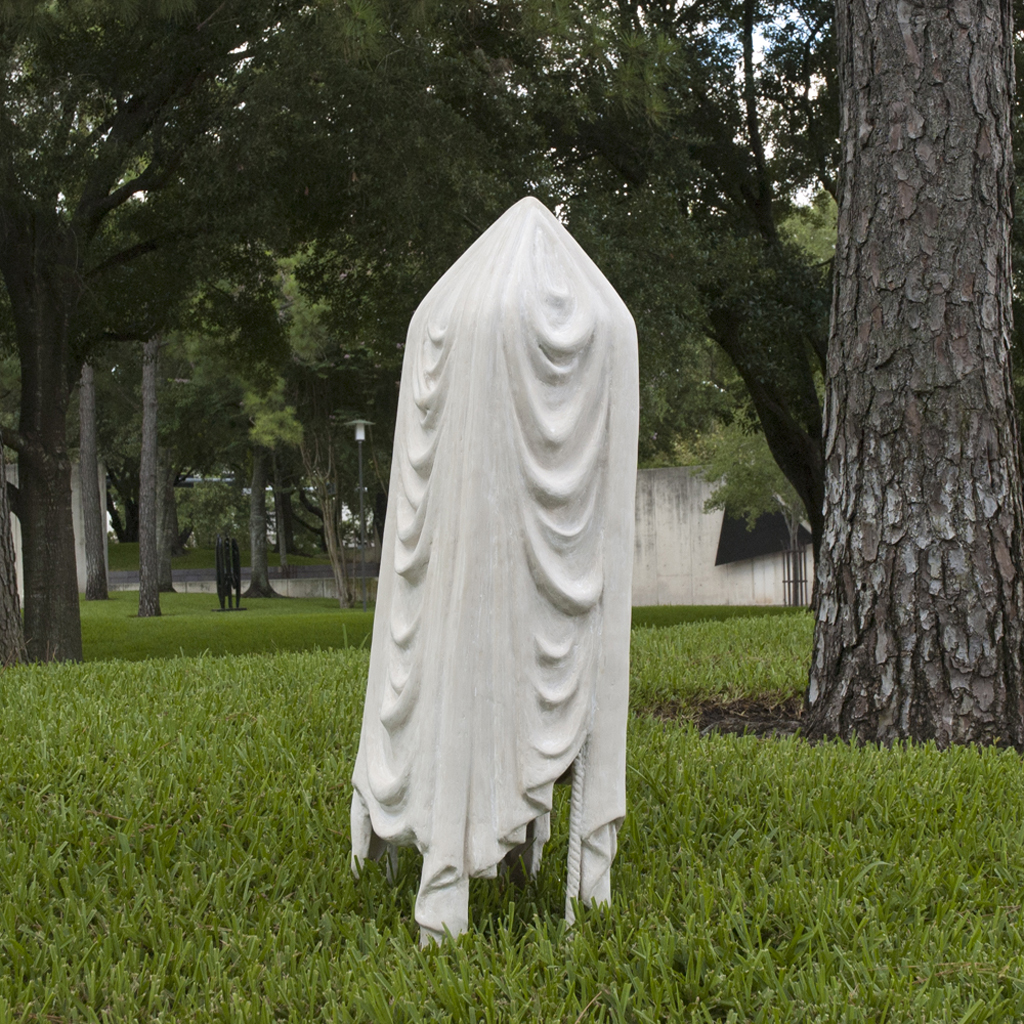
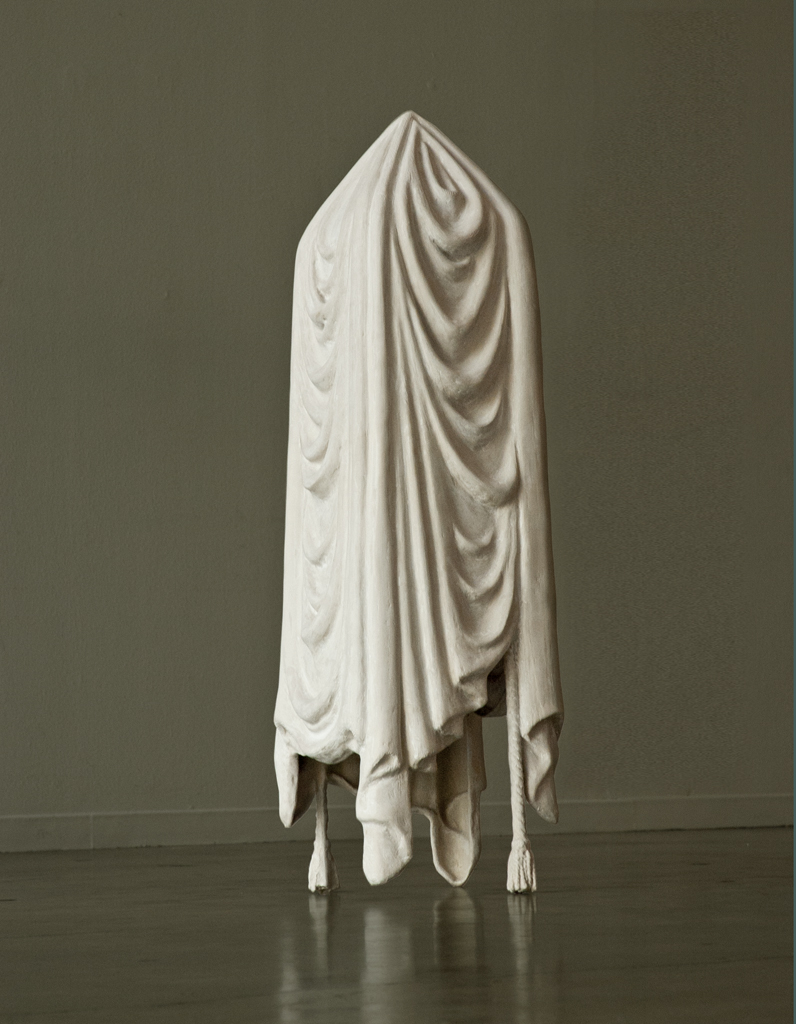
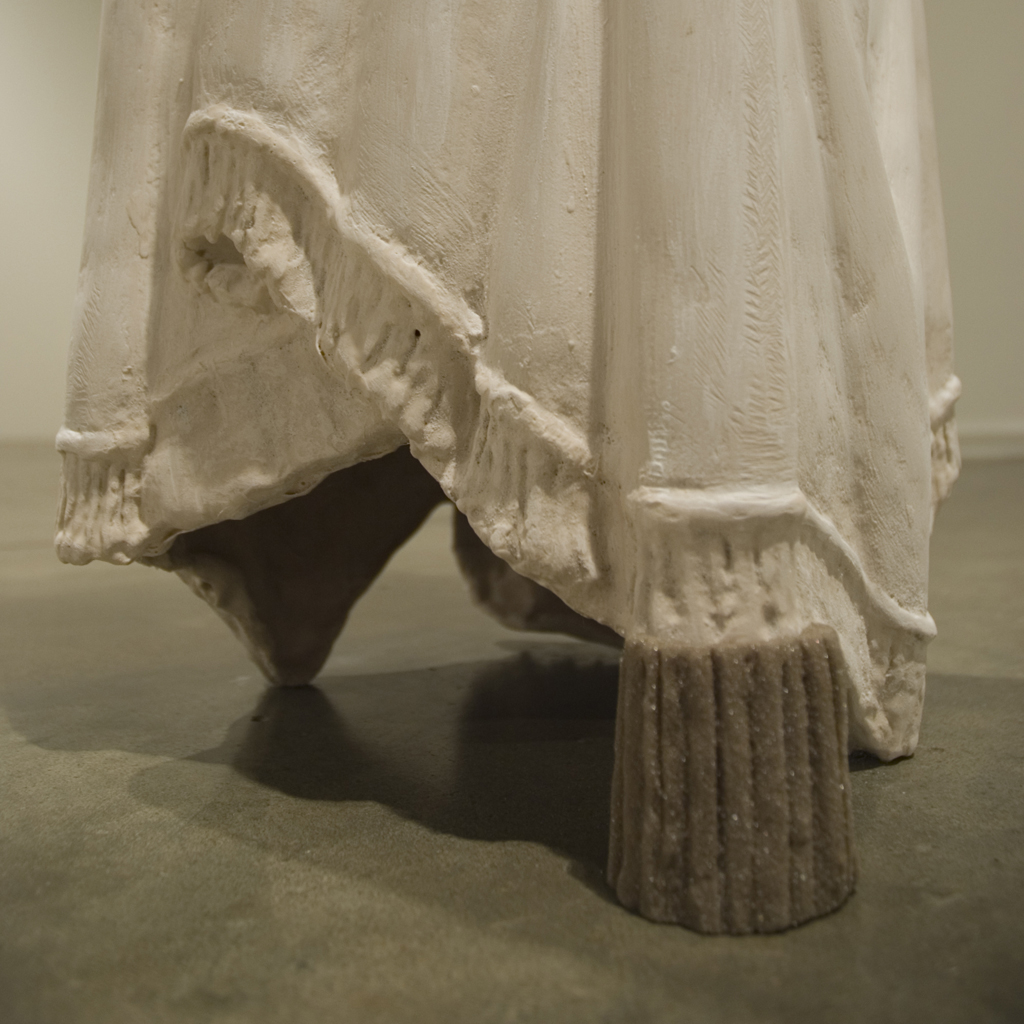
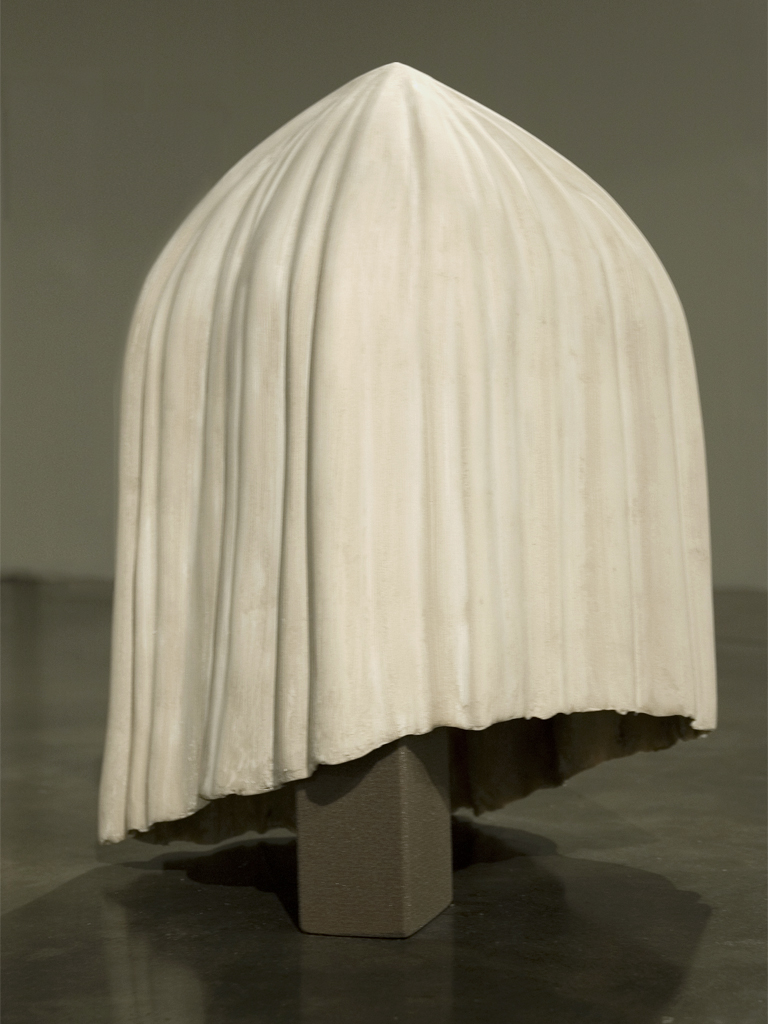
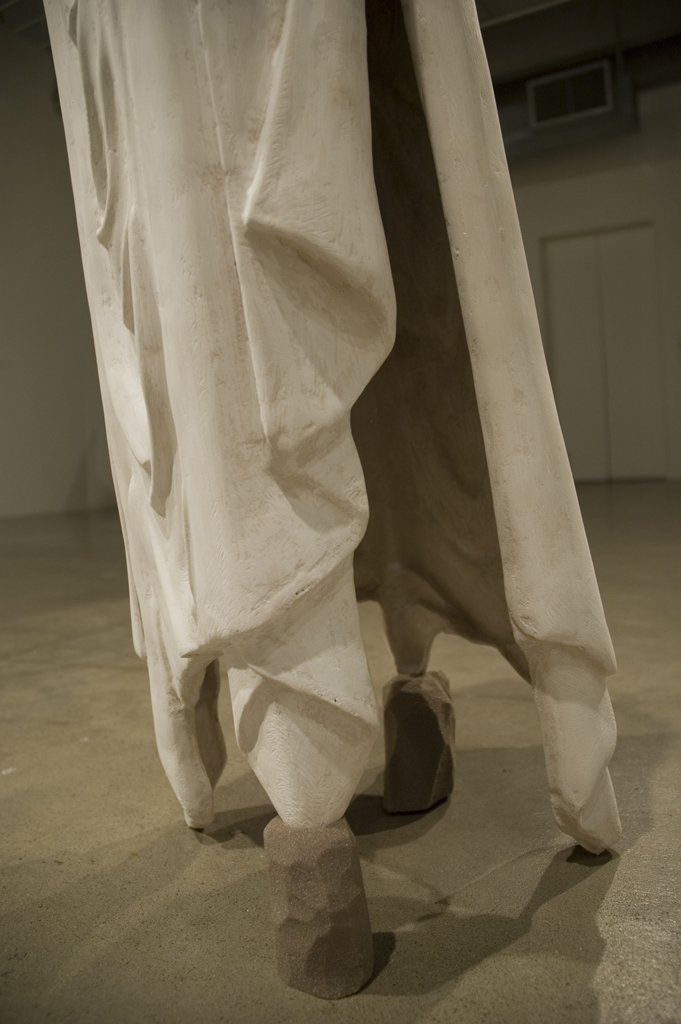
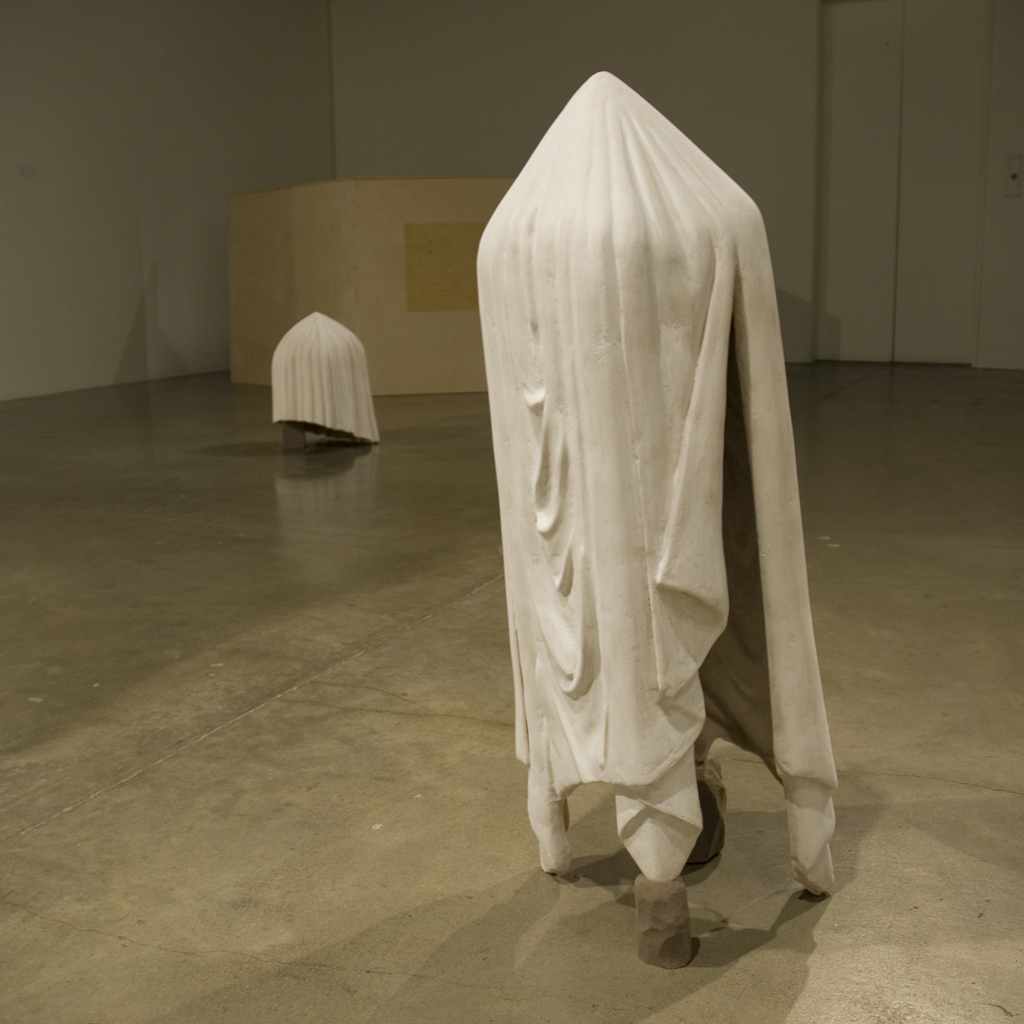
Based on 19th-century grave markers, my sculptures are ghosts of these monuments, yet their palpable physicality belies ephemerality.
Rapt 1, 2009
aqua resin, floral foam; 22 x 12 x 12 in.Rapt 2, 2009
aqua resin, floral foam; 34 x 11 x 11 inc.Rapt 3, 2009
aqua resin, floral foam; 39 x 12 x 12 in.Rapt 4, 2009
aqua resin, floral foam; 34 x 11 x 11 in.
Thicket
lilycoxrichard@gmail.com
2013
Carved plaster sculptures, artist book, custom shelf
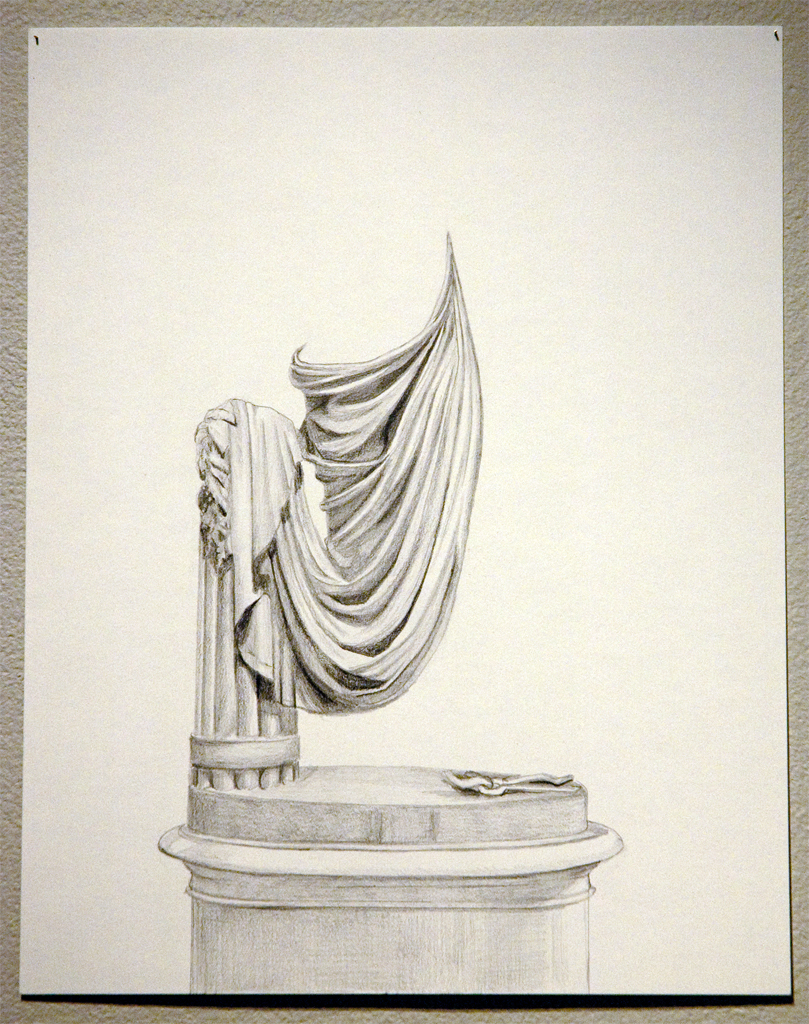
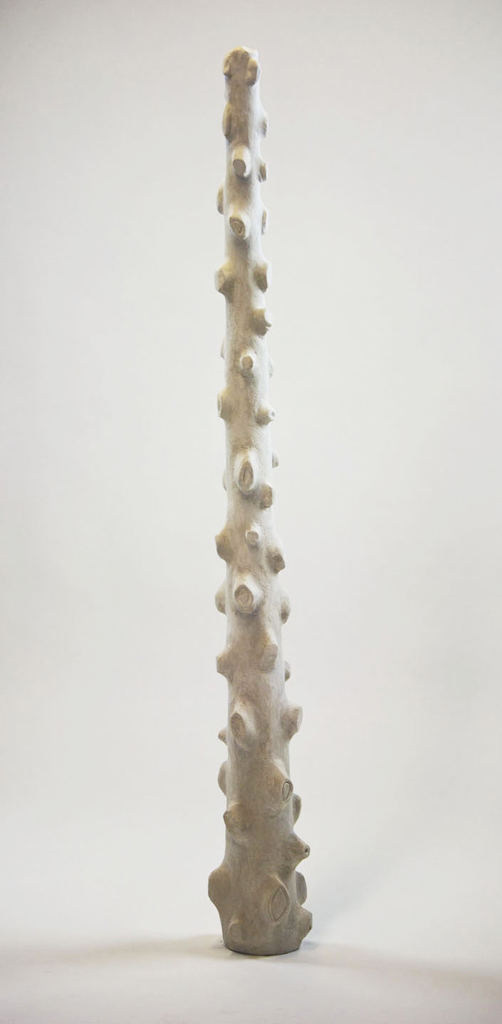
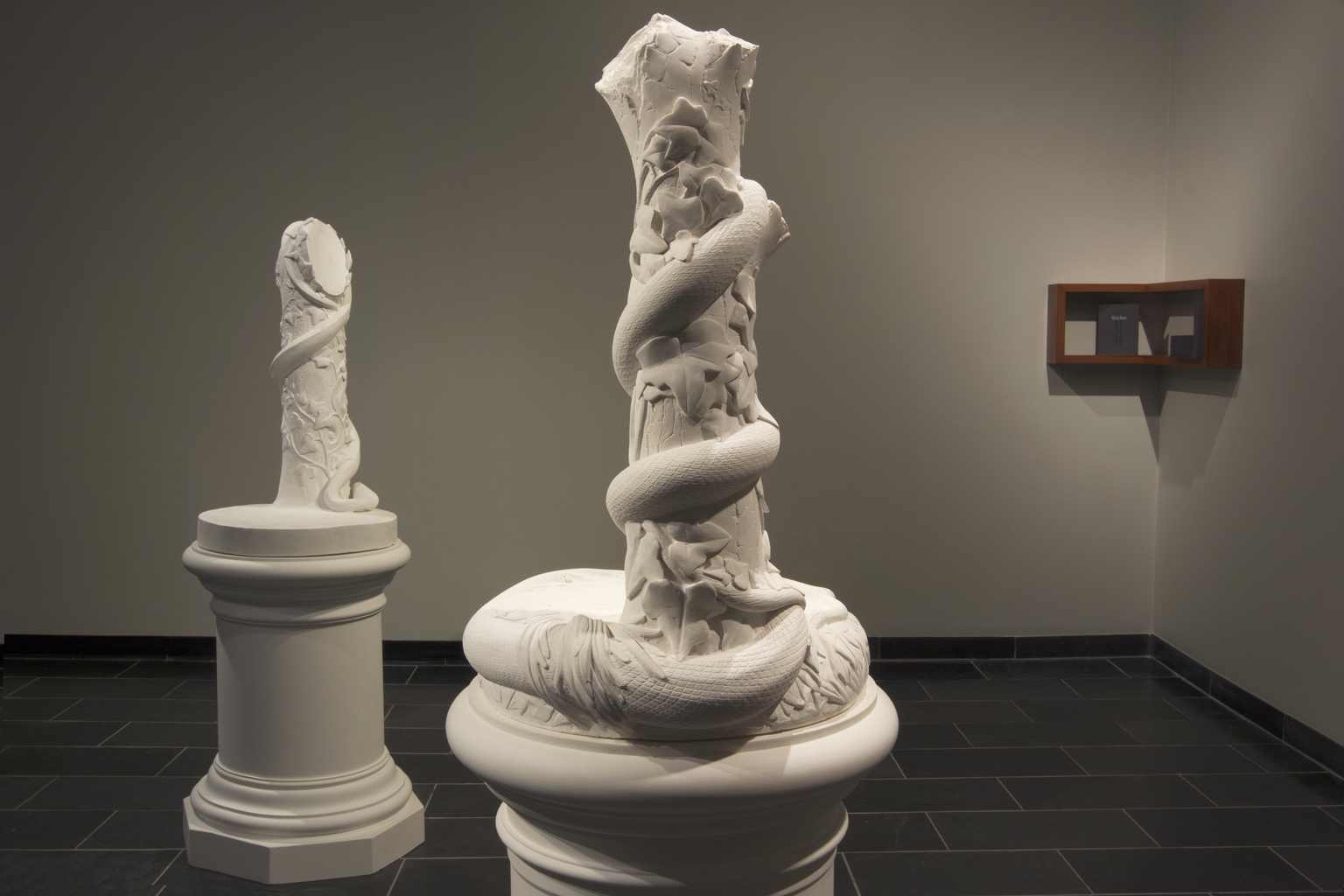
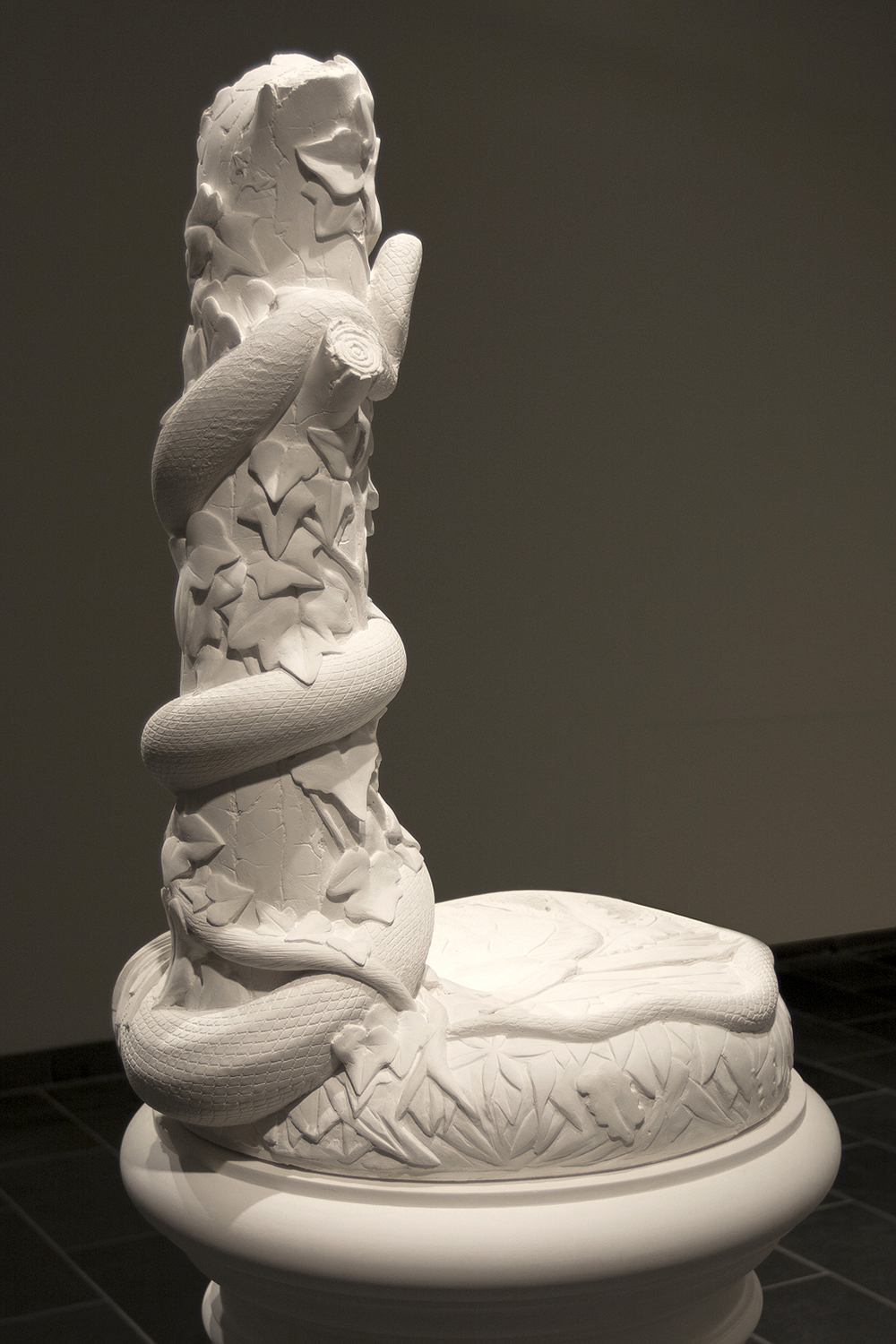
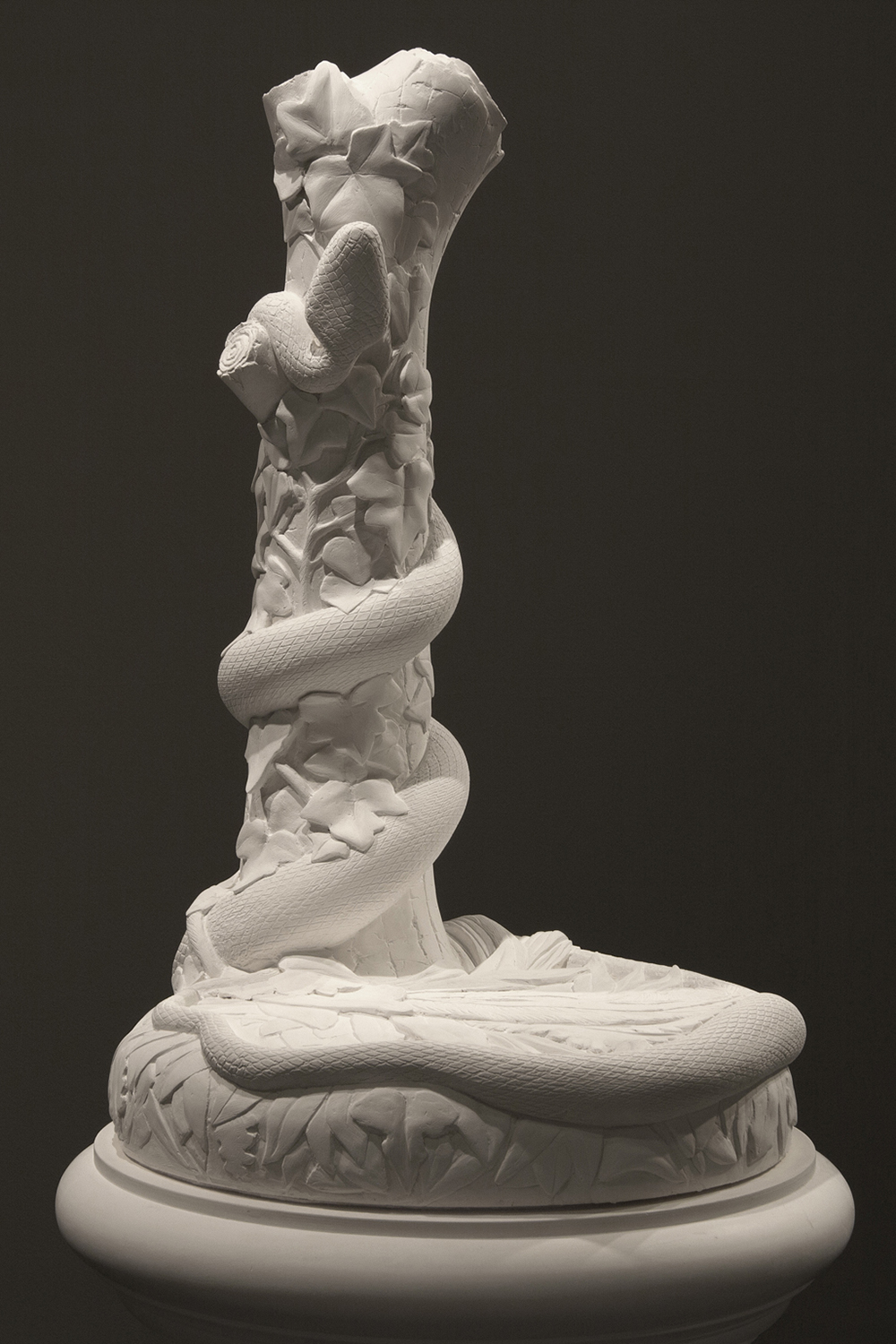
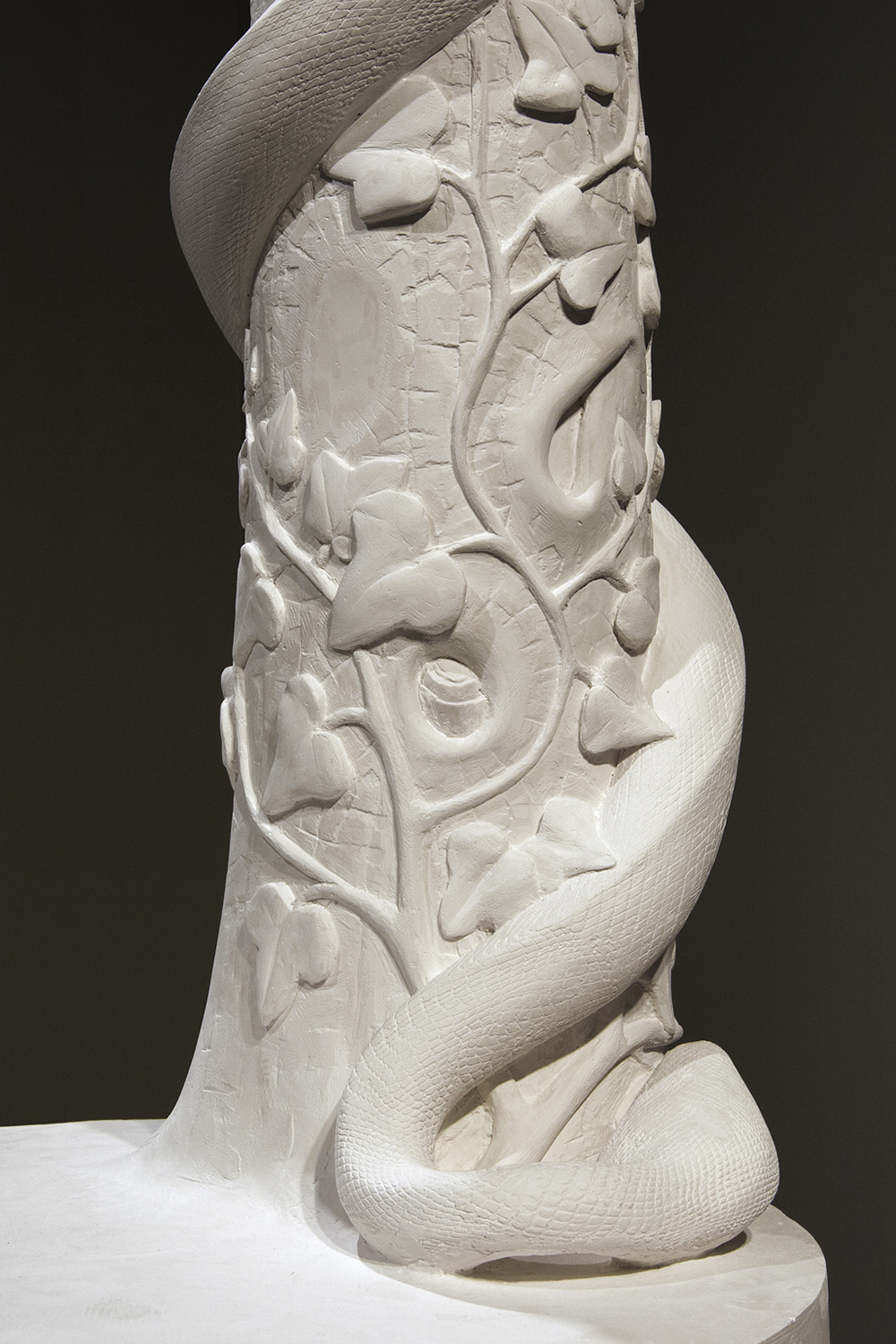
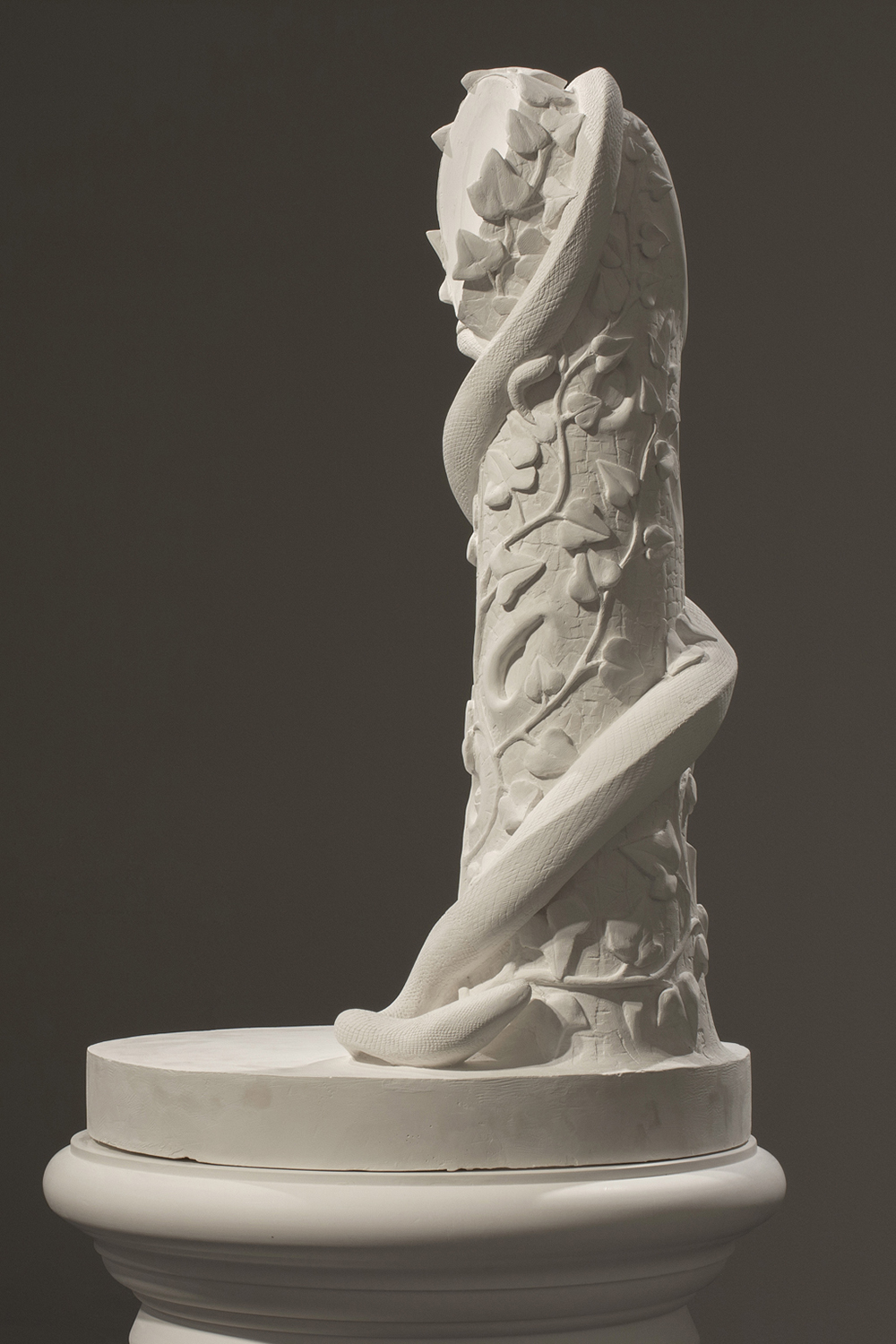
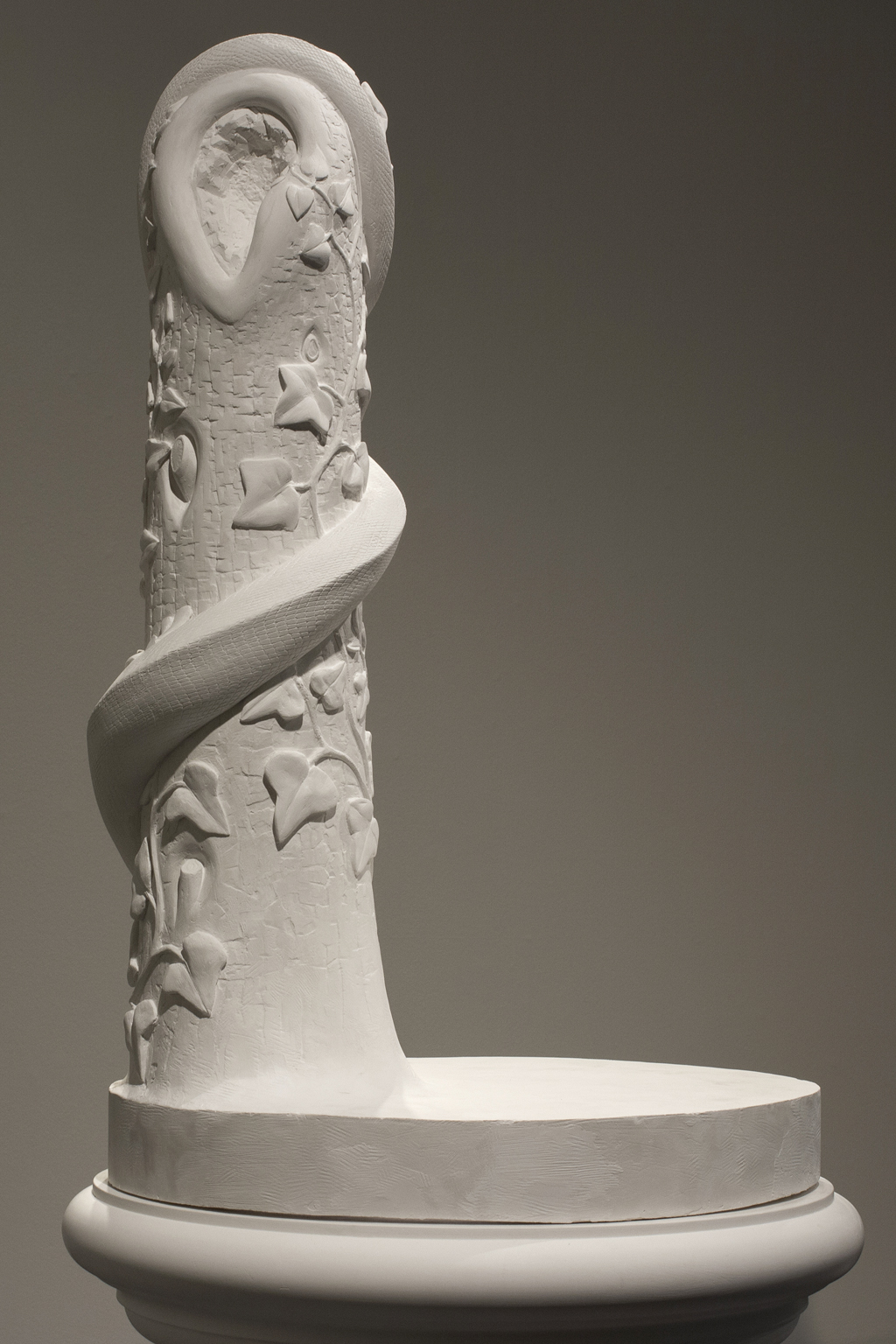
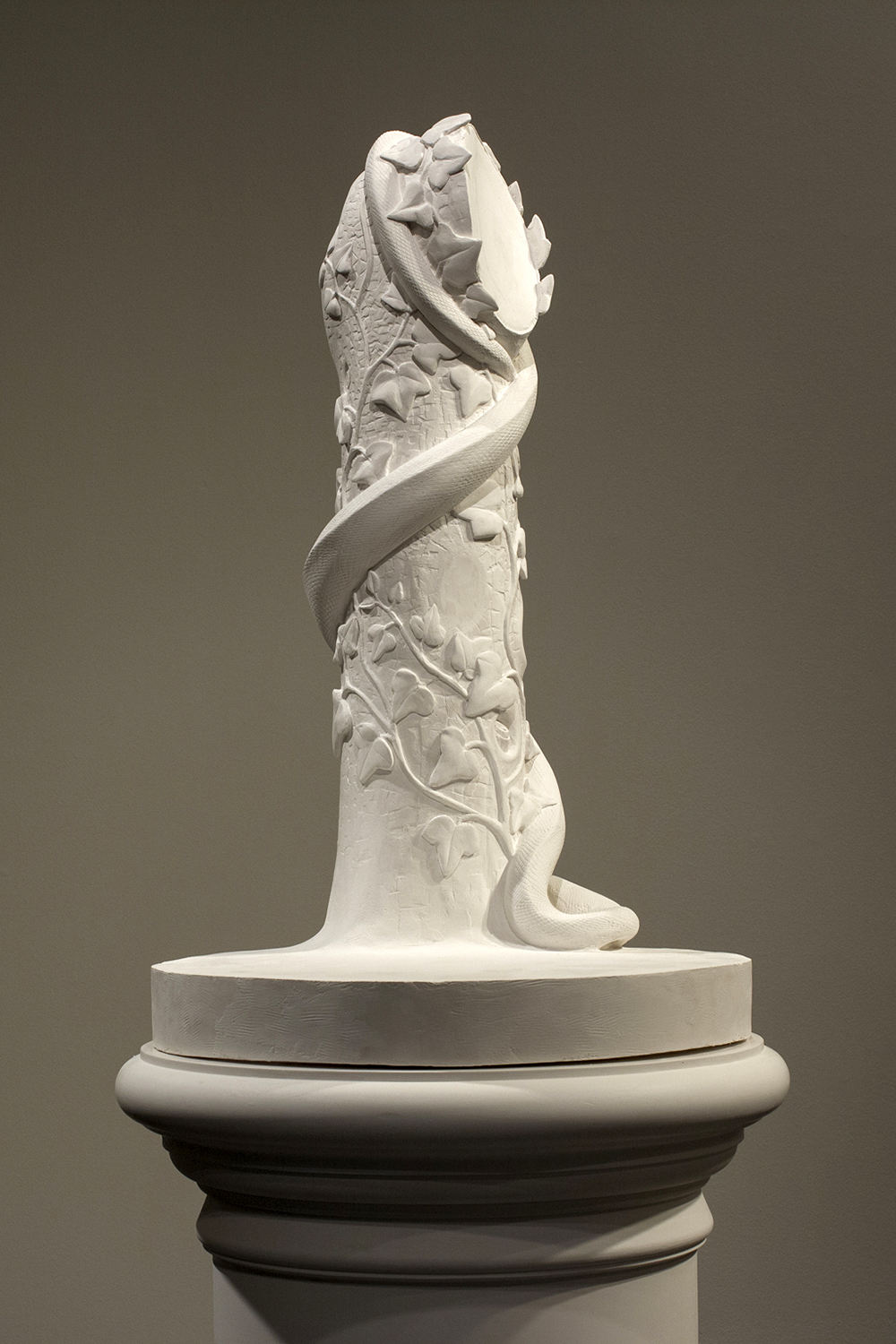
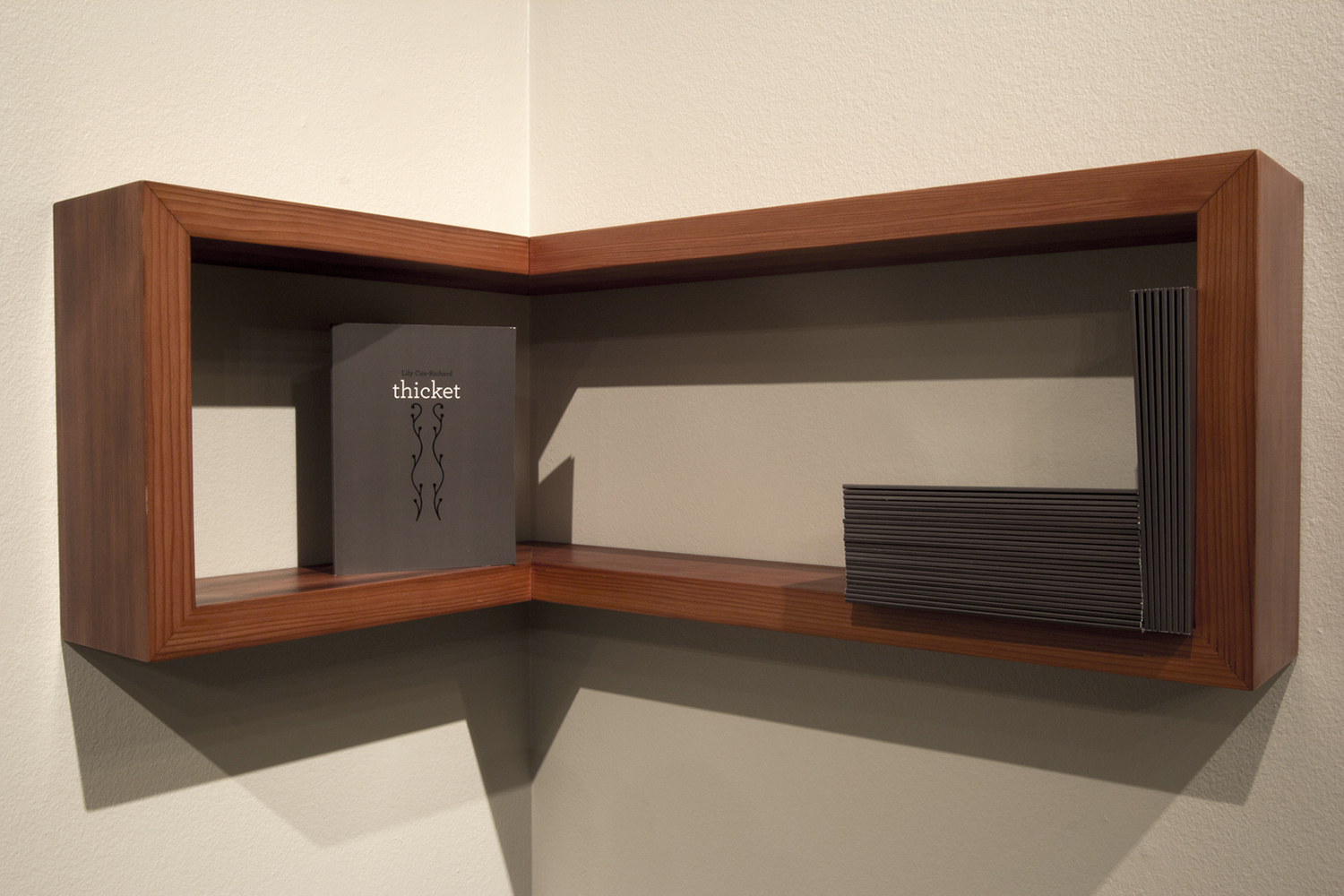
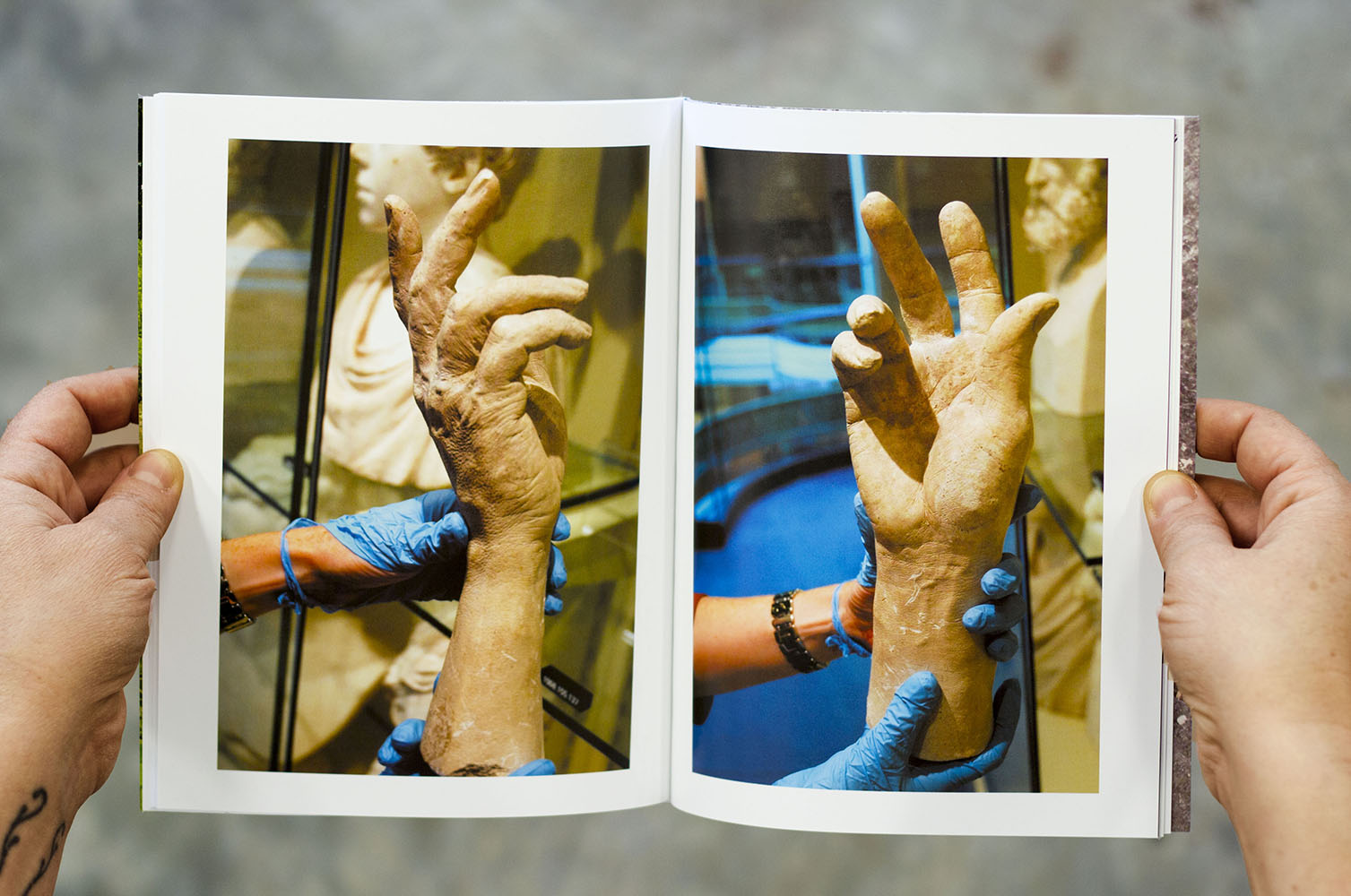
Thicket is part of the larger project, The Stand (Possessing Powers), which grapples with sculptural traditions as they relate to American history, gender, and form. In this series, each of my carved plaster sculptures takes on a major work by Hiram Powers (1805-1873), once considered the Father of American Sculpture. Thicket focuses on the supporting elements in Power’s sculptures of Eve. Installation views show the work installed at the Institute for the Humanities Gallery at University of Michigan. The book contains photographs, collage, archival research, and poems by Davy Knittle.
The Stand: Eve Disconsolate, 2013
carved plaster; 69 x 26 x 26 in.
The Stand: Eve Tempted, 2013
carved plaster; 72 x 25 x 25 in.
Thicket, 2013
book, 6.5 x 8.5 in. 42 pages, edition of 500