She-Wolf + Lower Figs.
July 27–December 29, 2019
The Blanton Museum of Art (Austin, TX)
Related Materials:
Notes:
Lily Cox-Richard investigates the history of materials to illuminate hidden systems of production and social values.
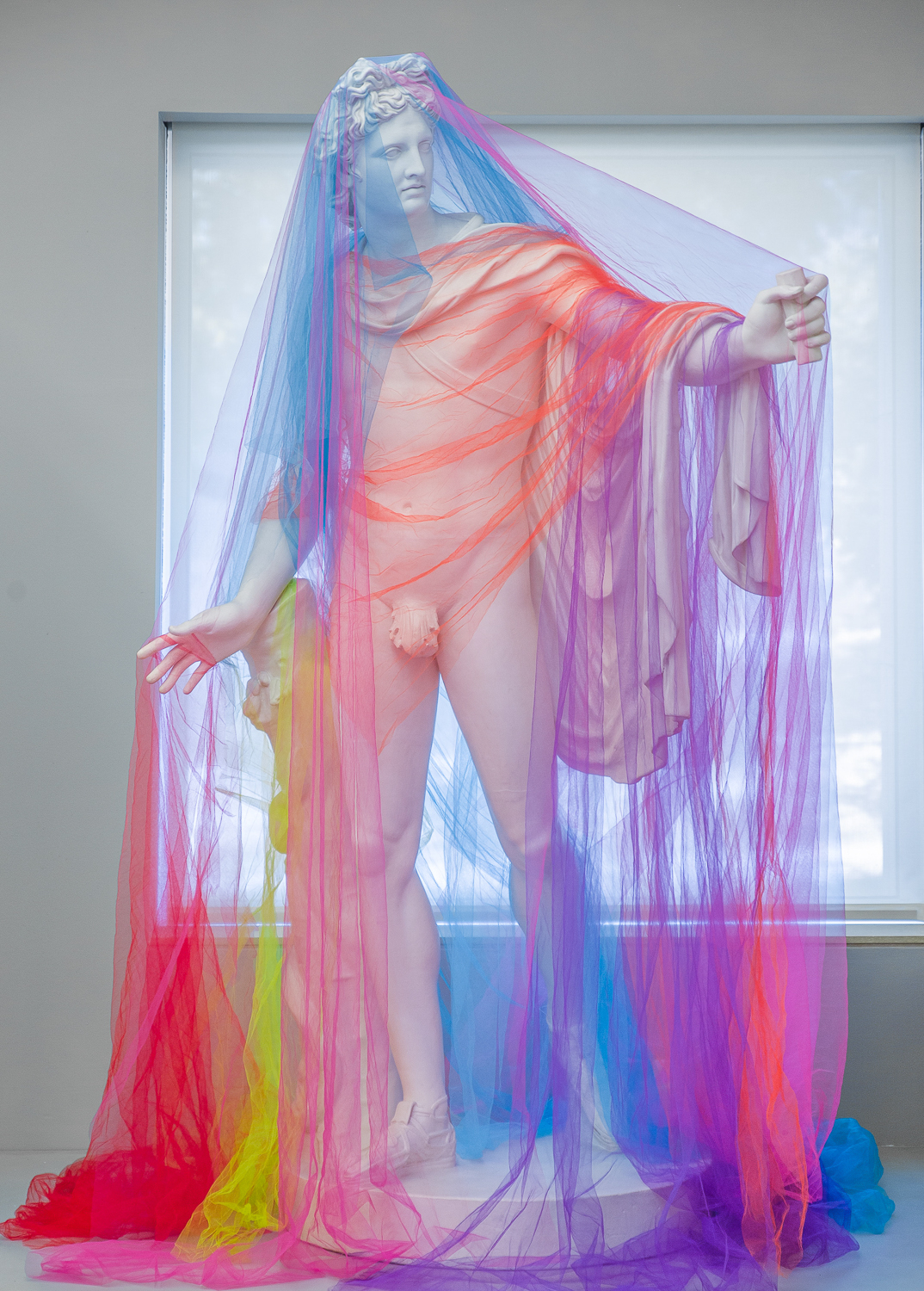
This installation responded to the Blanton’s William J. Battle Collection of Plaster Casts, a set of nineteenth-century replicas of ancient Greek and Roman sculpture. Such casts were once an integral part of artistic training throughout the Western world. For nineteenth-century viewers, classical statues—and their casts—embodied aesthetic and cultural standards of taste, beauty, democracy, and learnedness. By the mid-twentieth century, however, plaster casts were devalued as mere copies, and the Battle Casts are one of the few remaining collections of this kind in the United States. Cox-Richard’s sculptural installation invited us to consider the legacy of these objects, raising questions about their role in perpetuating notions of physical “perfection” and “whiteness” as ideal.
Many Greek and Roman marble sculptures were originally polychromed—brightly painted, gilded, or otherwise embellished—although little of this surface decoration has withstood the passage of time. This creates the false impression that these sculptures, and ancient people, were all white. Plaster casts reinforced the myth of the statues’ original whiteness. Cox-Richard subverts this fiction and the attendant “ideals” by adding color to sculptures she made utilizing 3D scanning, a modern technology that offers near-perfect reproductions of artworks, as plaster casts once did.
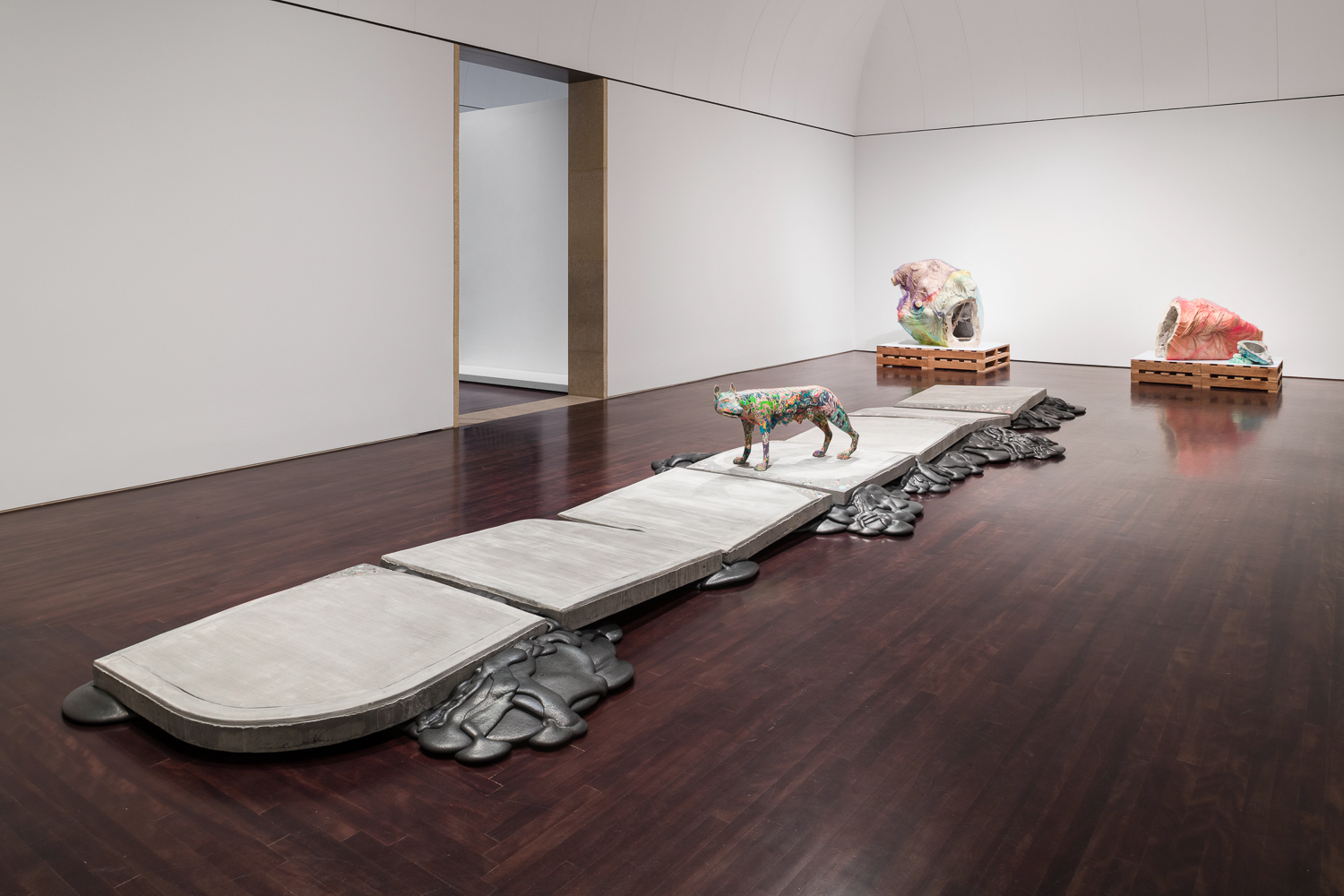
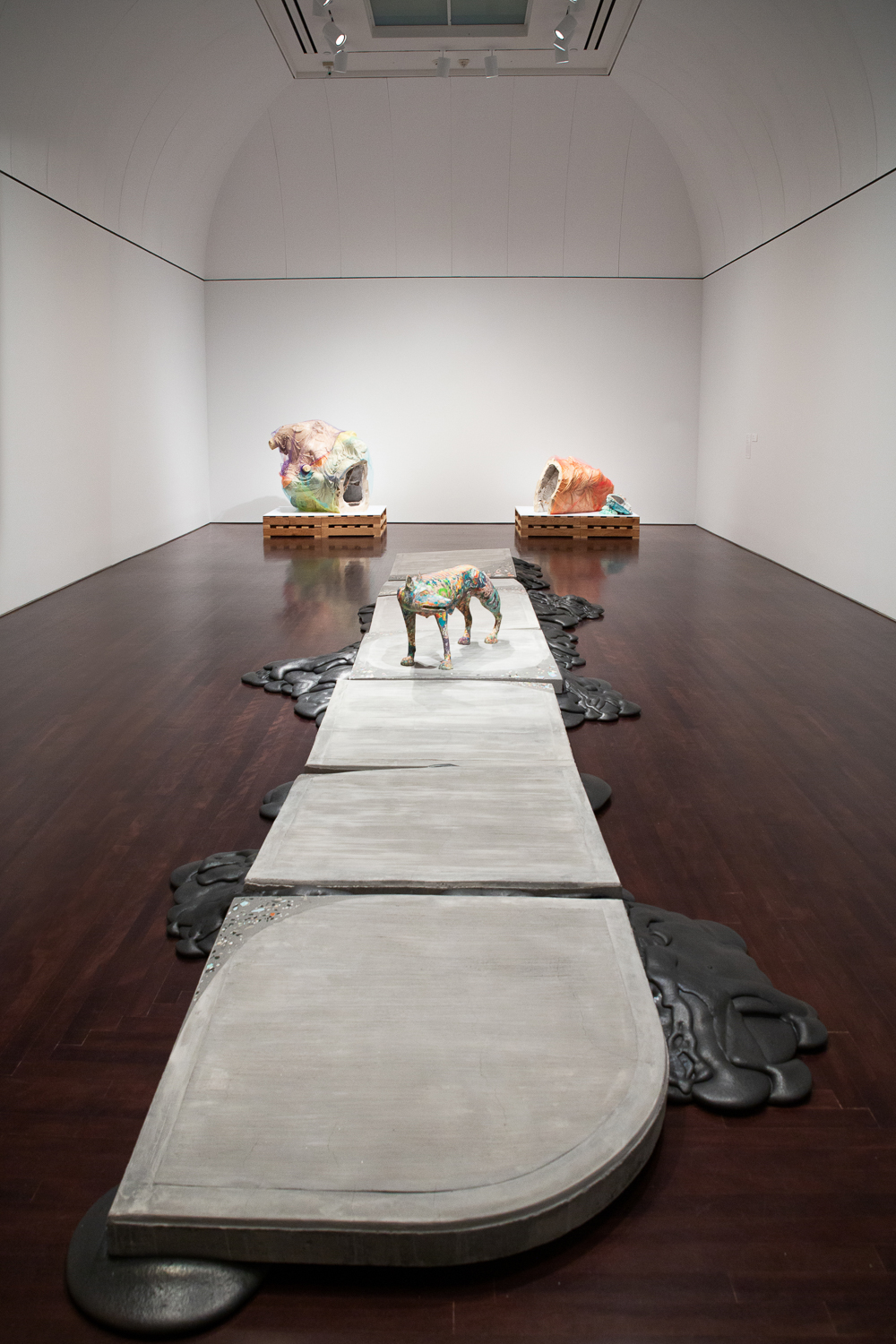
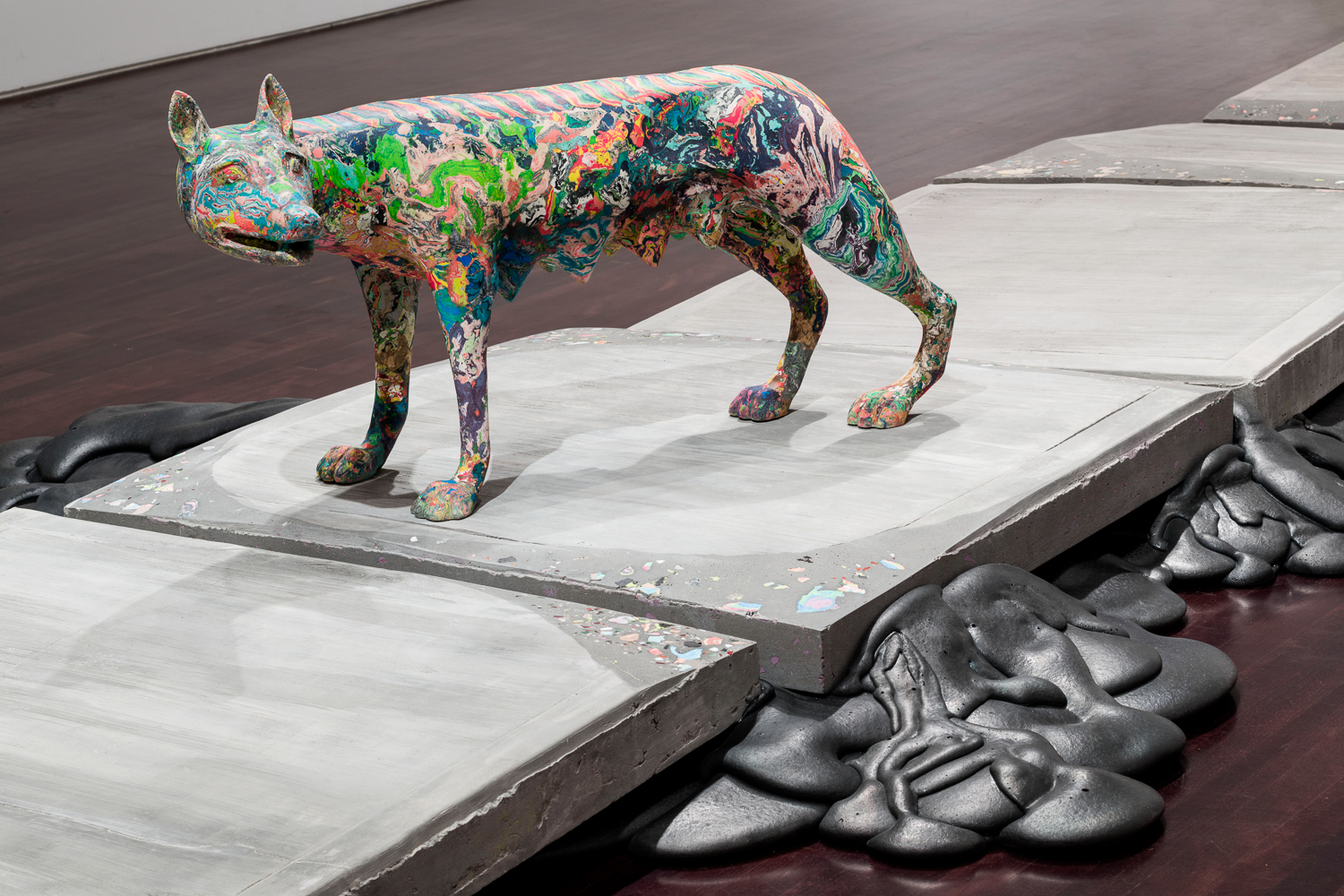
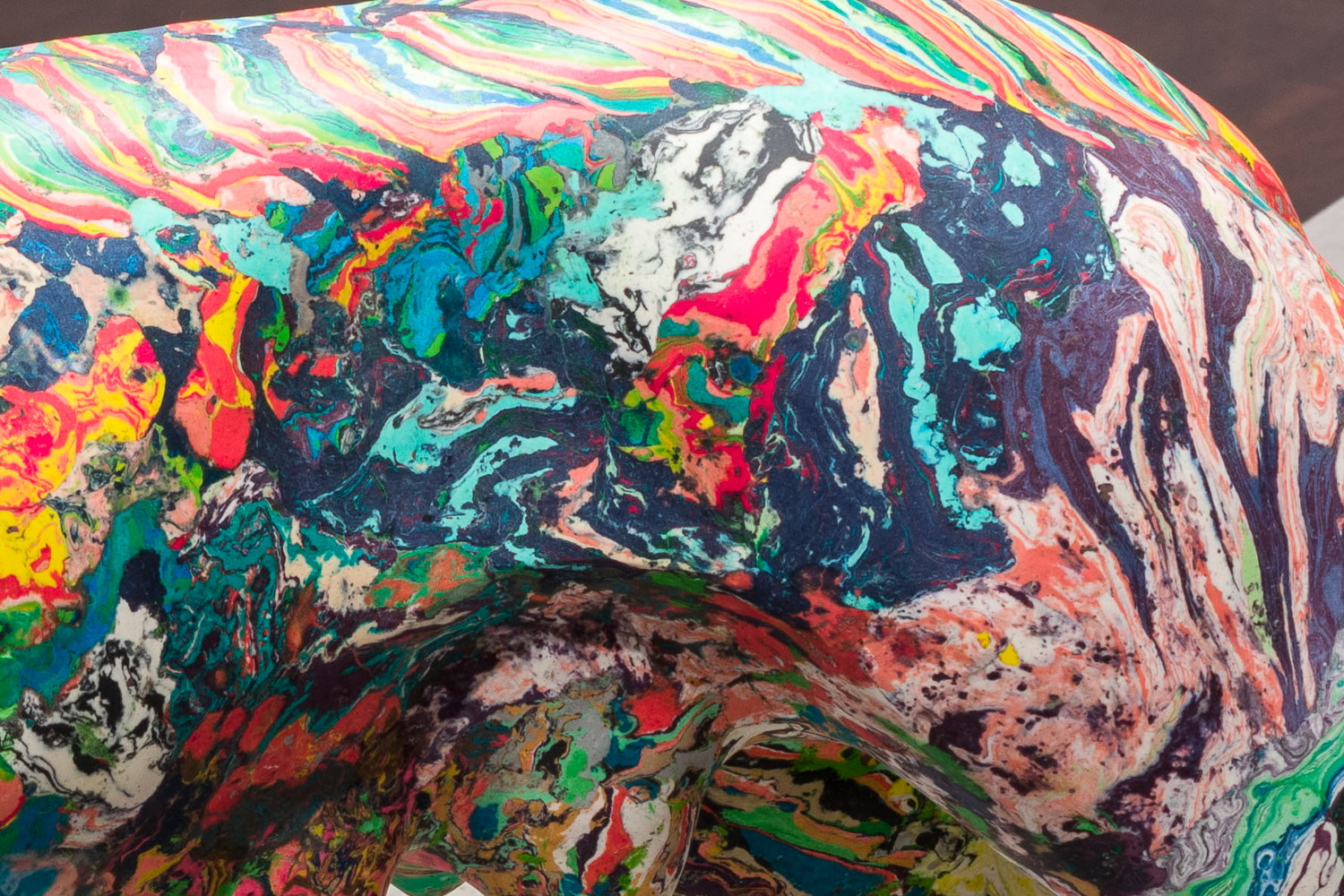
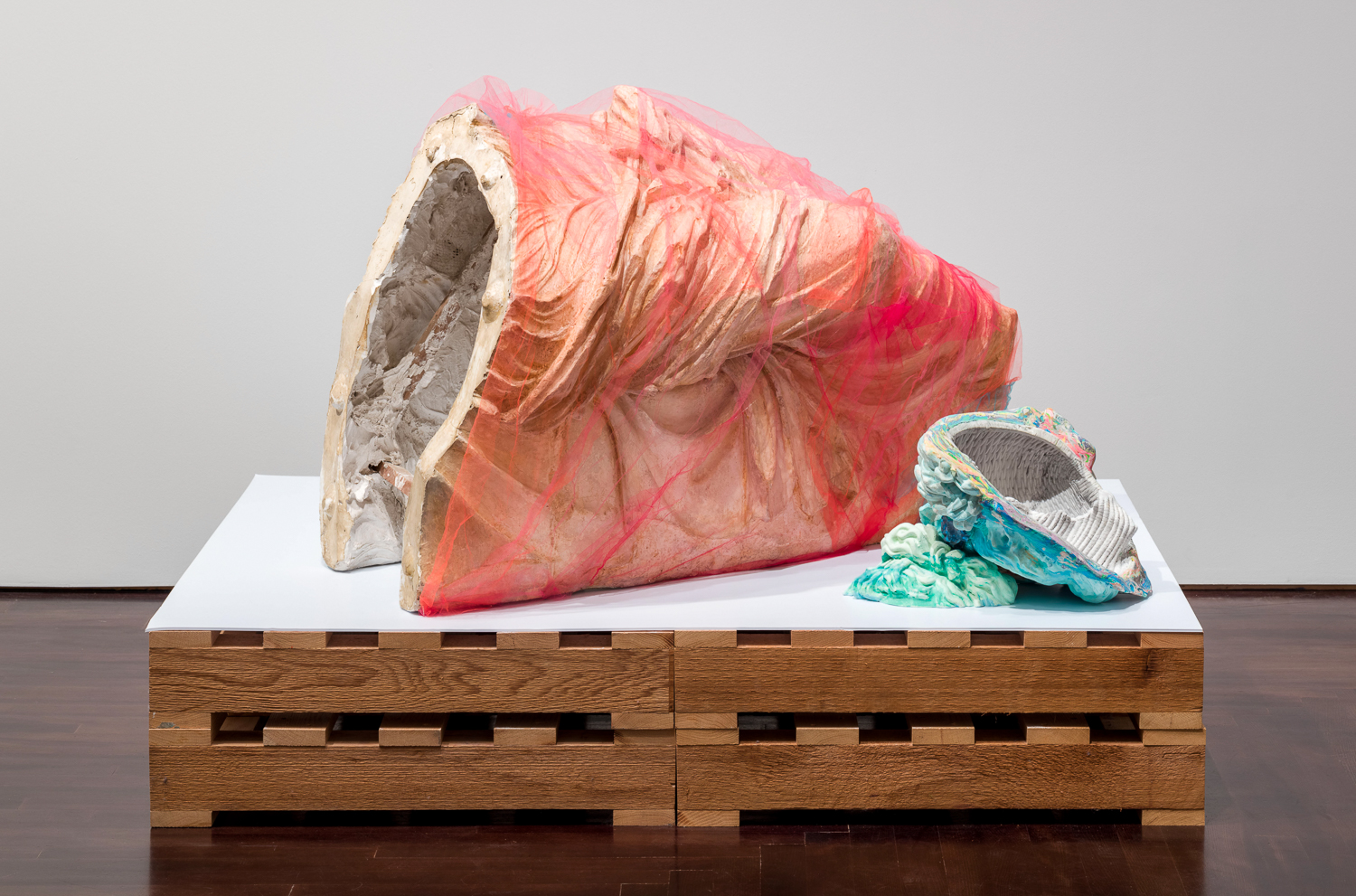
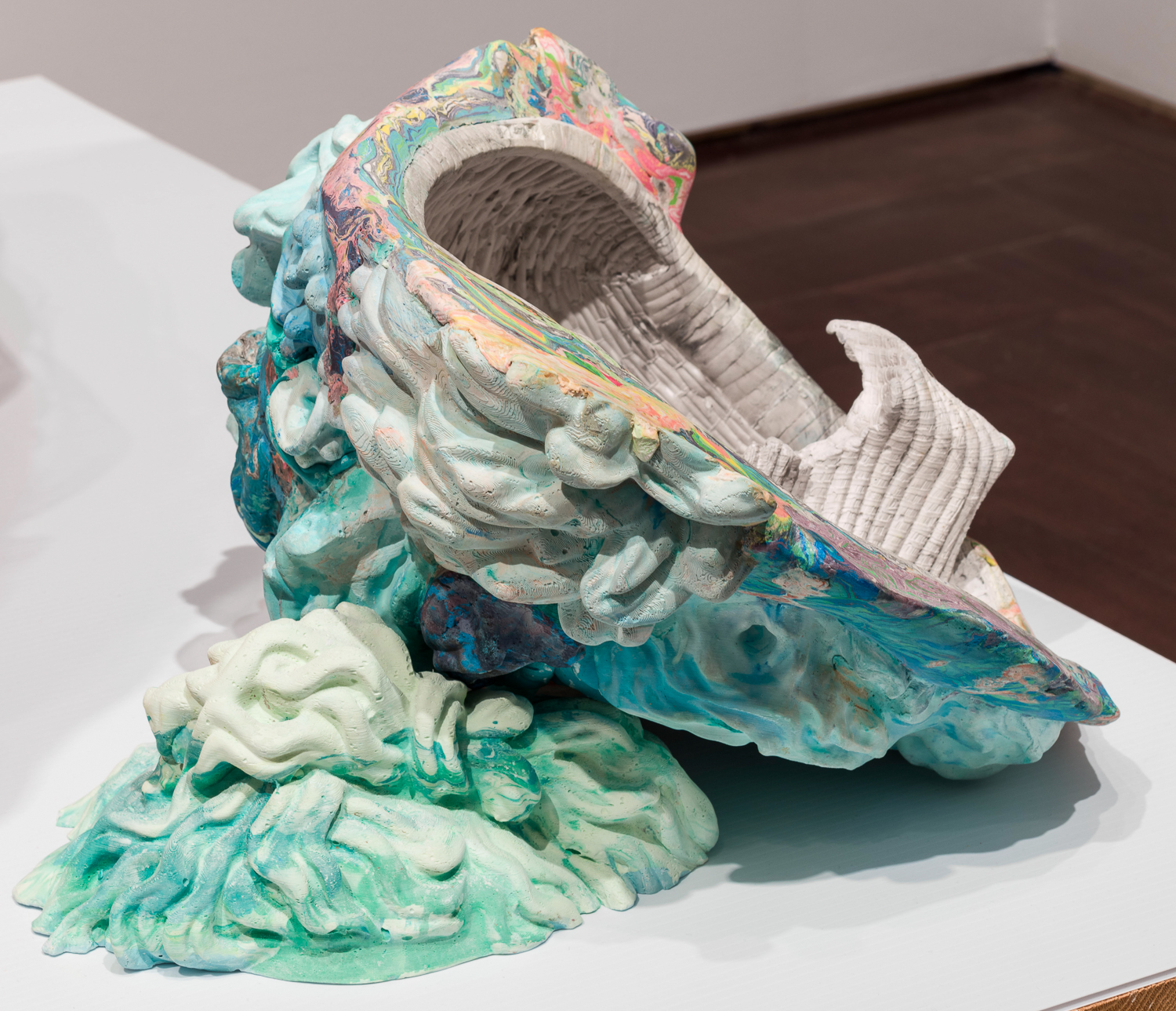
Cox-Richard proposes technicolor alternative narratives for the casts of ancient objects. She used scagliola, or marbleized plaster, to create a sculpture of a she-wolf based on scans of casts taken from the bronze original in the Capitoline Museum in Rome. The she-wolf confronted the viewer from a concrete sidewalk pushed upward by an oozing substance, suggesting a rupture in history. Cox-Richard ground down the corners of the concrete slabs to reveal a colorful aggregate and fossil-like fragments made using 3D scans of the heads of Battle casts.
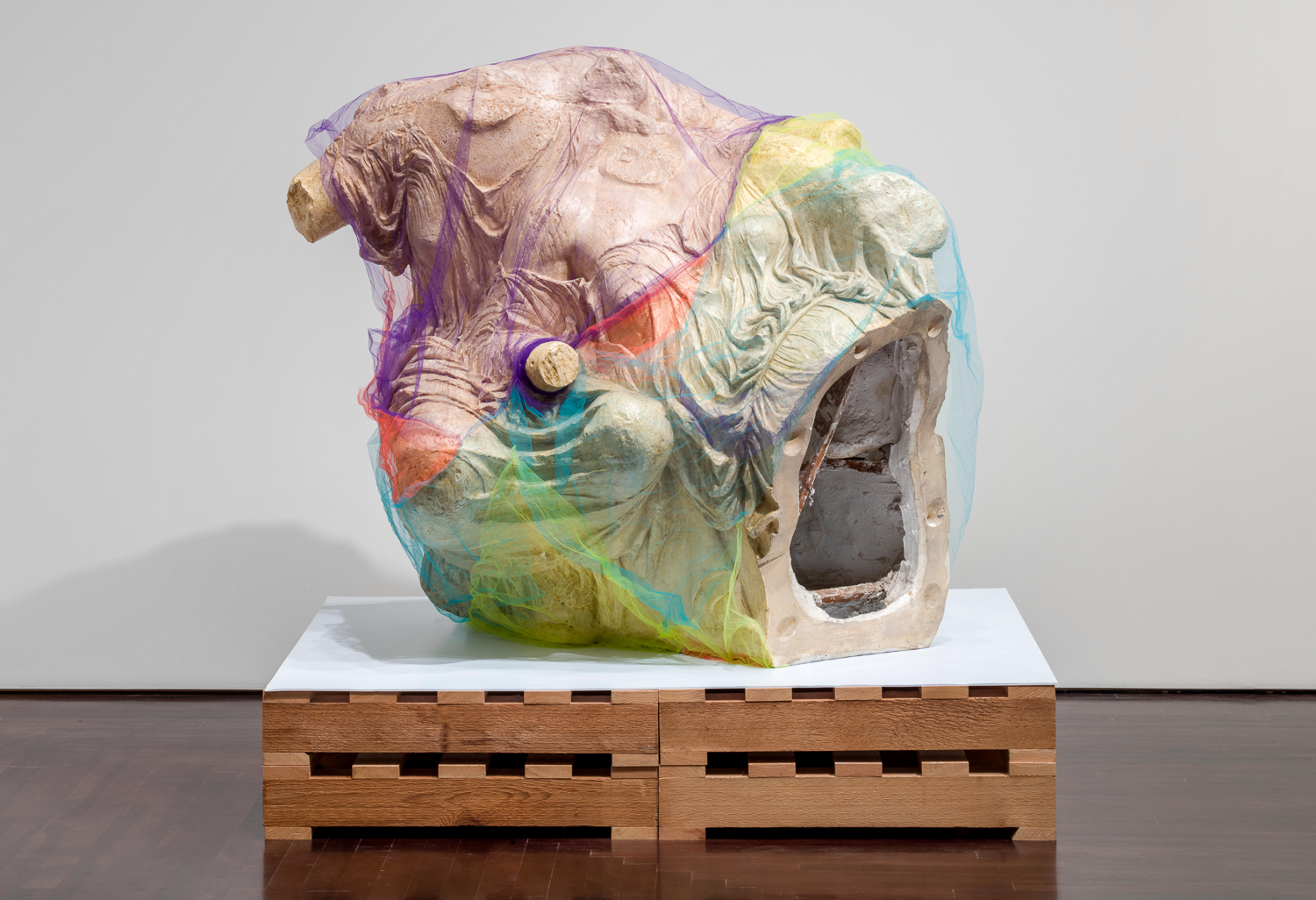
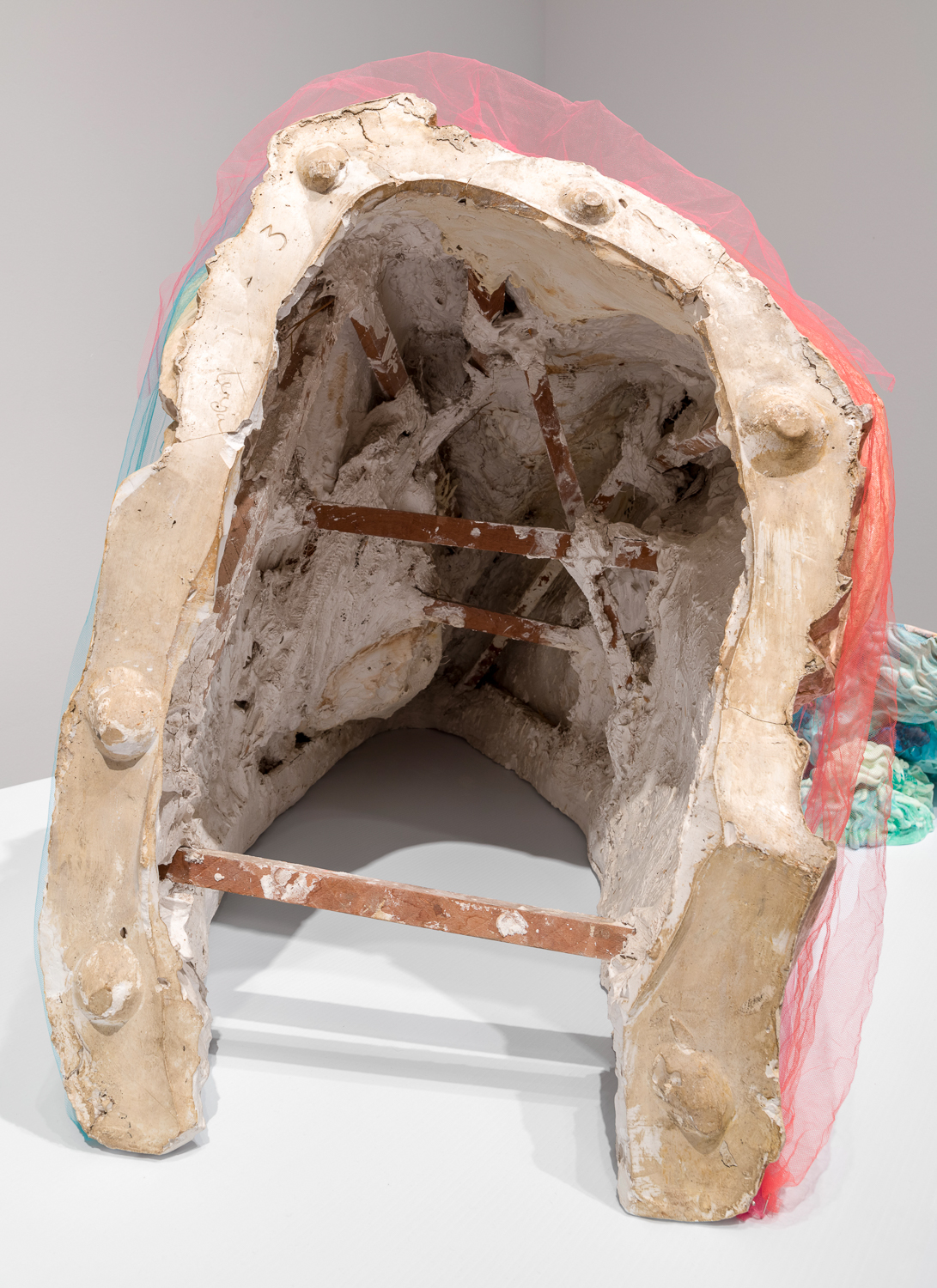
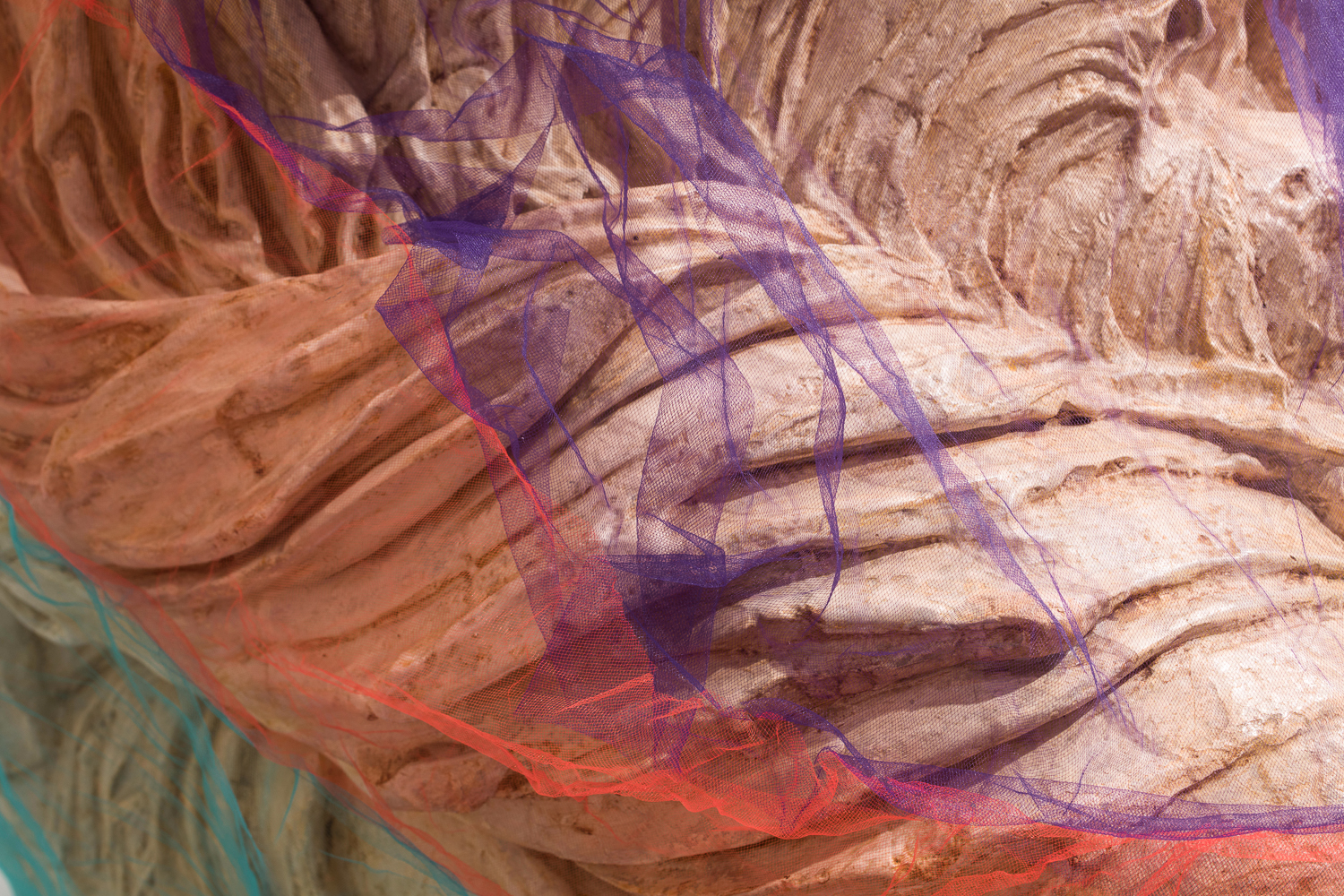
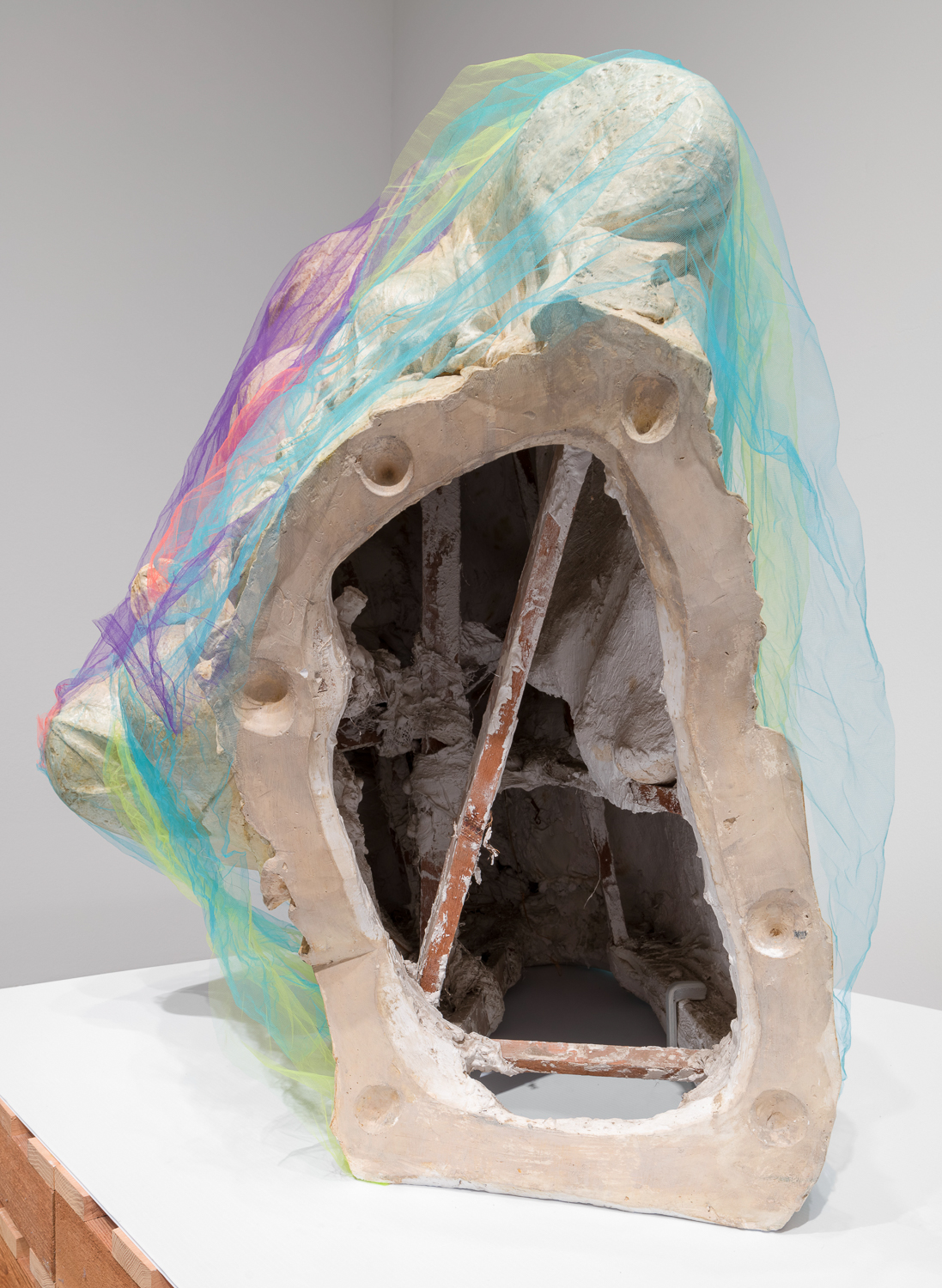
The sidewalk extended from two separated sections of a Battle Collection cast of a sculpture of the goddesses Dione and Aphrodite that originally decorated the Parthenon in Athens, Greece. The figures were swathed in brightly colored fabric to remind us that the original sculptures were once painted. Cox-Richard’s installation evoked classical sculptures’ and their white plaster casts’ journeys through history and asked how we can disrupt the legacies of oppression that they have helped to perpetuate.
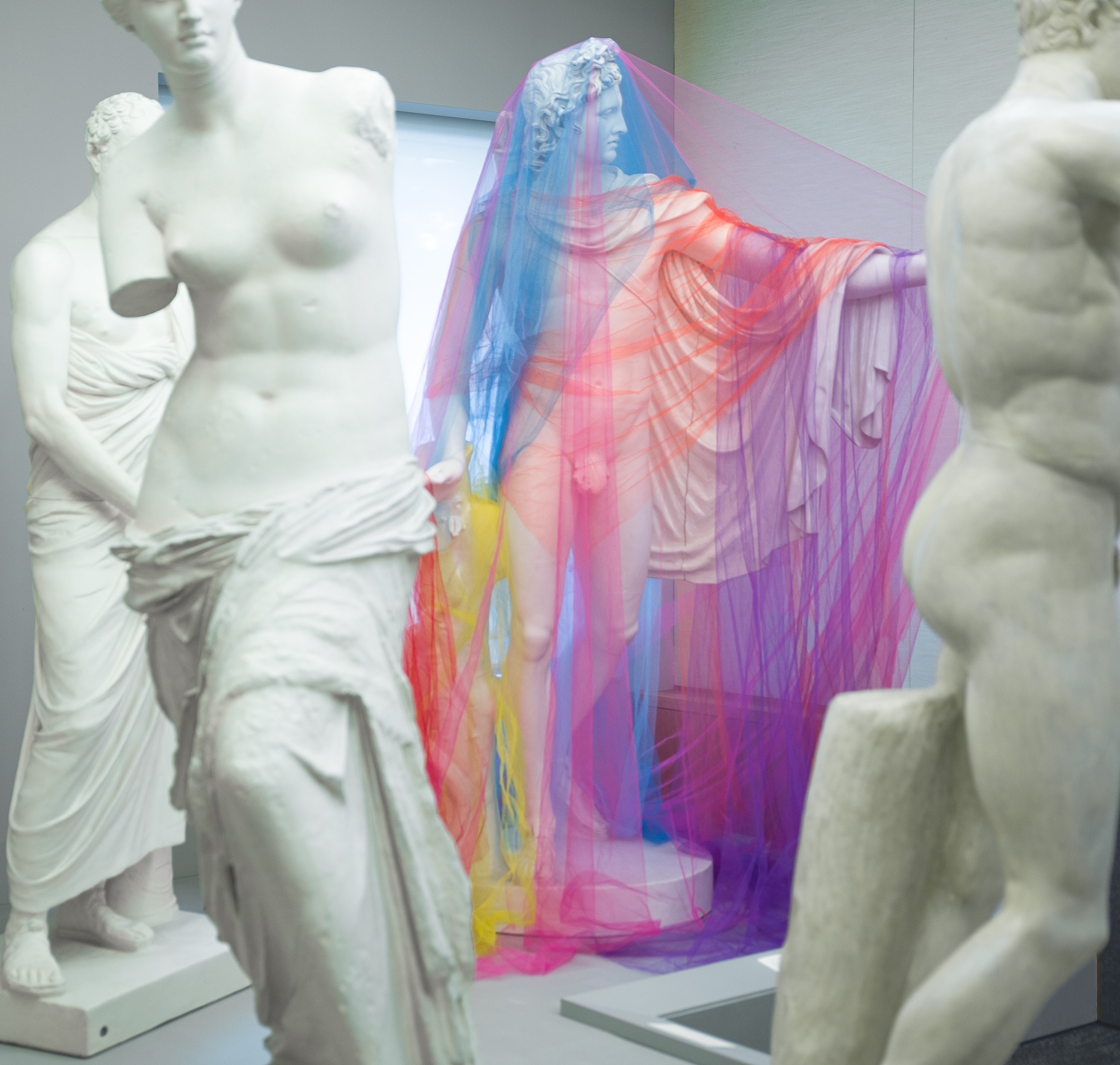
Cox-Richard’s exhibition also included an intervention in the display of the Battle Collection in the first-floor Osborne Seminar Room.
List of Works:
Ramp, 2019 (Fiber-reinforced concrete; aggregate including glass, shell, brick, and concrete fragments cast from models of Battle Cast hair; urethane foam; pigment) 11 x 355 x 93 in
She-Wolf, 2019 (scagliola: plaster, rabbit skin glue, pigment) 21.5 x 46.25 x 19.5 in
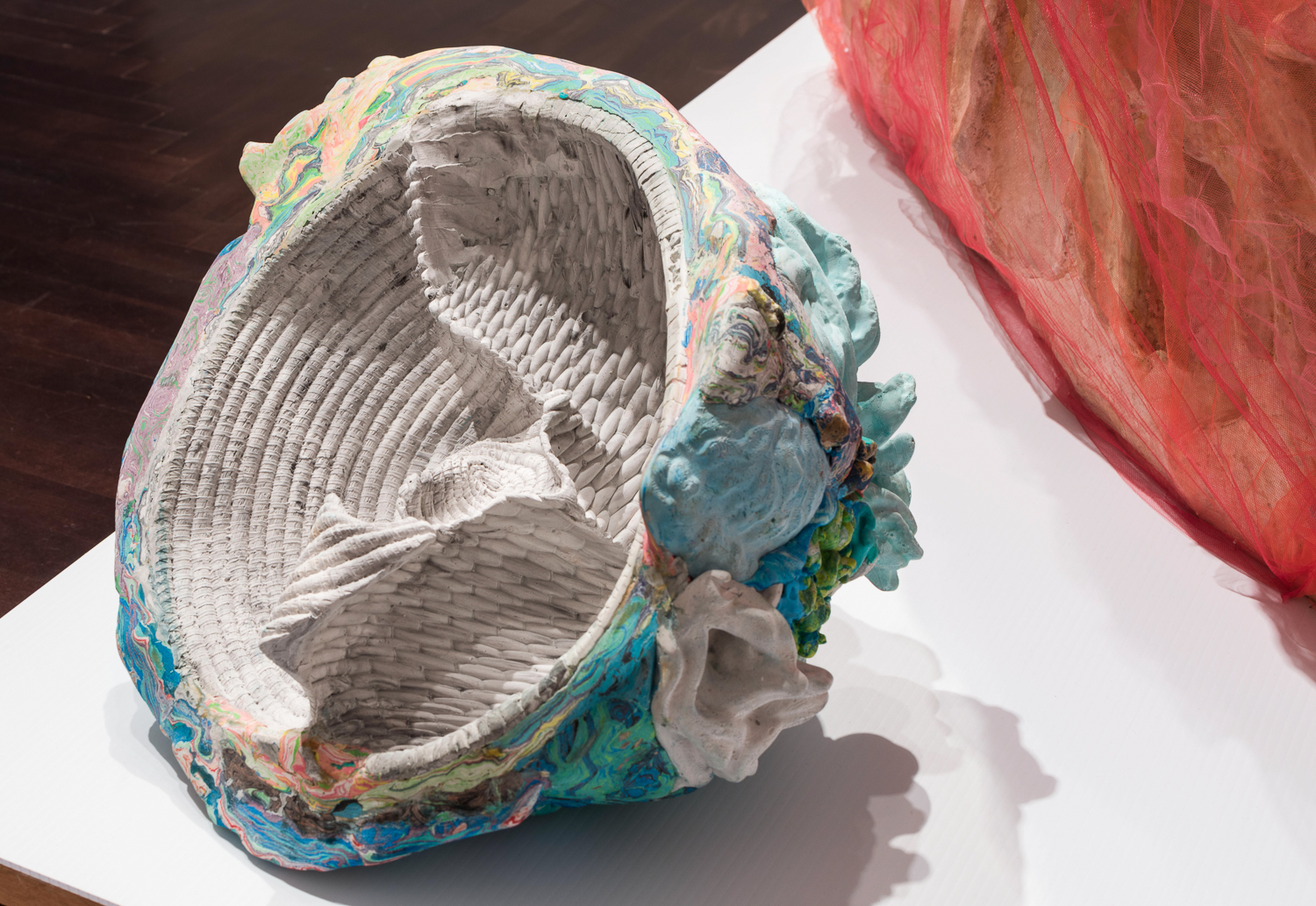
Weave, 2019 (scagliola: plaster, rabbit skin glue, pigment) 14.75 x 17 x 14.5 in
Figs., 2019 (synthetic tulle netting, storage pallets, Goddesses from the East Pediment of the Parthenon: Dione and Aphrodite, 19th-century reproduction, plaster cast from marble original by Phidias (circa 5th century BCE), The William J. Battle Collection of Plaster Casts.)
Intervention in the Osborne Seminar Room, 2019 (synthetic tulle netting and Apollo Belvedere, 19th-century reproduction, plaster cast from Roman adaptation or copy of a Greek bronze original by Leochares (circa 330 BCE), The William J. Battle Collection of Plaster Casts.)
Press:
Andy Campbell, Austin: Lily Cox-Richard, Blanton Museum of Art, Artforum, December 2019
Sean J Patrick Carney, Lily Cox-Richard’s Kaleidoscopic View on the Classical Cannon, Art in America, October 9, 2019
Lydia Pyne, Subverting the Whiteness of Antiquity, Hyperallergic, September 2, 2019
Erin Keever, Lily Cox-Richard: Re-casting the Blanton’s Battle casts, Sightlines, August 8, 2019
Credits:
This installation was organized by the Blanton Museum of Art.
Major funding is provided by Suzanne McFayden.
The Blanton thanks the UT Department of Art and Art History’s Digital Fabrication Lab for technical support of this exhibition.
Photography by Colin Doyle and Manny Alcalá.